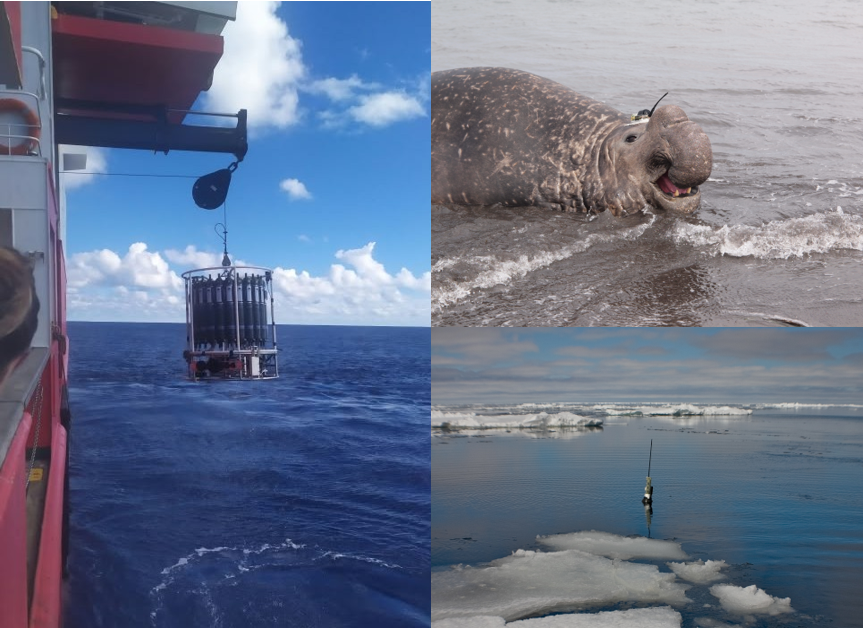
How do you study an ocean that is difficult to reach, frequently covered by sea ice, and far from most research institutions? Collecting observations is one challenge. Finding the measurements that already exist can be another. Temperature and salinity profiles reveal how seawater properties change with depth, helping oceanographers identify water masses and investigate the …[Read More]
ocean data
An archipelago as a natural laboratory: Pioneering ocean monitoring network in the Canary Islands
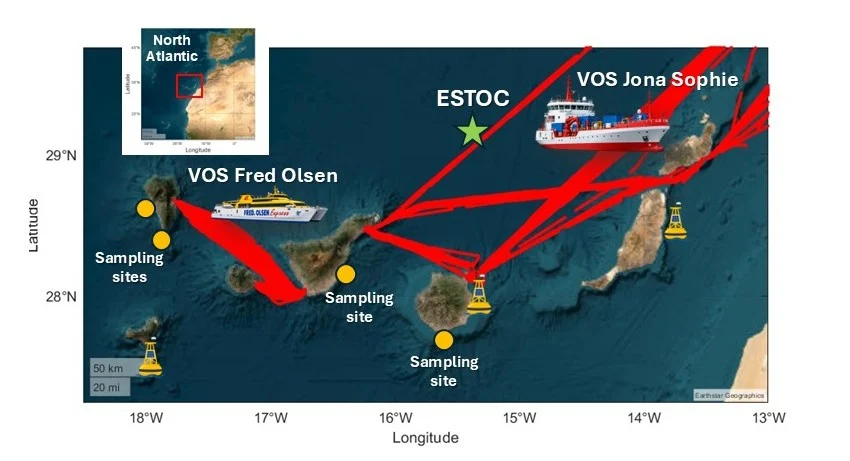
The Canary Islands are often shown as a group of small dots in the vast Atlantic Ocean. However, across only a few tens of kilometres, their surrounding waters can shift from sheltered coastal bays and energetic inter-island channels to the open subtropical ocean. This strong environmental contrast makes the archipelago an ideal natural laboratory for …[Read More]
Fifty years of ocean chemistry in one place: GLODAPv3 is here!
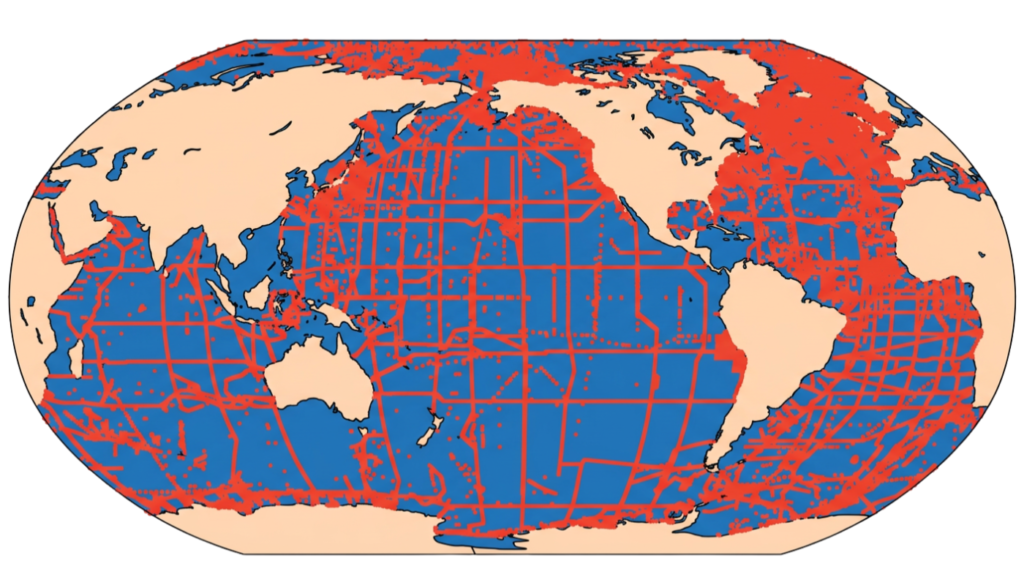
Working with marine carbonate-system observations has taught me how much effort lies behind every row of an oceanographic dataset: long hours at sea, careful sampling, laboratory analyses, calibration and quality control. A single bottle of seawater may represent only one place, one depth and one moment, but when many such samples are brought together, they …[Read More]