OS
Ocean Sciences

Ocean Sciences

A Record-Breaking Indian Ocean Dipole: What Happened in 2021–2022?

A Record-Breaking Indian Ocean Dipole: What Happened in 2021–2022?

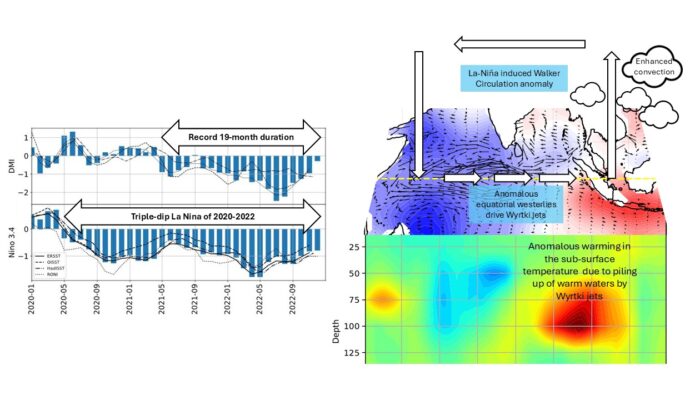
The Indian Ocean Dipole (IOD) is generally considered a seasonal mode of variability, developing and decaying within a single year. During 2021–2022, however, negative IOD conditions persisted for approximately 19 months (Figure 1, top left), making this event the longest—and among the strongest—observed since reliable records began. This unusual persistence highlights important aspects of ocean–a ...[Read More]

How do mesoscale eddies modulate CO2 fluxes in the Southern Ocean?

How do mesoscale eddies modulate CO2 fluxes in the Southern Ocean?

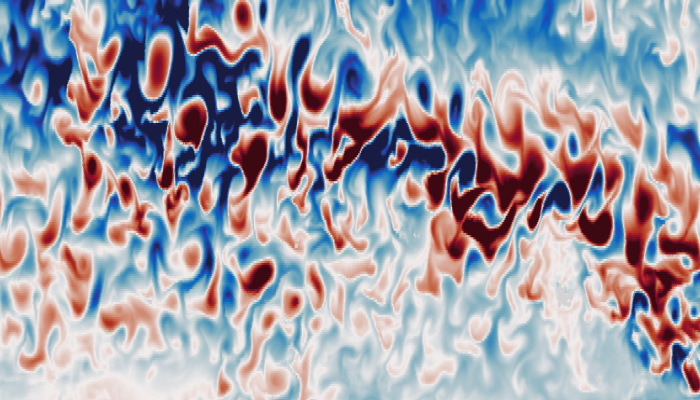
Mesoscale eddies and Southern Ocean carbon sink The Southern Ocean takes up more than a quarter of the anthropogenic CO₂. Its powerful westerly winds, deep overturning circulation, and intense mixing make it a major player in Earth’s climate system. But beneath this large-scale picture lies a world of swirling, dynamic structures that constantly reshape the ocean’s physical and biogeochemical prop ...[Read More]

Meet Arianna, the New Voice as ECS OS Representative!

Meet Arianna, the New Voice as ECS OS Representative!

Meet the new Early Career Scientist (ECS) Representative for the Ocean Sciences (OS) division: Arianna Olivelli! In this role, she is dedicated to connecting, supporting, and advocating for early career ocean researchers across Europe and beyond. We sat down with Arianna to hear about her journey, her vision for the OS ECS community, and how she is empowering the next generation of ocean scientist ...[Read More]

A model to trace methane from the seafloor to the atmosphere

When people picture gas leaking from the seafloor, they often imagine plumes of bubbles that make up a direct path from the seabed to the sky. The reality, however, is far more complex and far more interesting. Between the seafloor and the atmosphere lies an entire ocean of physics, chemistry, and biology that controls the fate of the released gas. In fact, typically, most methane is dissolved int ...[Read More]