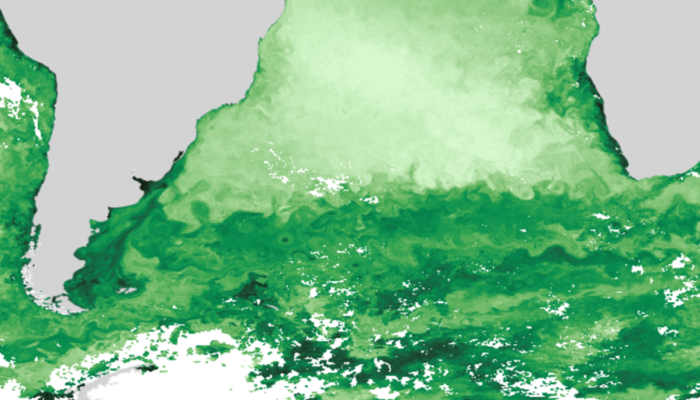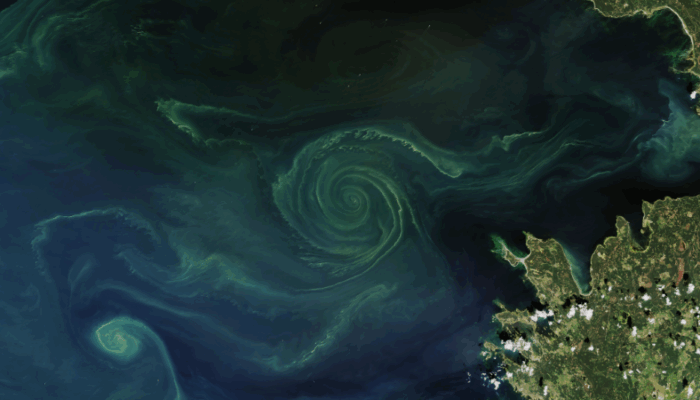
Mesoscale eddies and Southern Ocean carbon sink The Southern Ocean takes up more than a quarter of the anthropogenic CO₂. Its powerful westerly winds, deep overturning circulation, and intense mixing make it a major player in Earth’s climate system. But beneath this large-scale picture lies a world of swirling, dynamic structures that constantly reshape the ocean’s physical and biogeochemical prop ...[Read More]
Monitoring the Ocean’s Green Pulse: A New Global Dataset for Phytoplankton Phenology
Phytoplankton are tiny, single-celled organisms mainly found in the ocean’s sunlit surface, where they grow through photosynthesis, forming the marine food web’s base and regulating Earth’s climate by absorbing carbon dioxide. Their seasonal growth cycles—known as “blooms”—drive marine productivity and influence everything from carbon uptake to food security. But how can we track ...[Read More]
Sailing for Science: How Data from Sailing Races Advances Ocean Research
The Vendée Globe began on November 10th, with 44 participants embarking on the world’s toughest sailing race. This non-stop, single-handed round-the-world yacht race challenges skippers to circumnavigate the Southern Ocean. The race starts in France, traverses the North Atlantic, and heads directly into the Southern Ocean. Despite taking place during the austral summer, the conditions remain ...[Read More]
The Alarming Decline in Ocean CO2 Observations
„observations not taken today are lost forever.“ (Wunsch et al., 2013) The Critical Need for CO2 Measurements Imagine the ocean as a giant lung, breathing in carbon dioxide (CO2) and helping to keep our planet cool. It absorbs about 25% of the CO2 emissions from human activities, playing a crucial role in mitigating the pace of climate change. But what happens when we lose sight of this process? B ...[Read More]