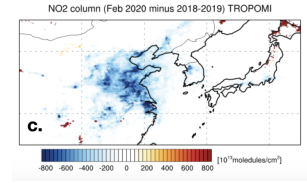
While a previous blog entry dealt with the question whether we can use lessons from the nonlinear nature of climate for projections of the Covid-19 pandemic, there is now a first example of how the pandemic can teach us something on climate. The several weeks long lockdown of China made February 2020 an exceptional month in terms of air quality; aerosol emissions were tremendously reduced leading ...[Read More]
Science Communication
#shareEGU20: Networking event of the NP Division
The current COVID-19 situation has profoundly changed our daily lifes and has also affected our way to perform and share research. In today’s world a lot of efforts have been made to minimize the impact of working from home and exchange thoughts with colleagues, and also the usual annual General Assembly of the European Geosciences Union (EGU) has been moved online. Thus, the largest online ...[Read More]
NP Interviews: the 2020 Lewis Fry Richardson Medal Valerio Lucarini
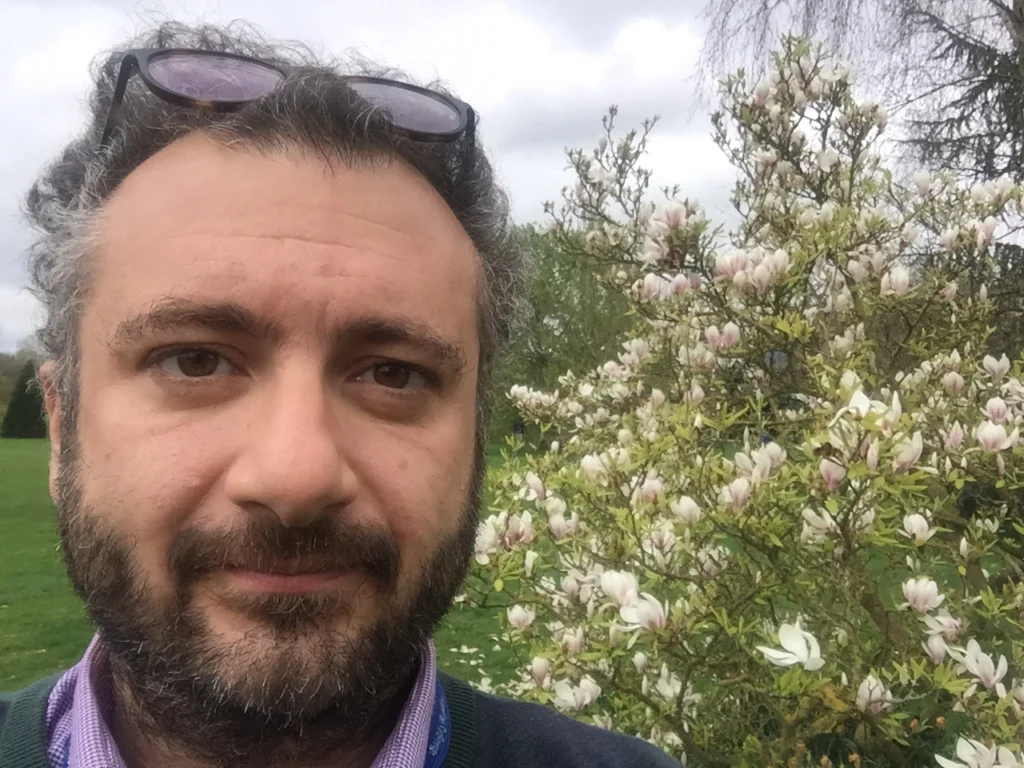
Today’s NP Interviews hosts the 2020 Lewis Fry Richardson Medal Valerio Lucarini. Valerio (b. Ancona, Italy, 1976) is the Director of the Centre for the Mathematics of Planet Earth and Professor of Statistical Mechanics at the University of Reading, and former Professor of Theoretical Meteorology at the University of Hamburg. His main expertise is in Climate Dynamics, Extreme Events, Statist ...[Read More]
NPG Paper of the Month: “Application of a local attractor dimension to reduced space strongly coupled data assimilation for chaotic multiscale systems”
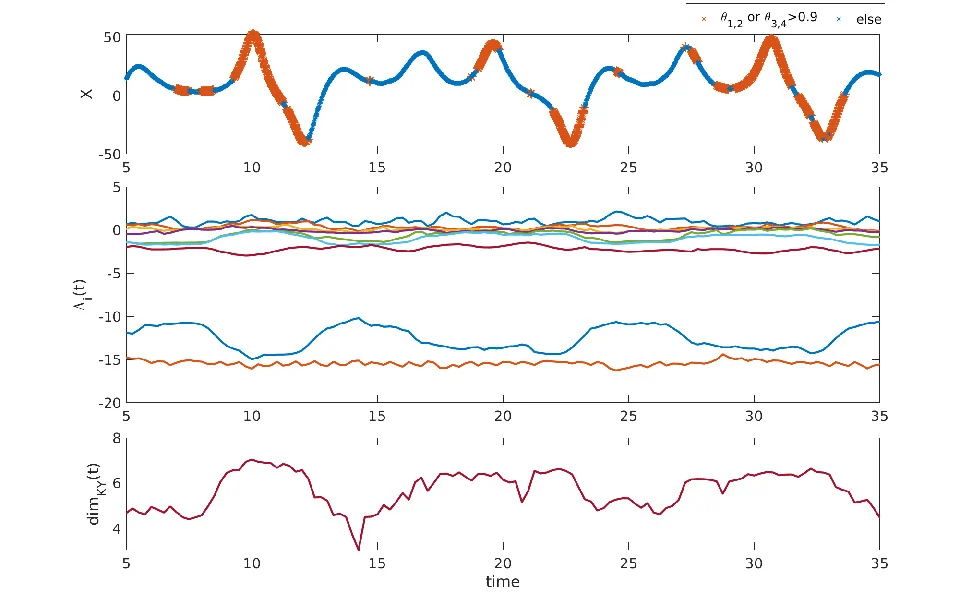
This month the NPG Paper of the Month award is achieved by Courtney Quinn for her paper “Application of a local attractor dimension to reduced space strongly coupled data assimilation for chaotic multiscale systems” (https://www.nonlin-processes-geophys.net/27/51/2020/). Dr. Courtney obtained her PhD in Mathematics at the University of Exeter (UK) researching critical transitions in dynamical syst ...[Read More]
How Climate Sciences can help in understanding uncertainties in Covid-19 epidemic projections
COVID-19 is currently affecting over 180 countries in the world and poses serious threats to public health as well as economic and social stability of many countries. Modeling and extrapolating in near real-time the evolution of COVID-19 epidemics is a scientific challenge, which requires a deep understanding of the factors undermining the dynamics of the epidemics. Despite the importance of havin ...[Read More]
NP Interviews: the newly elected NP Division President François Schmitt
Today’s NP Interviews hosts the newly elected NP Division President François Schmitt. François has a PhD degree from Université Pierre et Marie Curie in Paris (1993), in atmospheric turbulence, and an Habilitation degree from the same university (2001). He has stayed in Belgium during 6 years as a post-doc, working in meteorology and in fluid mechanics. He is CNRS researcher in Wimereux (Nor ...[Read More]
NP Interviews: the AGU 2019 Turcotte awardee Vera Melinda Galfi
Before pursuing a scientific career, Melinda studied economics and worked in the field for several years. Her scientific career took place until now in Hamburg, Germany, where she completed both her undergraduate and graduate studies in meteorology. Melinda finished her PhD in 2018 under the supervision of Valerio Lucarini, studying extreme events in chaotic atmospheric models. She received the 20 ...[Read More]
NP Division at the General Assembly 2020
Each year the European Geosciences Union organizes the largest European geosciences event which is the EGU General Assembly. It usually attracts over than 15000 scientists from all over the world, including both established researchers and early career scientists, who contribute to more than a half of the participants. It consists of several sessions (usually more than 500), covering a wide spectr ...[Read More]
NP Interviews: the 2019 Lewis Fry Richardson Medallist Shaun Lovejoy
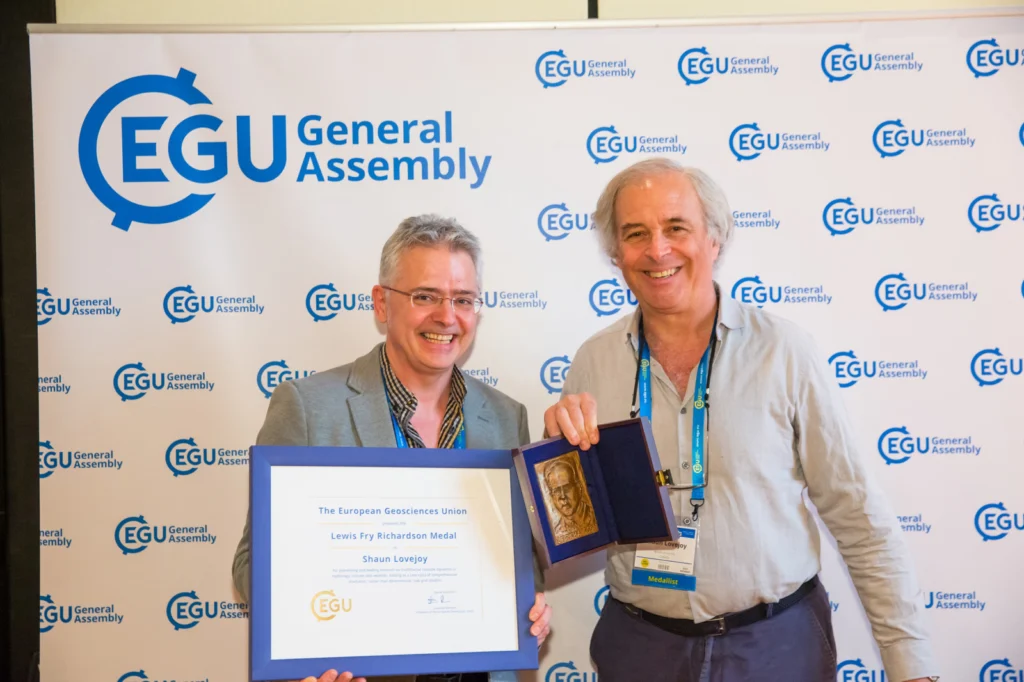
Today’s NP Interviews hosts the Lewis Fry Richardson Medallist Shaun Lovejoy. Shaun has degrees in physics from Cambridge and McGill University; he has been a McGill professor since 1985. For four decades, he has developed fractal, scaling ideas in the geosciences, contributing to advances in cascade processes, multifractals, anisotropic scale invariance, space-time multifractal modeling as well a ...[Read More]
Workshop report: Mathematics of the Economy and Climate
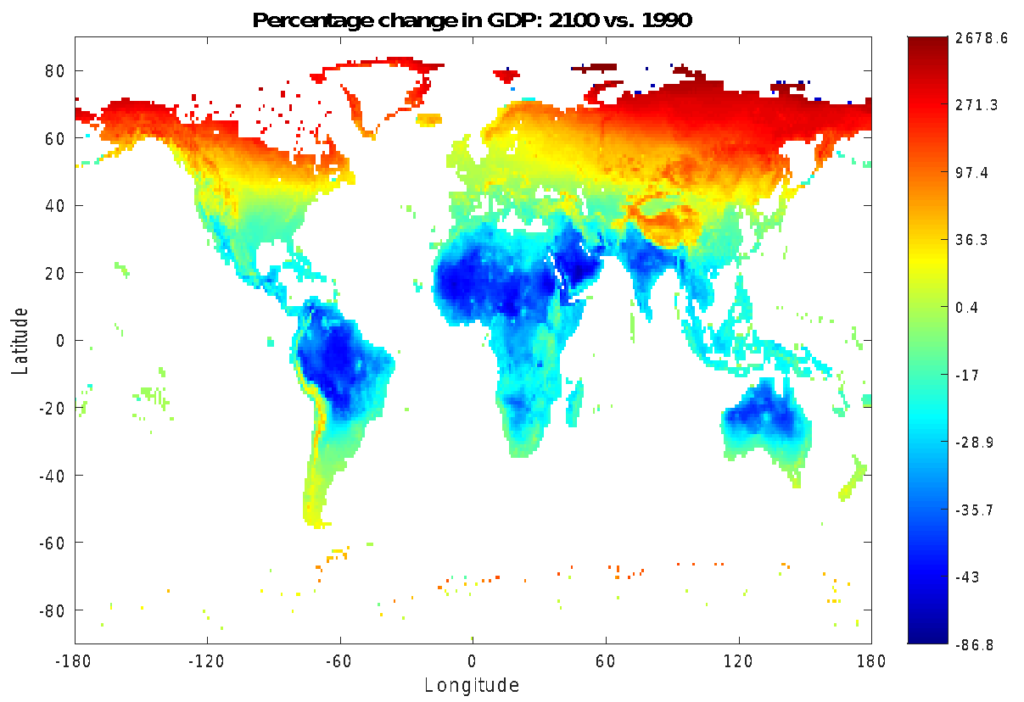
Just before the summer a group of about 40 scientists gathered in an old Monastery in the Netherlands (Kontakt der Kontinenten, Soesterberg) for a rather special collaborative workshop entitled “Mathematics of the economy and climate”. Mathematicians, climate scientists and economists – a group of scientists that normally does not mix and are rather unfamiliar with each other’s researc ...[Read More]