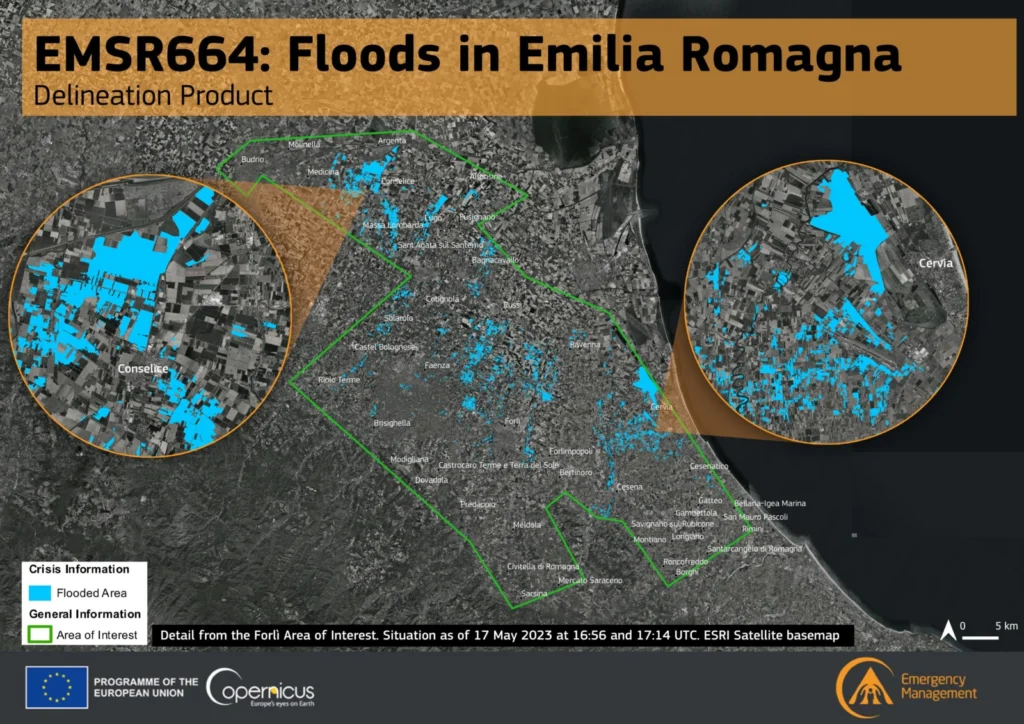
Italy has recently been struck by a series of catastrophic floods that have claimed lives, displaced thousands of people, and caused extensive damage to infrastructure. These floods were triggered by an extraordinary amount of rainfall, equivalent to six months’ worth, occurring within few days. The culmination of three distinct meteorological events, with low-pressure systems over …[Read More]
Nonlinear Processes in Geosciences
NPG Paper of the Month: “A Range of Outcomes: The Combined Effects of Internal Variability and Anthropogenic Forcing on Regional Climate Trends over Europe”
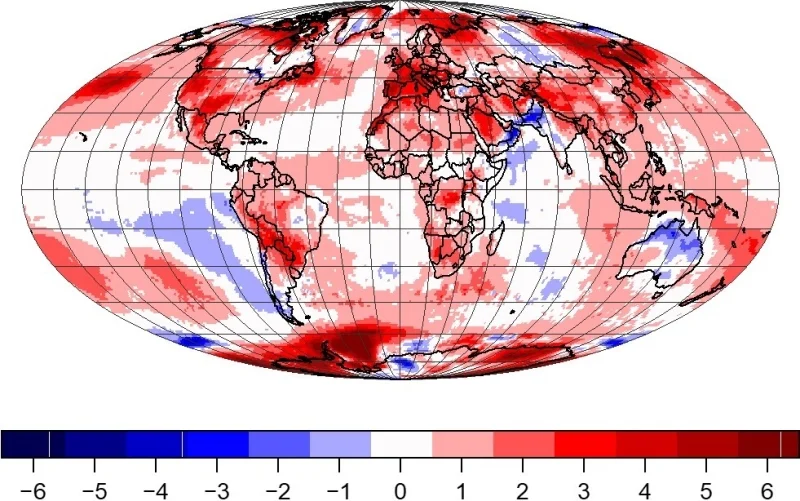
The NPG paper of the month for February 2023 was awarded to “A Range of Outcomes: The Combined Effects of Internal Variability and Anthropogenic Forcing on Regional Climate Trends over Europe” by Clara Deser and Adam S. Phillips. How much will Europe warm in the next 50 years? Will precipitation increase or decrease? Are past …[Read More]
Socio-economic and security implications of global heating
This year, like in the last few years, we are experiencing the effects of global heating in increasingly personal ways. The summer of 2022 exposed us to ever more extreme heat waves in North America, Europe, and Asia. For instance, the heat wave in India and Pakistan reached temperatures of 49C in Nawabshah, Pakistan. North …[Read More]
ECS SpotLight: Changes in the climate dynamics have already modified characteristics and impacts of storms in France: the case study of storm Alex 2020
Extratropical cyclones play a key role in modulating the precipitation and wind in mid-latitudes and can be responsible for extreme wet and windy events. With global warming, the dynamics and thermodynamics associated with these atmospheric systems are being affected. However, due to the complexity of modelling the climate system, a challenge arises when evaluating the …[Read More]
Back in Green: The Return of Pineapple Express to California
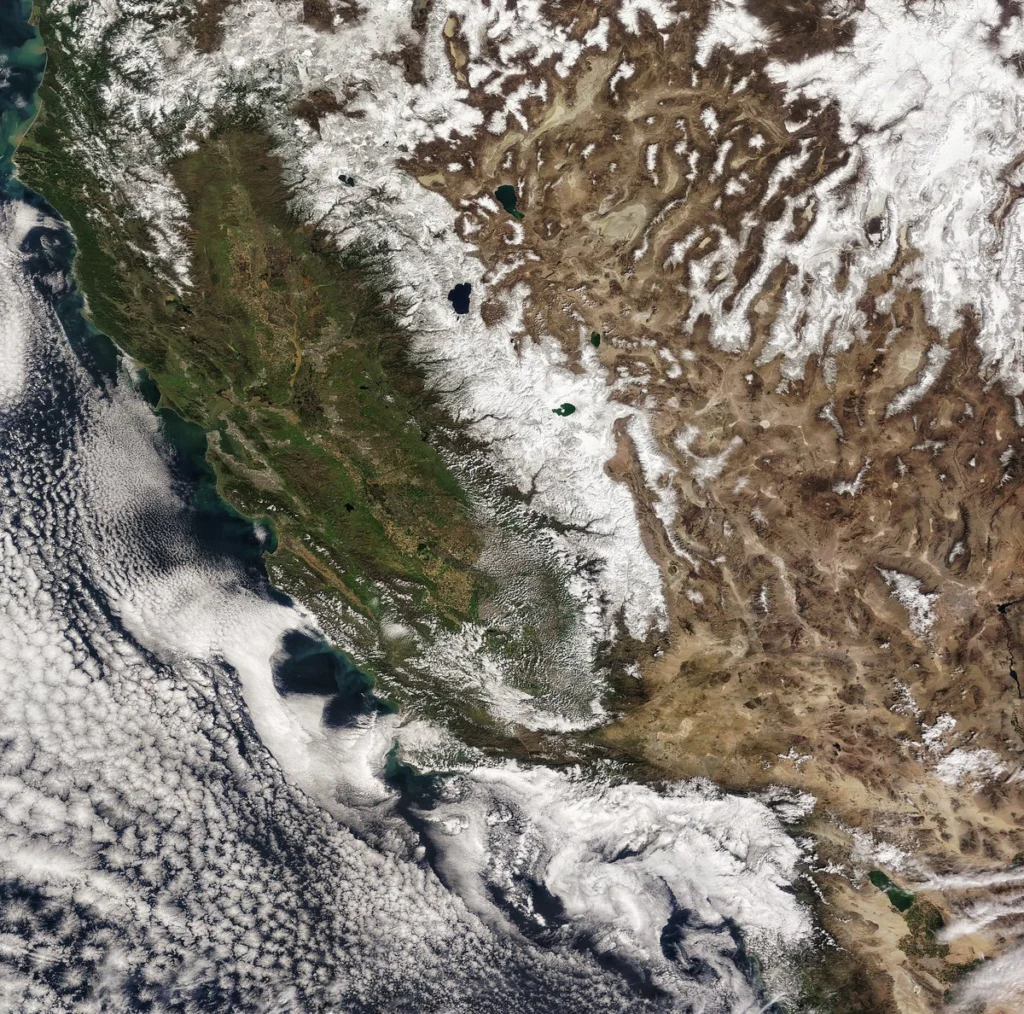
If you Google Pineapple Express you’re likely to end-up with a stoner movie comedy, but for those who live on the West Coast of North America, it has an entirely different meaning. Pineapple Express is a weather phenomenon that refers to a strong atmospheric river that brings heavy rain and moisture to the region. Despite …[Read More]
El Niño is back: What it Means for Global Warming?
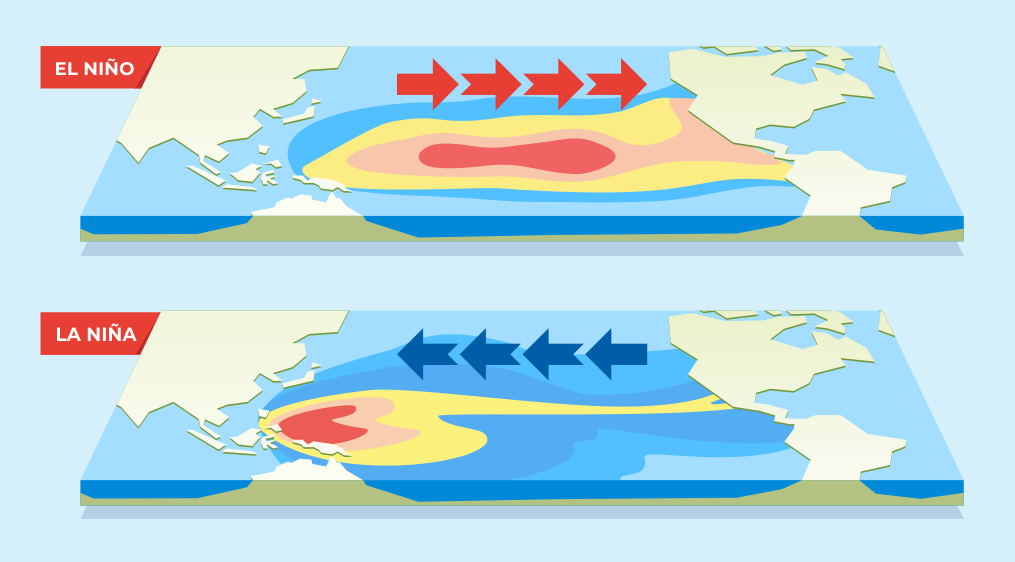
The World Meteorological Organization (WMO) has just announced that the La Niña episode has officially ended, and from autumn onwards, it should give way to an El Niño phase. But what does that mean? And what is the influence of these weather phenomena on global warming?For those who have never heard of La Niña before, …[Read More]
ECS SpotLight: Climate change on extreme winds already affects off-shore wind energy availability in Europe
Off-shore wind energy plays a key role in the transition to a renewable energy (RE) system, and its usage is expected to increase in the next few decades. Nevertheless, wind energy is one of the most variable and weather-dependent RE, because of its natural dependence on the wind speed, which can vary at different time …[Read More]
Sea level rise: a global threat in a warming planet
Over 70% of the Earth’s surface is covered by seas and oceans but in the geological past the extension of sea and land has varied several times as sea level changed over time. During the past millions of years, the oceans have cyclically retreated and expanded with the alternating of warmer and colder climatic periods …[Read More]
NPG Paper of the Month: “Brief communication: Climate science as a social process – history, climatic determinism, Mertonian norms and post-normality”
The NPG paper of the month for January 2023 was awarded to “Brief communication: Climate science as a social process – history, climatic determinism, Mertonian norms and post-normality” by Hans von Storch. One could argue that climate science is part of geophysics, or more precisely that part of climate science is part of geophysics. But …[Read More]
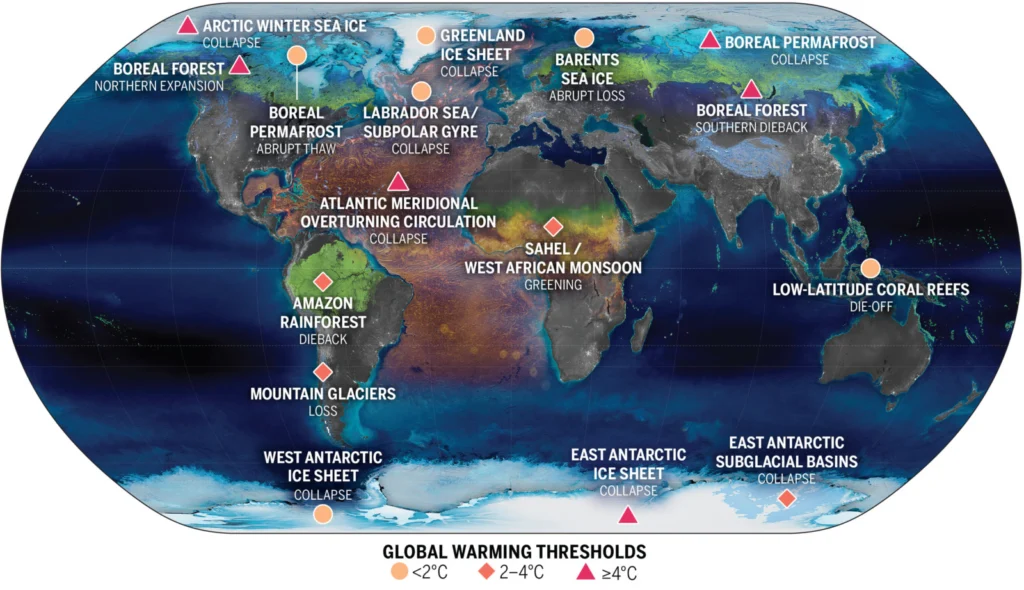
Climate Tipping Points through the “eyes” of the Masters: a virtual art exhibition
We are running out of time in fighting the effects of climate change. With the greenhouse gasses emissions steady, the planet is reaching warming levels that could cause some large ecosystems to tip in different states. A tipping point in the climate system refers to a threshold beyond which a small change in a particular …[Read More]