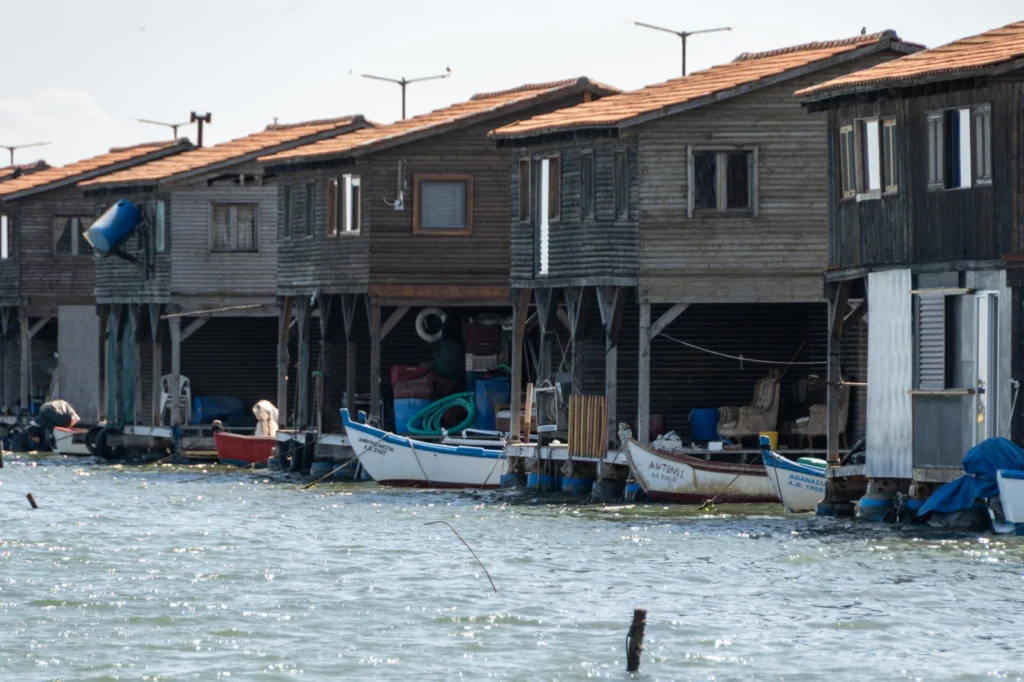
Over 70% of the Earth’s surface is covered by seas and oceans but in the geological past the extension of sea and land has varied several times as sea level changed over time. During the past millions of years, the oceans have cyclically retreated and expanded with the alternating of warmer and colder climatic periods …[Read More]
Climate
NPG Paper of the Month: “Brief communication: Climate science as a social process – history, climatic determinism, Mertonian norms and post-normality”
The NPG paper of the month for January 2023 was awarded to “Brief communication: Climate science as a social process – history, climatic determinism, Mertonian norms and post-normality” by Hans von Storch. One could argue that climate science is part of geophysics, or more precisely that part of climate science is part of geophysics. But …[Read More]
Climate Tipping Points through the “eyes” of the Masters: a virtual art exhibition
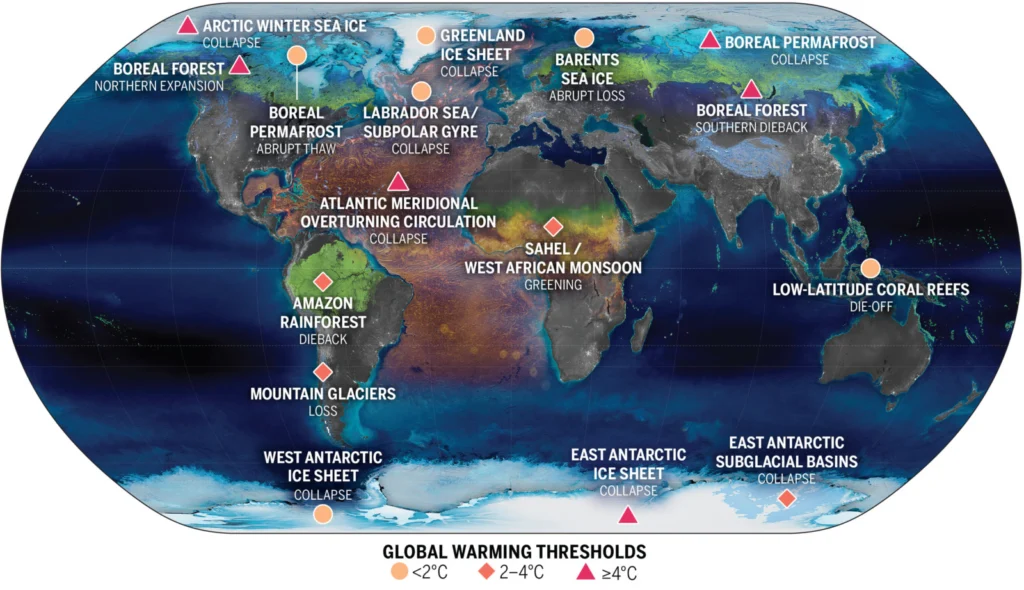
We are running out of time in fighting the effects of climate change. With the greenhouse gasses emissions steady, the planet is reaching warming levels that could cause some large ecosystems to tip in different states. A tipping point in the climate system refers to a threshold beyond which a small change in a particular …[Read More]
Can Artificial Intelligence replace scientists to explain Climate Change? Find it out in our first interview to… ChatGPT!
Figure: DallE (the visual cousin of ChatGPT) has produced this image when I asked for “a cartoon showing a climatologist with research articles walking on a weather map” As a communication officer of the division of Nonlinear Processes I started to write posts for the EGU blog a few years ago and I found …[Read More]
The Great Cold Debate: Is Climate Change to Blame for Extreme Cold Spells?
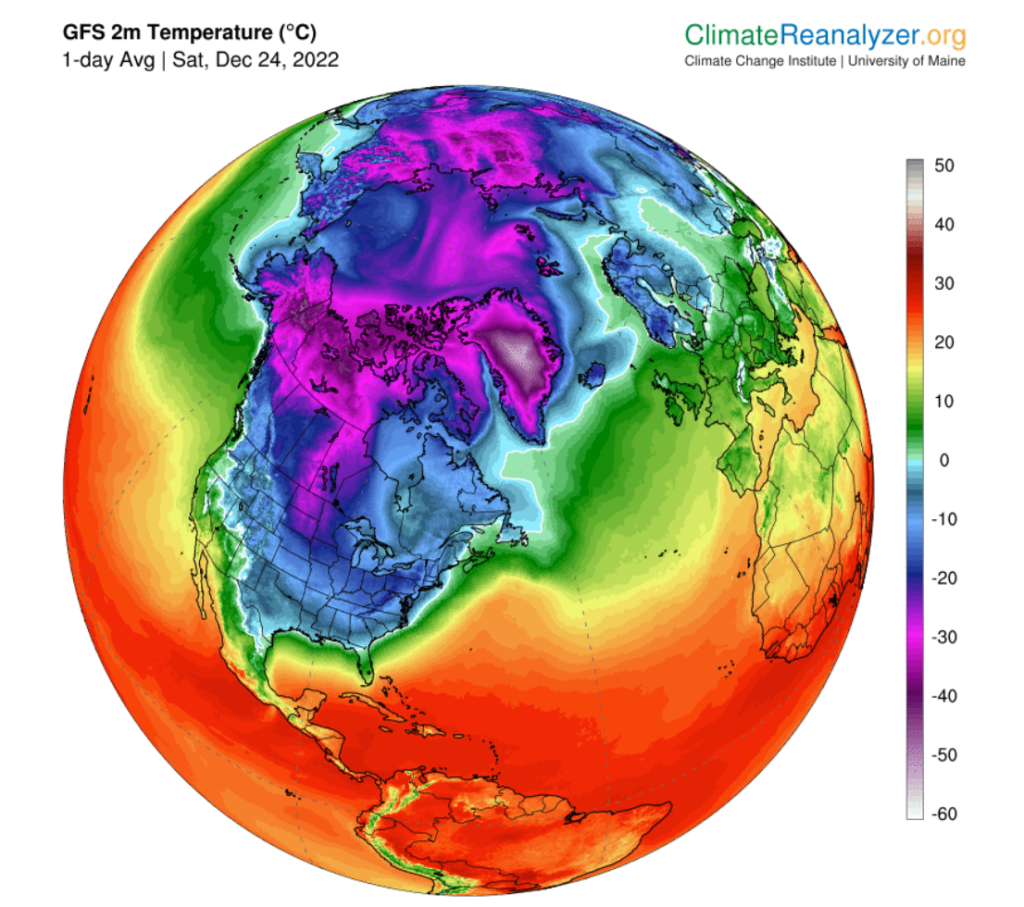
In December 2022, the United States experienced a severe cold spell, with record-low temperatures being recorded in many parts of the country. While it is natural for cold spells to occur, the question has arisen as to whether climate change is playing a role in the intensity and frequency of these events. There is ongoing debate …[Read More]
NP Interview: Federico Grazzini on Climate Change casts shadows on the present and the future of the Mediterranean Basin
Weather extreme events in the year 2022 are really hitting the Mediterranean basin very hard. Since the beginning of the year we are observing a widespread drought, heatwaves but also severe thunderstorms. Few days before the COP meeting in Sharm-el-sheik we discussed one of the experts of Mediterranean climate, Federico Grazzini, to unveil whether these …[Read More]
How climate change can possibly increase the intensity of tornadoes in Europe
On October 23 2022, a tornado outbreak occurred in France, causing extensive damages. Tornadoes in France are a relatively rare phenomenon, even more so in the second half of October. This weather phenomenon is linked to intense thunderstorms, and it is difficult to predict because it is very localized. Will global warming make this weather …[Read More]
What the 2022 summer thunderstorms in the Mediterranean tell us about the ongoing climate change?
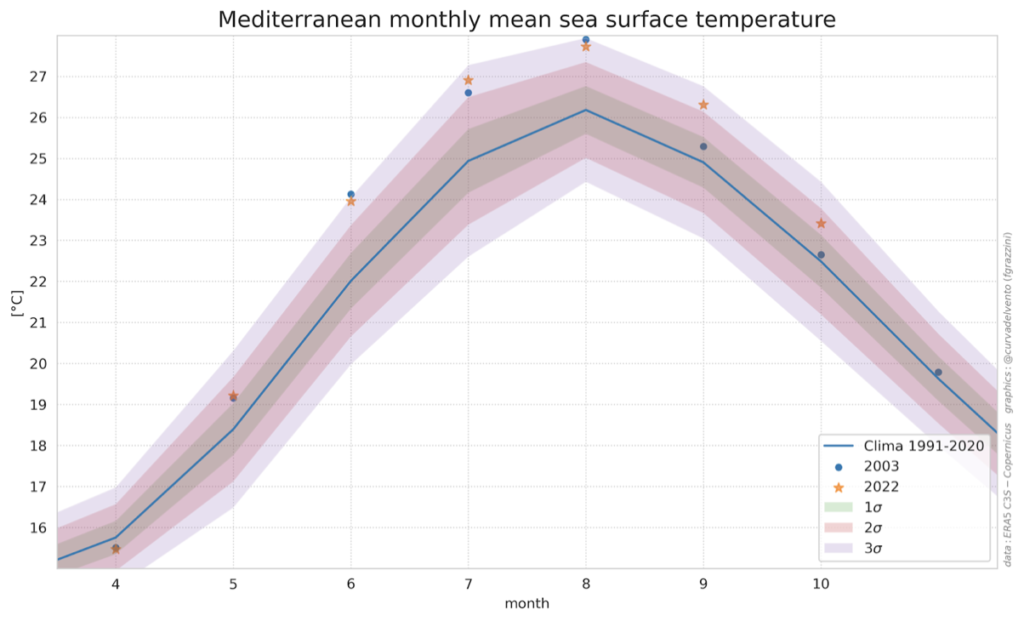
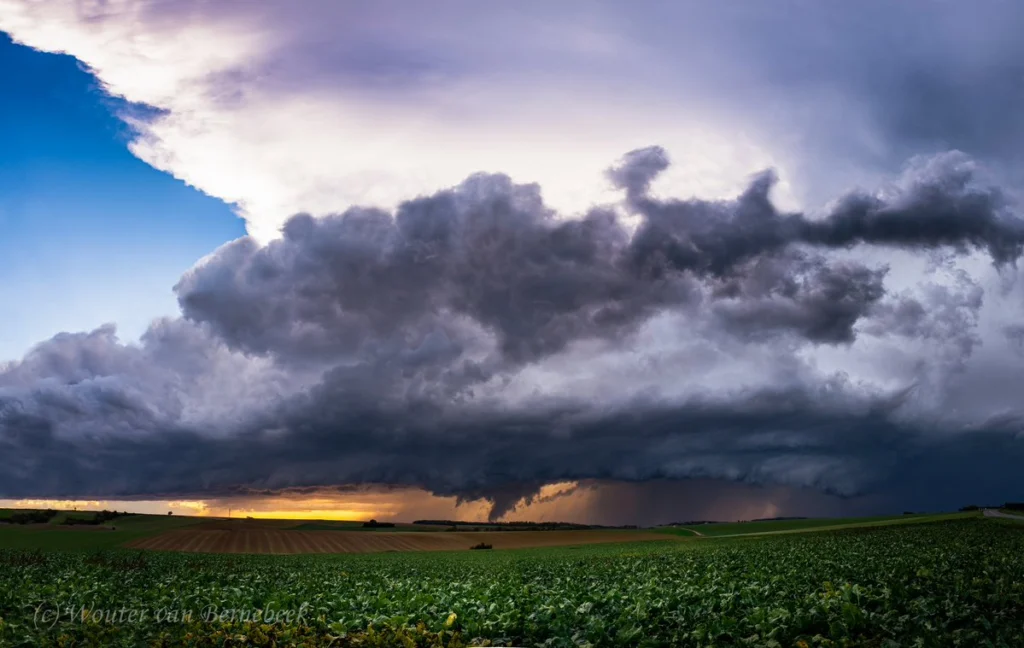
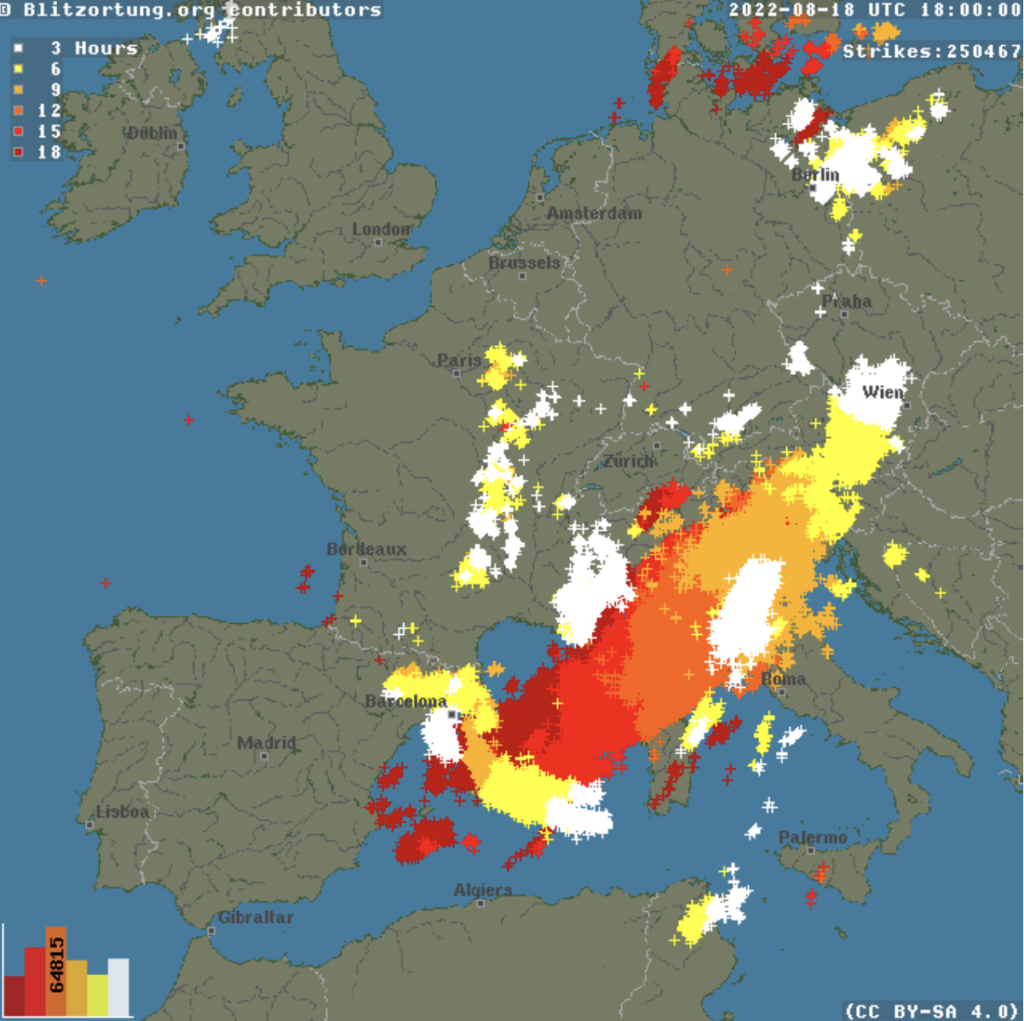
The 2022 European summer was governed by the presence of a persistent cold drop (low pressure area) located between Portugal and France. The change in its position has determined the alternation between hot conditions (low pressure center over Portugal) and stormy conditions (cold drop over France). The warming of the Mediterranean Sea (up to +6°C …[Read More]
NP Interviews: Davide Faranda (CNRS) on the topic “global warming and extreme events in Europe”
Davide Faranda is a physicist at the French National Center for Scientific Research (CNRS). His main interests are devoted to the construction of a statistical mechanical and dynamical systems framework for the study of atmospheric motions. In particular, his works aim at the characterization of the metastable states of the atmospheric circulation with simple mathematical …[Read More]
A new virtual seminar series on Climate Physics organized by the American Physical Society (APS) group in Physics of Climate
The APS Topical Group on the Physics of Climate (APS-GPC) is excited to launch a new virtual monthly seminar series on climate physics and variability. These seminars are aimed at introducing the broader physics community (and math, engineering, and other communities) to the fundamentals of climate science as well as cutting-edge research and open questions …[Read More]