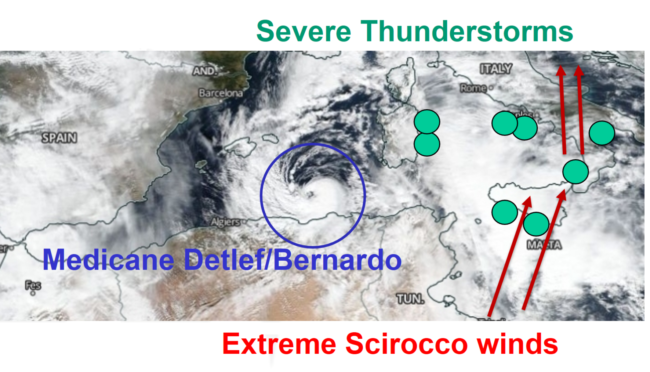
A Mediterranean cyclone, high tides and climate change: these three ingredients made the 12/11/2019 acqua alta event in Venice exceptional. This combination of causes determined what climate scientists define as a compound extreme event, a non-linear mix of factors which led to several and connected extreme weather phenomena in the Mediterranean area. Let us start by the analysis of the atmospheri ...[Read More]
NP Interviews: the AGU 2019 Turcotte awardee Vera Melinda Galfi
Before pursuing a scientific career, Melinda studied economics and worked in the field for several years. Her scientific career took place until now in Hamburg, Germany, where she completed both her undergraduate and graduate studies in meteorology. Melinda finished her PhD in 2018 under the supervision of Valerio Lucarini, studying extreme events in chaotic atmospheric models. She received the 20 ...[Read More]
NP Interviews: the 2019 Lewis Fry Richardson Medallist Shaun Lovejoy
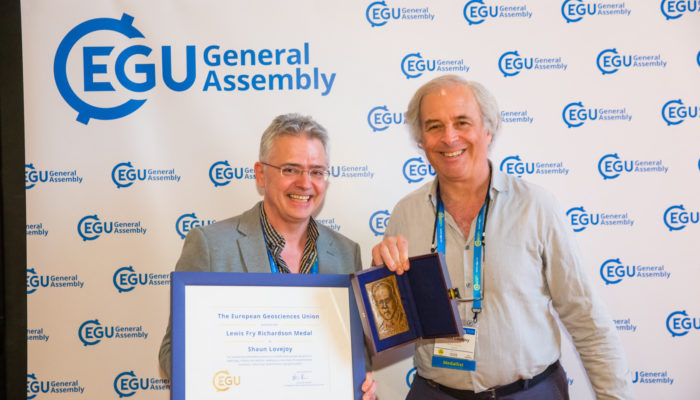
Today’s NP Interviews hosts the Lewis Fry Richardson Medallist Shaun Lovejoy. Shaun has degrees in physics from Cambridge and McGill University; he has been a McGill professor since 1985. For four decades, he has developed fractal, scaling ideas in the geosciences, contributing to advances in cascade processes, multifractals, anisotropic scale invariance, space-time multifractal modeling as well a ...[Read More]
After Lorenzo and Ophelia, should we prepare European coasts for tropical storms and hurricanes?
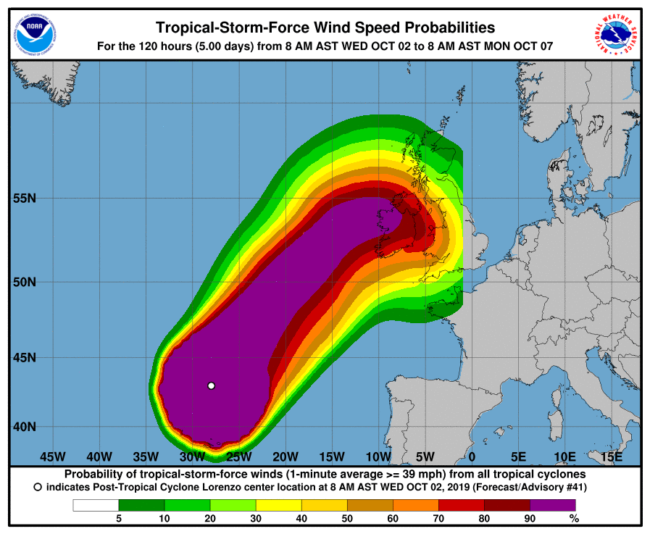
Autumn is hurricane season in the north tropics and indeed 2019 does not make exception from this point of view. After Dorian hitting Bahamas and North Carolina, the American National Hurricane Center named Lorenzo a tropical depression originating near Capo Verde. On September 25th Lorenzo became a category 1 hurricane, according to the Saffir-Simpson scale. This scale categorizes the hurricanes ...[Read More]
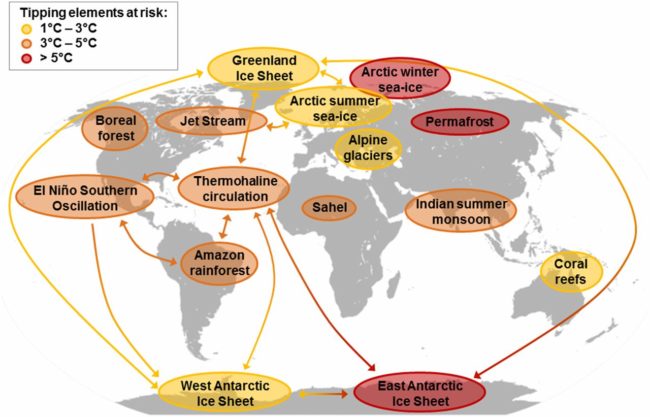
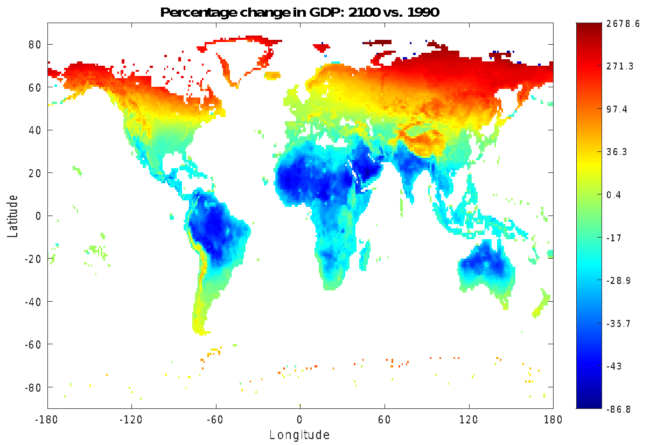
Abrupt Warming could bring our planet a “Hothouse Earth” with catastrophic consequences for our economy and society
Most of us have enjoyed swings in childhood. Some have even tried to swing faster and make a full 360 degrees’ loop. Those who succeeded had a very strange feeling of not being able to predict whether, increasing the energy of the swing, the transition from normal oscillations and 360 loops would happen. Indeed, there is an energy threshold such that the swing goes from oscillations to full loops ...[Read More]
Workshop report: Mathematics of the Economy and Climate
Just before the summer a group of about 40 scientists gathered in an old Monastery in the Netherlands (Kontakt der Kontinenten, Soesterberg) for a rather special collaborative workshop entitled “Mathematics of the economy and climate”. Mathematicians, climate scientists and economists – a group of scientists that normally does not mix and are rather unfamiliar with each other’s researc ...[Read More]