When reading fantasy novels, we are usually brought to worlds of elves, dragons, and epic battles, all surrounded by breathtaking magical forests, or castles above impervious cliffs. However, even fantasy stories take inspiration from the real world and its geology. Who does not remember the ascent of Mount Doom of Frodo and Sam, or the importance of Dragon Glass (Obsidian) in Game of Thrones? So, ...[Read More]
Tambora 1815: From eruptive dynamics to the global impact of the eruption – with Jessica Kandlbauer
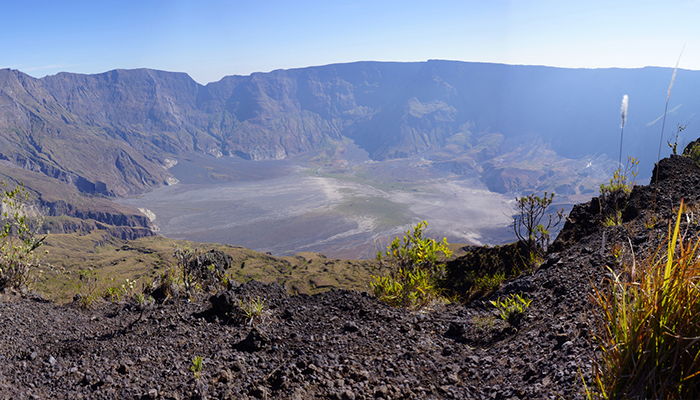
reading time: 10 minutes The Tambora 1815 eruption: a brief introduction On April 10th, 1815, the Tambora volcano, located on the island of Sumbawa in Indonesia, was responsible for one of the largest eruptions in the last millennium (Stothers, 1984; Sigurdsson and Carey, 1989; Oppenheimer, 2003; Self et al., 2004; Kandlbauer et al., 2013a; Kandlbauer and Sparks, 2014). The eruption had a devastat ...[Read More]
Fagradalsfjall 2021 versus 2022: similarity and differences
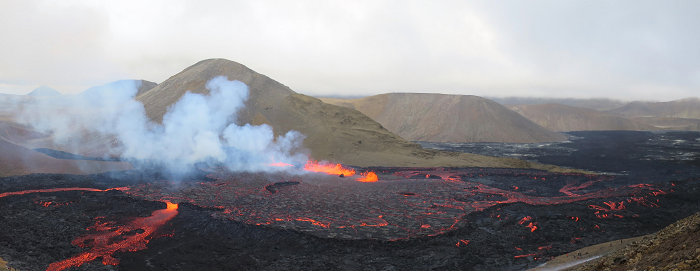
The Icelandic eruptions of 2021 and 2022 originated in the Reykjanes peninsula, characterized by the Krýsuvík-Trölladyngja system, one of the five volcanic systems present along the peninsula. This peninsula is a leaky transform fault, characterized by episodic rifts and associated volcanism. The last two years have brought about some of the most momentous volcanic eruptions in recent history. The ...[Read More]
Machine Learning and Volcanic Crystals: a journey with Corin Jorgenson into Random Forest Thermobarometry
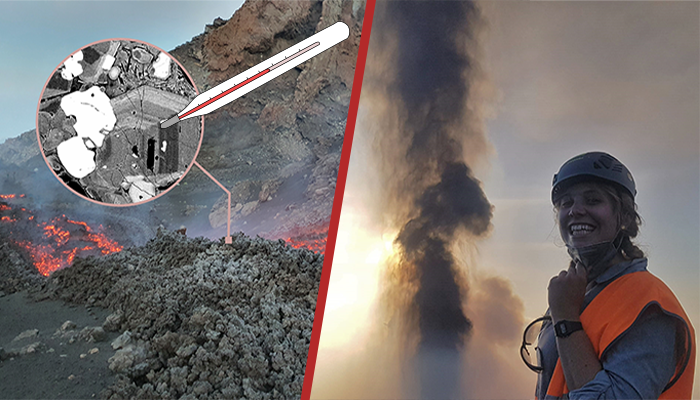
Thermobarometry: a bit of background Being able to understand the eruptive style of a volcano, how the eruptive behavior can evolve over time and managing to better interpret the signals that a volcanic system gives us before an eruption are of fundamental importance for mitigating the risk associated with eruptive activities. In this context, it is extremely important to understand trans-crustal ...[Read More]
5 things I learnt from 2 months at sea with the International Ocean Discovery Program
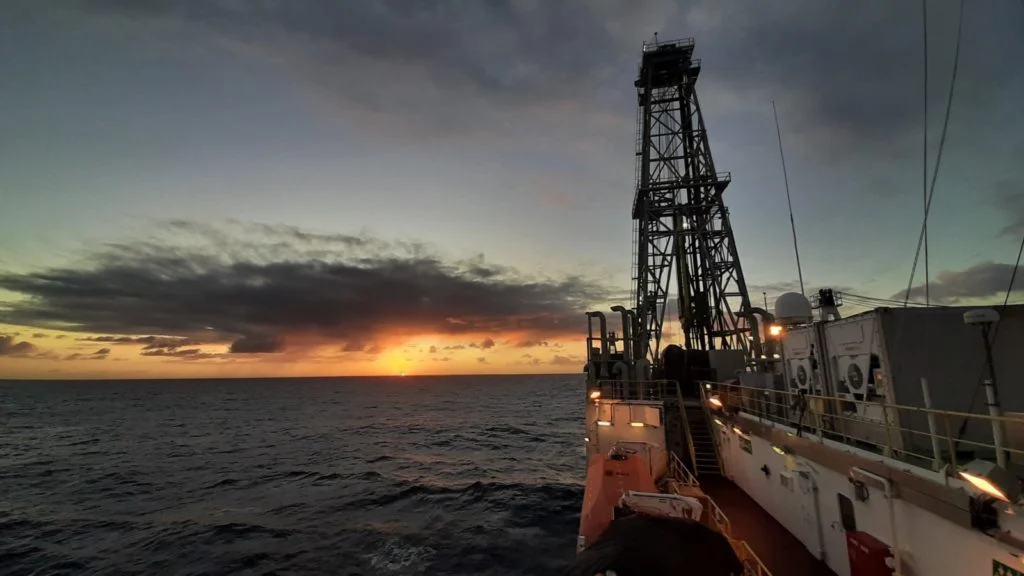
This year I was lucky enough to be part of International Ocean Discovery Program (IODP) Expedition 390 – South Atlantic Transect I – aboard the research vessel JOIDES Resolution which spent two months, from April to June, out in the South Atlantic, drilling into and sampling the upper oceanic crust and sediments. I sailed as a petrologist and was responsible for describing how the basa ...[Read More]
Can human curiosity affect dynamic risk?
In simple words, the volcanic risk (R) can be defined as R = Value × Vulnerability × Hazard. The value is a figure that varies according to the total number of population and / or infrastructures at risk during a volcanic eruption, vulnerability is the percentage of value at risk for a given volcanic event and the hazard is the probability that a certain place may be affected by a determined hazar ...[Read More]
EGU22: Wednesday highlights
This Wednesday we are at exactly half time through the congress! Here are some tips for today as one looks forward to a wonderful day of learning and sharing. We start between 8.30 and 11.45 CEST immersing ourselves in the world of metamorphic minerals (session GMPV 7.2– Room D2 https://meetingorganizer.copernicus.org/EGU22/session/41922#Presentations) and geodynamic processes (session GD 6. ...[Read More]
Volcanoes and social media make us (more?) crazy
Many people are drawn to danger and behaviors that can harm their health or finances. Dangerous activities include the attraction that humans have always had towards natural events, such as volcanic eruptions, or towards gambling, adventure, challenging travels or physical activities without the ability or the necessary preparation. In today’s life many people face risks, however these risks ...[Read More]
An Overview on the 15 Jan 2022 Hunga Tonga-Huna Ha’apai Eruption
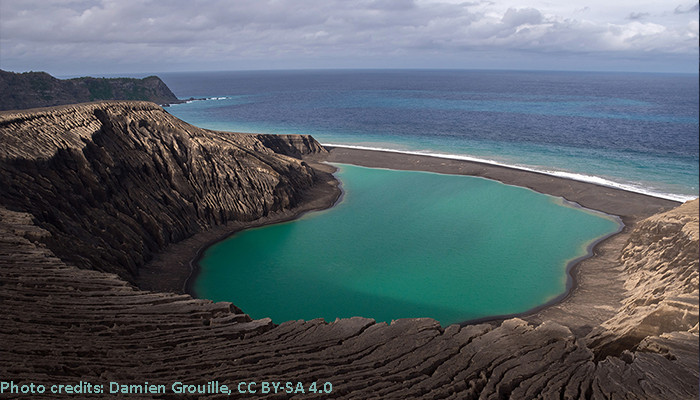
Since 15 January 2022, the islands of the Tonga archipelago and surrounding territories have been suffering the effects of what has turned out to be one of the biggest eruptions of this century. The eruption occurred on Hunga Tonga-Hunga Ha’apai, an island created by the emergence of a large submarine volcano. HTHH is located among the ~170 islands of the Kingdom of Tonga and about 65 km nor ...[Read More]
EGU GMPV ECS Campfires – 16th Edition
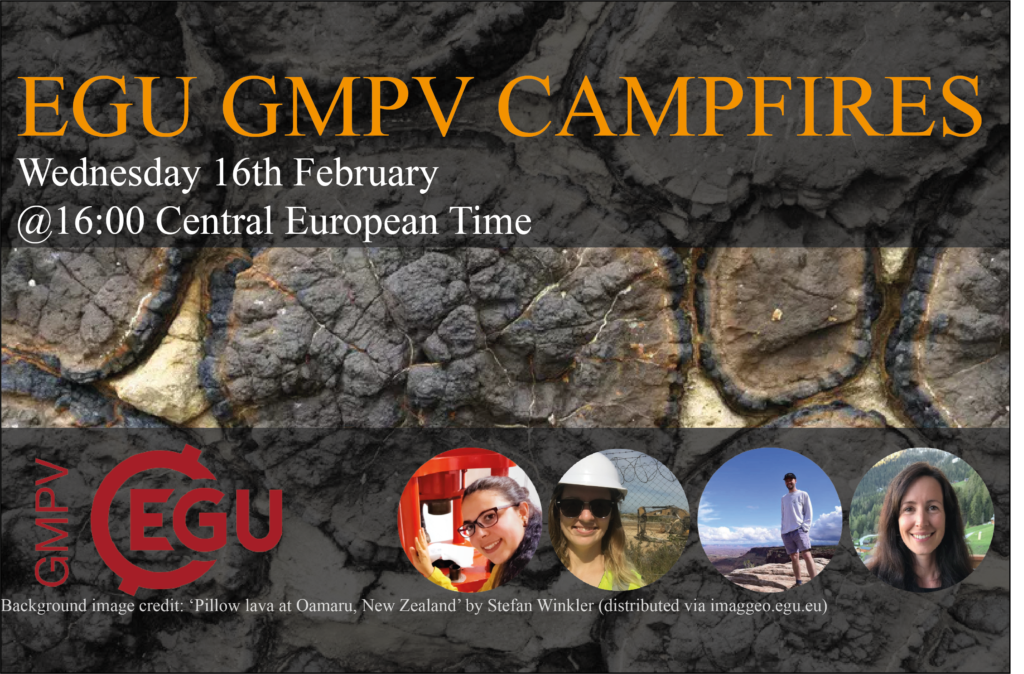
After a short winter break, the Geochemistry, Mineralogy, Petrology and Volcanology division’s early career scientists talks (EGU campfires) are back! The first session in 2022 (and 16th overall) will be a general format event. The talks will be held on Wednesday 16th February at 4pm CET on Zoom. Our four speakers are: Barbara Bonechi (PostDoc @ Sapienza University of Rome, Italy) – High pre ...[Read More]