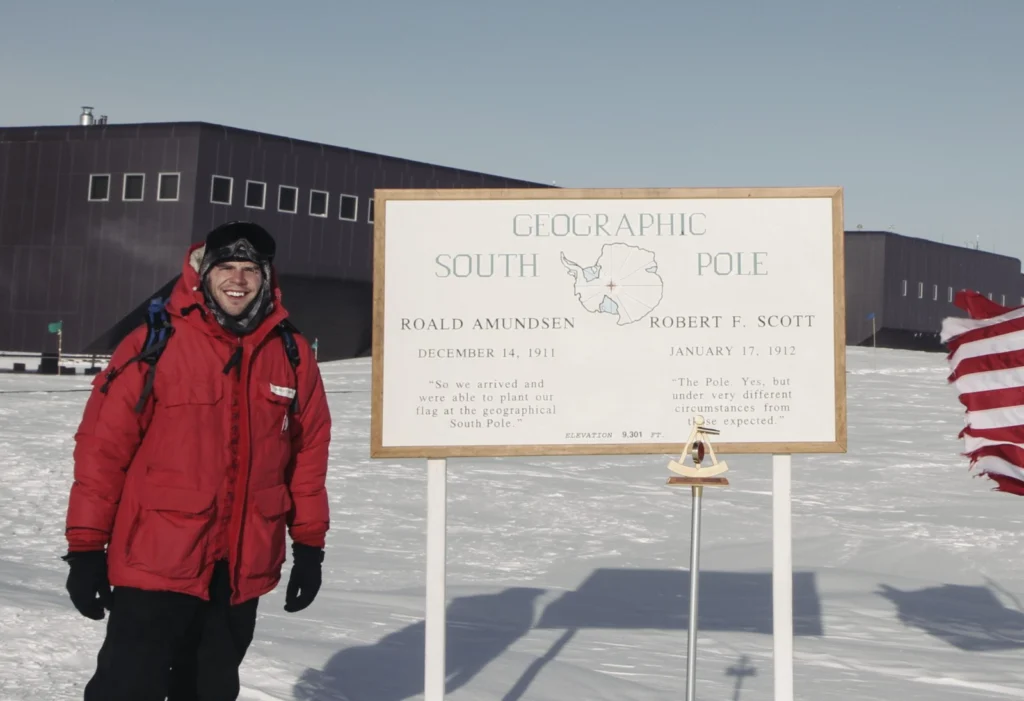
CR
Cryospheric Sciences

Early career

From Finland to Switzerland: A Campervan Journey for Snow Research
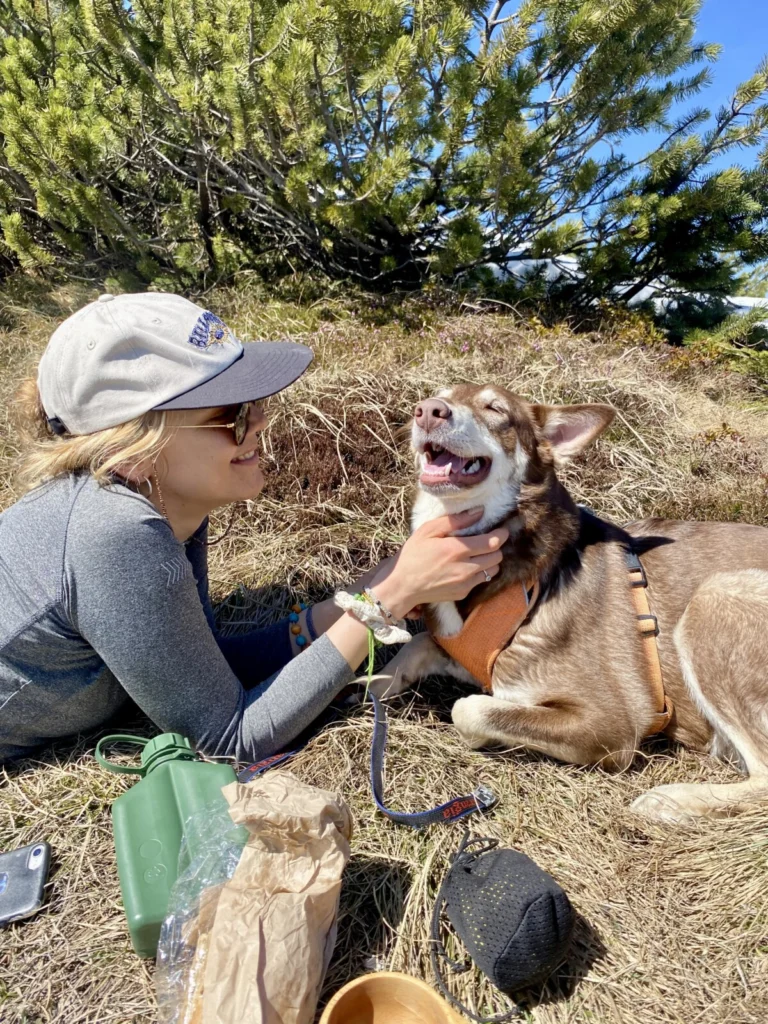
a scientist lays on the grass with a dog in the sun. Its a casual setting with camping equipment scattered around them

Traveling by land within Europe is relatively easy, and for me it’s also a conscious choice to push back against the fast pace of modern travel and the normalization of flying. I chose to drive a van instead of taking the train mainly because of my dog, and because finding pet-friendly accommodation during the high season was challenging. I’m visiting the Snow Hydrology research group in WSL Insti ...[Read More]

3 Reasons to engage in early career networks

3 Reasons to engage in early career networks

There are several early career groups, which are affiliated with cryosphere-based research in one way or another. APECS (Association of Polar Early Career Scientists) is an international network that is present during many occasions and events in the world of polar research. Have you ever wondered why busy early career researchers (ECRs) use their time also for volunteering in such groups? Today, ...[Read More]

The Cryosphere meets the Twittersphere

The Cryosphere meets the Twittersphere

Twitter is a place that can be full of an overwhelming amount of information, and often it becomes difficult to hear about new information amongst the noise of all the tweeting. To help our fellow cryo-enthusiasts learn more about equality, diversity and accessibility within the cryosphere, we’re highlighting a few twitter accounts that we think everyone should follow! Gender equality: @womeninPol ...[Read More]

Parenting in Academia: Challenges and Perspectives

White print on pavement with parent holding kid by the hand

Trying to juggle teaching, advising, publishing, finding a new (or permanent) job, relocating, attending conferences, and actually doing research sometimes requires more hours in the day than exist (oh and that global pandemic situation is sticking around). Additionally, many scientists have children or are starting a family at the same time as maintaining and building a career. In this week’s blo ...[Read More]

An interview with Jenny Turton, early-career representative for the cryo-division of the EGU

The European Geophysical Union (EGU) has a number of scientific divisions or themes, such as cryosphere, atmospheric sciences and geodesy. Each division has a representative for early career scientists, and often a team of scientists who write and edit blogs and organise events. Today,  Jenny Turton, the new representative for the cryo-division, explains a bit more about the role and what she hope ...[Read More]

A brief guide to Navigating EGU 2019!

A brief guide to Navigating EGU 2019!

Are you going to the EGU General Assembly in Vienna next week? If so, read on for a quick guide to navigating the week: Where to start, what to see and how to meet people and enjoy yourself! After all, the meeting is as much about the opportunities to meet scientists from all over the world as it is about the science itself. How on Earth do I know what is going on?! The EGU General Assembly (GA) i ...[Read More]

Image of the Week – Seven weeks in Antarctica [and how to study its surface mass balance]

After only two months of PhD at the Laboratoire de Glaciologie of the Université libre de Bruxelles (ULB, Belgium), I had the chance to participate in an ice core drilling campaign in the Princess Ragnhild coastal region, East Antarctica, during seven weeks in December 2018 – January 2019 for the Mass2Ant project. Our goal was to collect ice cores to better evaluate the evolution of the surf ...[Read More]

Image of the Week – Promoting interdisciplinary science in the Arctic: what is IASC?

Image of the Week –  Promoting interdisciplinary science in the Arctic: what is IASC?

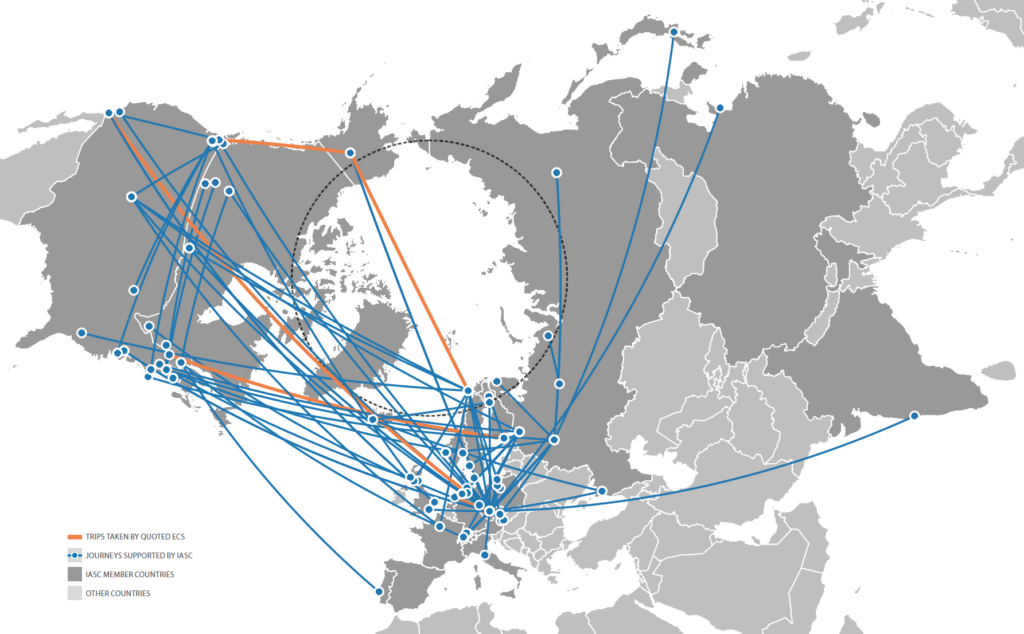
The Arctic is one of the fastest changing regions on the Earth, where climate change impacts are felt both earlier and more strongly than elsewhere in the world. As an integral part of the Earth system, the Arctic is shaped by global processes, and in turn, Arctic processes influence the living conditions of hundreds of millions of people at lower latitudes. No one country or community can underst ...[Read More]

A brief guide to Navigating EGU 2018!

A brief guide to Navigating EGU 2018!

Are you going to the EGU General Assembly in Vienna in just over a week? If so, read on for a quick guide to navigating the week: Where to start, what to see and how to meet people and enjoy yourself! After all, the meeting is as much about the opportunities to meet scientists from all over the world as it is about the science itself. How on Earth do I know what is going on?! The EGU General Assem ...[Read More]

Mapping the bottom of the world — an Interview with Brad Herried, Antarctic Cartographer

Mapping the bottom of the world — an Interview with Brad Herried, Antarctic Cartographer

Mapping Earth’s most remote continent presents a number of unique challenges. Antarctic cartographers and scientists are using some of the most advanced mapping technologies available to get a clearer picture of the continent. We asked Brad Herried, a Cartographer and Web Developer at the Polar Geospatial Center at the University of Minnesota, a few questions about what it’s like to do this unique ...[Read More]