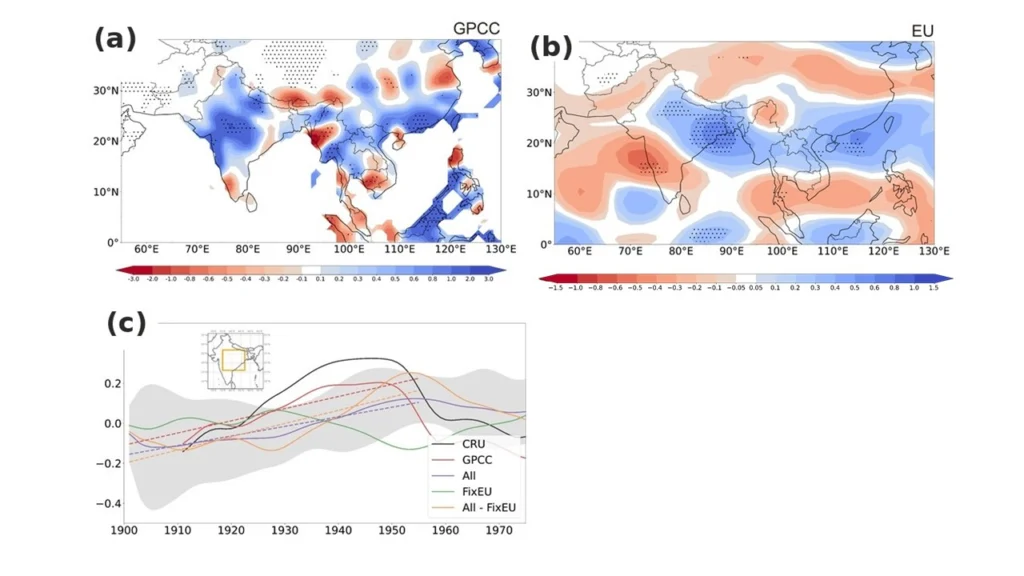
The Asian summer monsoon is one of the most powerful climate phenomena on Earth. Each year, it brings life-giving rainfall to billions of people across South and East Asia. Its arrival determines harvests, water supply, food security, and economic stability. We often think of the monsoon as something driven locally: by the heating of the Indian subcontinent, by ocean temperatures, or by reg ...[Read More]
Inside the Baltic Sea N2O Hunt: Tracing Sources using Isotopic tools
Nitrous oxide (N2O), commonly known as laughing gas, is one of the most important greenhouse gases, and its rise in the Anthropocene significantly contributes to global warming and depletion of stratospheric ozone. The marine environment, especially coastal and marginal seas, is an important (about 25%) contributor to the global atmospheric source of N2O. Nitrous oxide is primarily produced in mar ...[Read More]
Studying societal climate impacts: why is it hard and what can we do about it
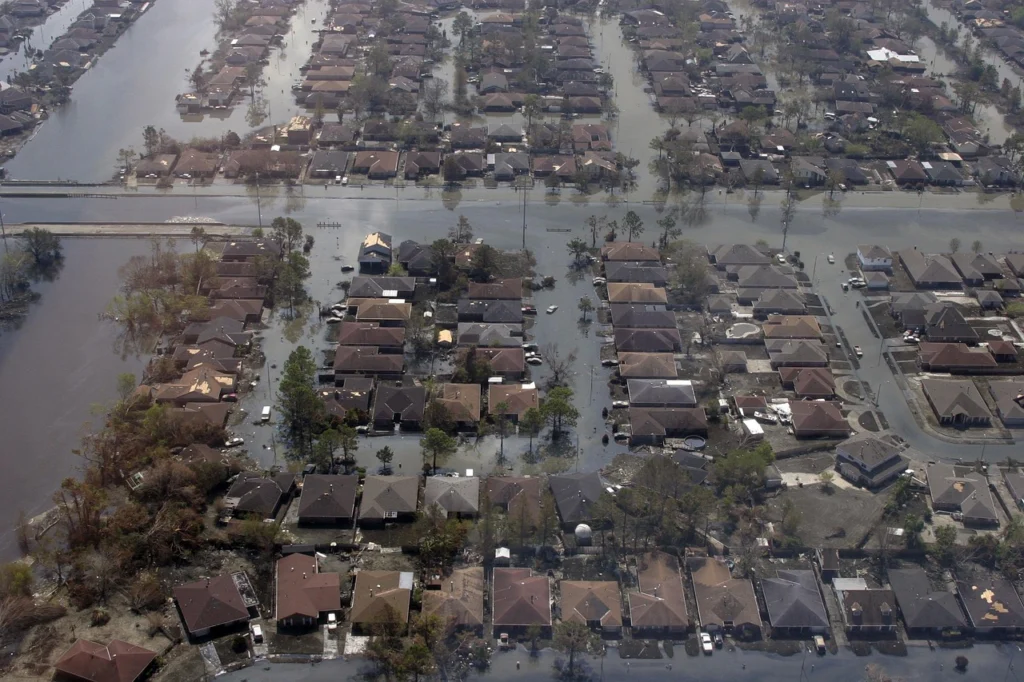
Due to the rapid rise in temperatures, it started raining on the snow and ice-covered roads, prompting the regional public transport operator to suspend all bus services. The rain also resulted in icing on the overhead lines of the main railway line coming into town. Rail traffic was also temporarily suspended. Before the adjacent highway could be salted, several tens of cars were involved in a ch ...[Read More]
CYCLIM: cycle counting a faster way
As we try to predict what will happen under increasing anthropogenic climate change, climate models can only get us so far. Another key is understanding past changes in the Earth’s climate. To do this, palaeoclimatologists turn to natural archives (e.g., sediment cores and speleothems) and extract records of past variability using their properties, such as chemical or physical composition. H ...[Read More]