
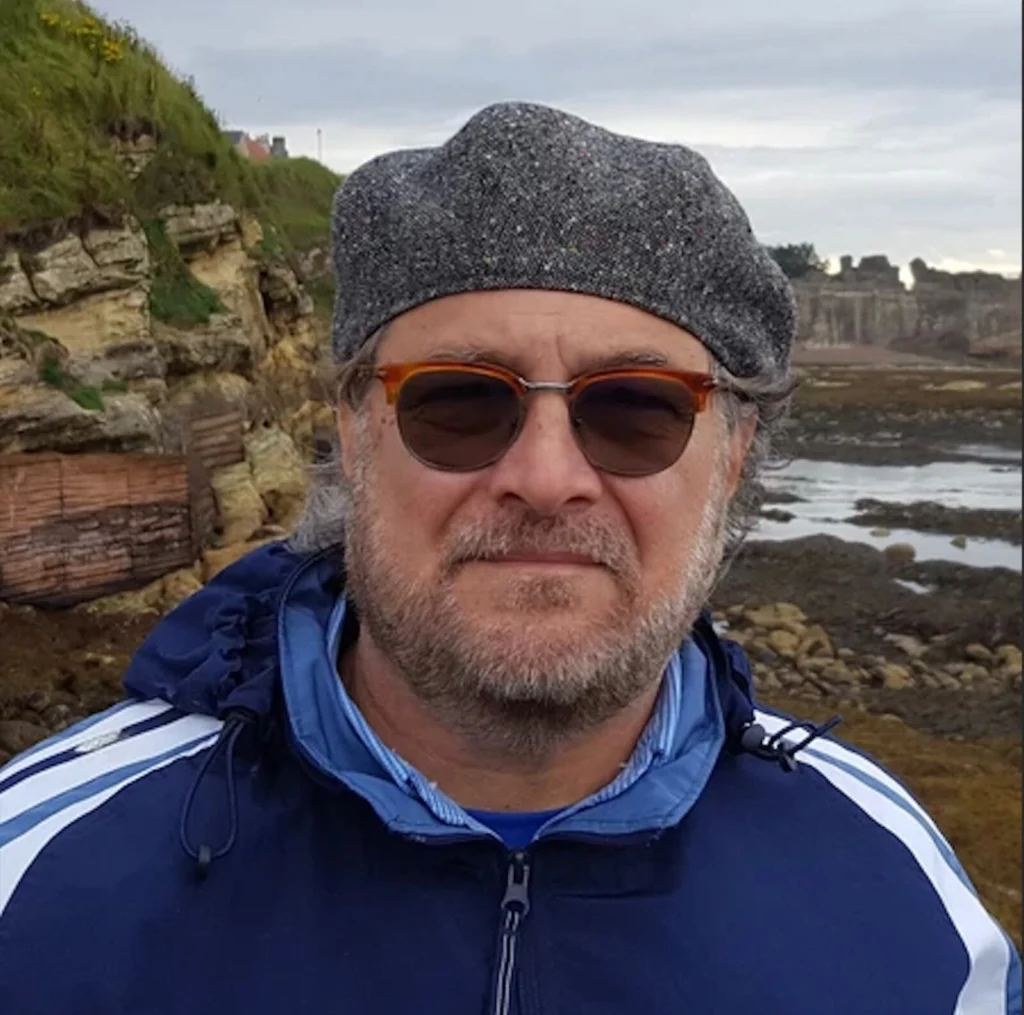
Thomas S. Bianchi is the 2026 Vladimir Ivanovich Vernadsky medallist of the Biogeosciences Division. The BG team congratulates Thomas and celebrates this well deserved recognition! We talked with Thomas to learn more about his career, research interests and advice for early career scientists
Could you tell us a bit about yourself and what inspired you to pursue a career in biogeosciences?
I grew up in a blue-collar family in Holbrook, NY—then a one–traffic-light town on eastern Long Island surrounded by woodlands. I spent my time playing basketball, diving, drumming, and exploring the coast. Long Island offered a remarkable range of shorelines, the Long Island Sound estuary, Peconic Bay, the Great South Bay barrier-island lagoon, the Atlantic Ocean, and extensive marshes, which fueled my fascination with coastal environments. From an early age I collected shoreline organisms, watched Cousteau specials, and read science books. I became captivated by marshes and invertebrates after spending countless hours diving and exploring diverse coastal habitats.
I actually came into biogeochemistry through oceanography. Back then, biogeochemistry wasn’t a recognized field, at least not in the U.S. While Vernadsky understood the concept, it wasn’t on our radar yet, and I was too junior to even use the terminology. As a high school senior, a friend and I even built a small artificial reef in about 15 m of water in Long Island Sound and documented its colonization; we briefly tried (unsuccessfully) to publish the results. An inspiring oceanography teacher, Dennis Hirsch, further encouraged my interests. As an undergraduate, I joined several local research projects with faculty and was selected for a 10-day natural history field trip to Gran Canaria in the Canary Islands. This was my first trip abroad, and it had a huge impact on me.
Another big influence for me as a potential scientist was the fact that I lived close to many research institutes that held open science events. I had the opportunity to attend seminars and tours at Brookhaven National Laboratory, Cold Spring Harbor Laboratory, the American Museum of Natural History, and Columbia University’s Lamont-Doherty Core Repository. All these experiences broadened my interests beyond oceanography into chemistry and genetics, and further confirmed my desire to become a scientist.
Could you briefly describe your research area and your specific contributions to the field?
My research career began, and largely continues, in muddy environments. Aside from a brief period studying sand flats in Delaware Bay during my Ph.D., my work started with mud in my M.S. research and has stayed there ever since. It is perhaps no surprise, then, that I am now writing a book about Earth’s mud. A reason for my interest in muddy environments is that over 90% of all the organic carbon in the ocean gets buried in the coastal margins. So, these small fringes have a huge importance in the ocean carbon cycling.
Like many academics, my work has evolved in stages. In graduate school at Stony Brook University with Jeff Levinton, and later at the University of Maryland with Don Rice, I focused on animal–sediment interactions—specifically the nutritional ecology of mud-dwelling macroinvertebrates and their influence on sediment geochemistry. These processes are important to both paleontologists and marine ecologists. A postdoc fellowship at the Cary Institute of Ecosystem Studies allowed me to extend this work in mud habitats at the Hudson River estuarine boundary.
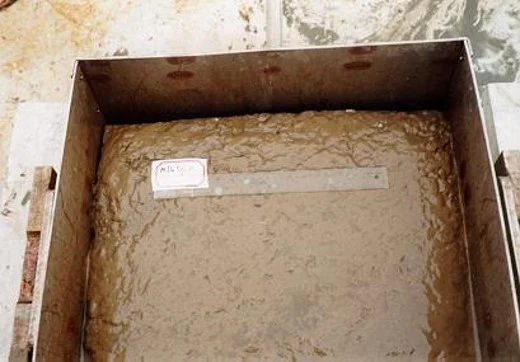
Box core of mud off the Mississippi river delta in the Gulf of Mexico (2002).
To better understand which types of organic matter are processed in mud, I needed tools to trace the many organic sources in coastal sediments to the organisms that use them. This is where Rodger Dawson, a member of my Ph.D. committee and fellow band member, influenced my work through his expertise in chemical biomarkers. That collaboration led me to plant pigments and other molecular tracers, which I have used throughout my career to distinguish algae, terrestrial plants, and soil-derived organic matter in sediments.
With these tools, I expanded my research to broader questions about how terrestrial organic matter connects with the coastal ocean, eventually focusing on the biogeochemical dynamics of mud in coastal marshes and estuaries. In terms of contributions, some of our key findings have helped clarify how organic carbon is processed and transported along the land–ocean continuum. I say “our” deliberately, in gratitude to the graduate students, postdocs, and visiting scholars who conducted much of the field and laboratory work; without them, there would be little for me to discuss.
Here are a few examples:
When we started analyzing river inputs in the Gulf of Mexico around 1997, we were surprised find less terrestrial organic matter from land plants than what was expected from known river inputs. It turns out that this comes back to suspensions of mud where river waters mix with Gulf waters. Mud is composed of very fine particles of silt and clay, which bind the terrestrial organic matter allowing it to stay resuspended for long periods which enhanced export to other regions. More specifically, using chemical biomarkers, we showed that some of the “missing” terrestrial organic carbon in shelf sediments was exported offshore as particulate organic carbon (POC) in the benthic boundary layer, or bottom waters. This further supported recent work, by Miguel Goni and Tim Eglinton, on the distribution of terrestrial organic matter in surface sediments of the Gulf. This work illustrated the importance in distinguishing marine vs. terrestrial buried carbon for understanding coastal carbon sequestration amid rising atmospheric CO₂ (364 ppm in 1997 to ca. 429 ppm in 2026).
Upon moving to Sweden on a Fulbright scholarship, I found the local community deeply concerned with the problematic cyanobacterial blooms in the Baltic Sea. Although research focused heavily on identifying the region’s main nutrient sources, it was unclear whether such massive algal blooms existed before human-induced impacts. Diatoms were known to exhibit significant population shifts over thousands of years, which were well-documented through their preserved silica frustules, or exoskeletons. In contrast, cyanobacteria lack such structures, decompose rapidly, and leave no microfossil record. We demonstrated that cyanobacterial blooms comparable to modern events occurred over 7,000 years ago in the Baltic Sea, driven by eustatic and isostatic changes, linking modern ecosystem dynamics with long-term environmental history. While this does not rule out the role of recent anthropogenic nutrient inputs in driving blooms, it indicated that such blooms had occurred much earlier, driven by large nutrient pulses from the ocean during distinct geological phases of the Baltic’s formation.
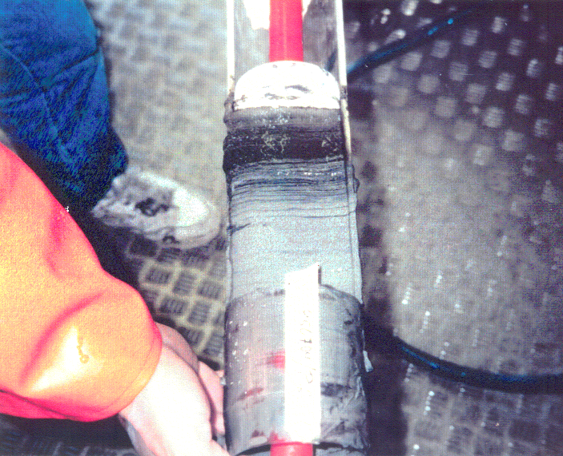
Thomas holding a sediment core with beautiful layers from their bloom work in the Baltic Sea (2000).
Another important contribution was to extend the concept of the microbial “priming effect,” previously known from soils to aquatic environments, as previously noted by Bertrand Guenet and others, showing how labile carbon inputs can stimulate degradation of refractory carbon across diverse ecosystem gradients. Given my past experience working on coastal river deltas and estuaries, it was a logical path to explore priming across the land-ocean margin. For example, we analyzed river confluences in tributaries of the Amazon, where the green and brown waters, comprised of phytoplankton and mud, mix. Together with Nick Ward, a postdoc in my group, and Jeff Richey, we used labeled isotopes to detect the priming effect at these interfaces.
There are many fascinating topics in this domain and I have dedicated significant effort to synthesizing research in this field in 10 books I authored or co-authored, most notably through Biogeochemistry of Estuaries (2007) and Chemical Biomarkers in Aquatic Ecosystems (2011).”
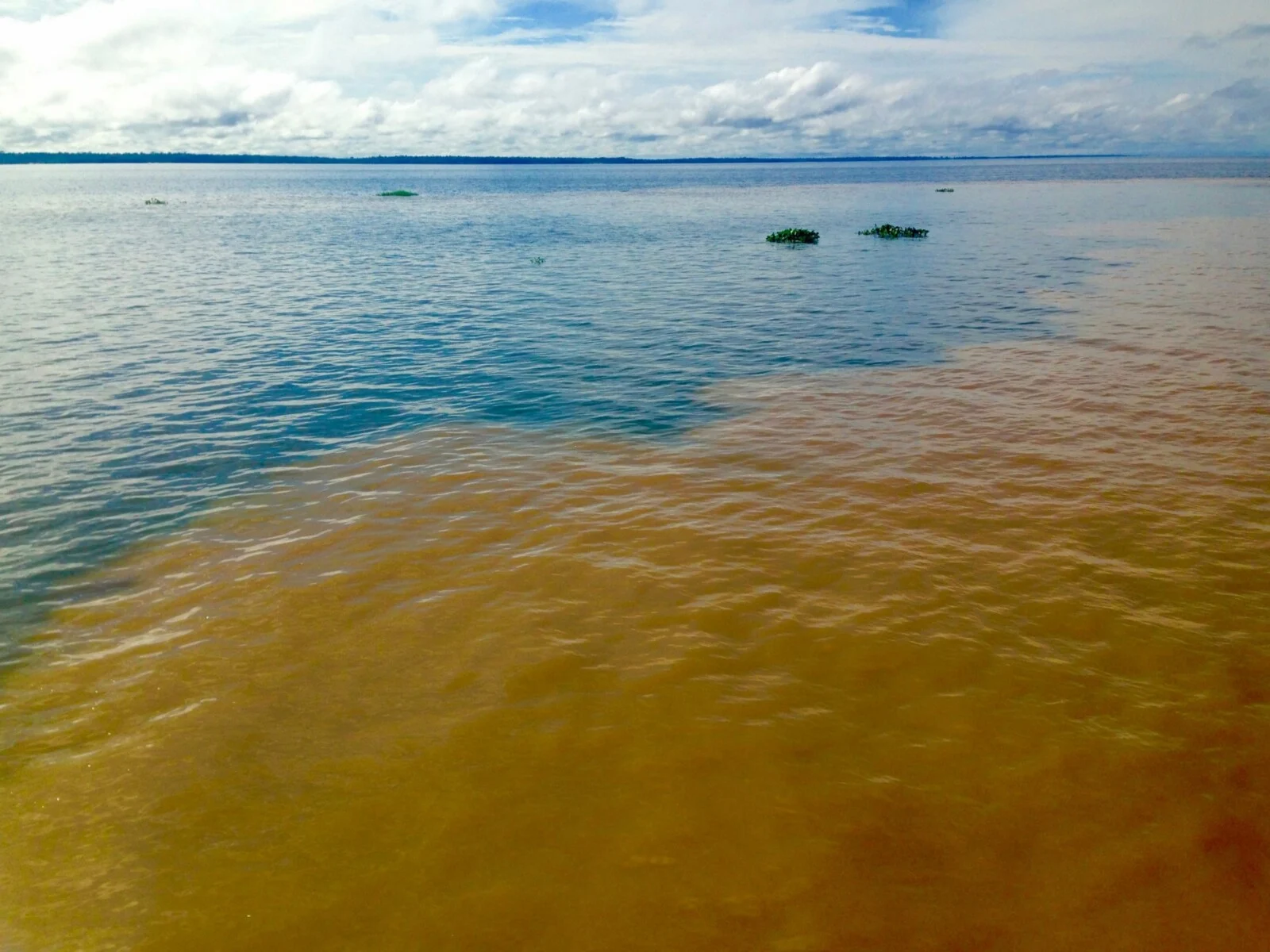
Confluence of green tributary water with brown mainstream amazon water. Photo by Nick Ward.
What key knowledge gaps still need to be addressed in this area?
As we continue to explore how carbon is sequestered on the planet, we need to return to two topics that had received considerable 30 to 50 years ago, the role of sulfur cycling and the importance of petrogenic organic carbon burial. While there have been some new and exciting studies on these topics over the past decade or so, there remain significant gaps in their roles in organic carbon burial. A better understanding of these pathway will continue to prove useful in exploring the mechanisms of the short and long-term carbon cycle.
There also remain many gaps in our understanding of priming, particularly in aquatic systems. New isotopic probing and omics techniques continue to provide innovative ways to trace the mechanisms involved priming, particularly as new aquatic critical zones are created from global change.
What have been the biggest challenges and the greatest opportunities in your career?
Early on, my biggest challenge was simply paying for college. My family could offer little financial support, so I worked about 40 hours a week unloading trucks while completing my undergraduate degree. Balancing work with coursework, like tending Drosophila crosses in genetics lab at odd hours in the evening, was demanding. I had to get special keys to go in the middle of the night and do these things. My books were thrown in the back seat, and I largely worked independently. So I never really experienced the idea of a “study group.” I never knew what a study group was. I have no idea how I did it, but I managed to get through it.
Later, like many early-career academics, I faced the usual challenges of balancing teaching and research while building a lab with limited funding and no technician. Then an extraordinary challenge arose: Hurricane Katrina. At the time I was a professor at Tulane University in New Orleans. I had been working on the Mississippi River and the Gulf of Mexico, and had so many ideas for future research. Everything just vanished. My family—my wife Jo Ann and son Christopher—and I lost our home and everything in it. Professionally, the colleagues I was collaborating with dispersed across the country with no certainty of returning. Ultimately, we did not go back, and I moved to Texas A&M University. Losing years of research at Tulane was devastating, but my family’s safety and support gave me the strength to rebuild.
Some of my most rewarding opportunities came through two Fulbright Program scholarships, the first in Sweden and later in Cyprus. These experiences opened doors to collaborations with regional research groups, leading to long-term partnerships and rich cultural exchanges. Later in my career, visiting research appointments during sabbaticals also proved highly productive.
How do you think the scientific field has changed since you started your career?
Universities have embraced a business model far more aggressively than in the past, placing intense pressure on young faculty to secure funding and publish more papers. University rankings now play a central role, further shifting the burden onto faculty. At the same time, classrooms have increasingly become “safe spaces”. A lot of the bullies are gone and that’s great, but students are often less challenged, something that, in my view, has also weakened academia.
Meanwhile, the number of journals has grown at an astonishing rate, making it easier to place publications, while publishing costs have soared with little solution in sight. Yet the real elephant in the room is AI. Yuval Noah Harari has written eloquently, and pessimistically, about its trajectory. AI has already proven to be a remarkable tool for scientists, helping recent Nobel laureates make major advances. But like any powerful invention, it brings risks and complex implications that we still need to confront.
What general advice would you give to early-career scientists?
These are challenging times, particularly in the United States. Attacks on academia have led to severe funding cuts, denial of climate change, threats to scholars’ privacy, and restrictions on international collaboration. Our government’s irresponsibility has also contributed to global instability. My advice is to stay focused on your work, this period will pass, perhaps sooner than expected.
Reflecting back on Vladimir Vernadsky, it is well-known that he worked under intense political pressure during the Russian Revolution and the Stalinist era. Rather than disengaging, he navigated these constraints by focusing deeply on his science.
For young scientists, it’s important to contribute to large interdisciplinary projects while still seeking opportunities to publish first-authored papers, even when projects are led by graduate students, postdocs, or collaborators. This helps maintain your original passion and creativity. Finally, stay open to shifting research directions as funding or new opportunities arise, inside and outside of academia, and surround yourself with good people.
