I thought a lot about how to write this piece because it is not easy to think of myself as an ally to my queer friends. This is only because it is, to me, completely unfathomable that we, in this century, in 2026, still need to be allies. Honestly, there is convenience in moving on …[Read More]
Latest posts
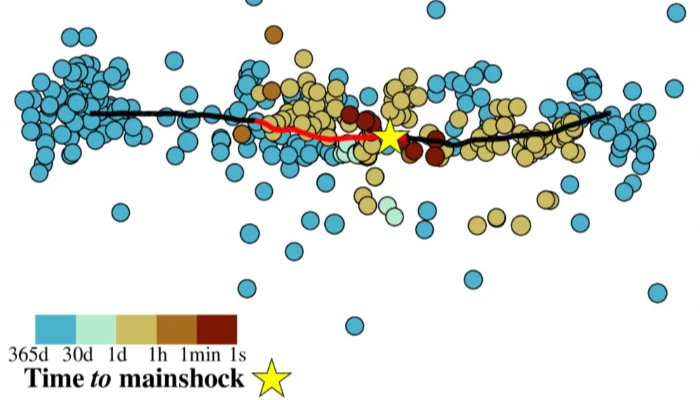
Modeling the full spectrum of observed seismicity: Insights from friction laws, fault instability, and fault-zone mechanics
Introduction Despite advances in our understanding of rock mechanics, the frictional behavior of rocks, and the physics of instability in geological materials, the coexistence of slow and fast earthquakes, as well as various types of fault-zone seismic radiation such as tremor, remains enigmatic. Can fault mechanics and friction laws reproduce the full spectrum of observed …[Read More]
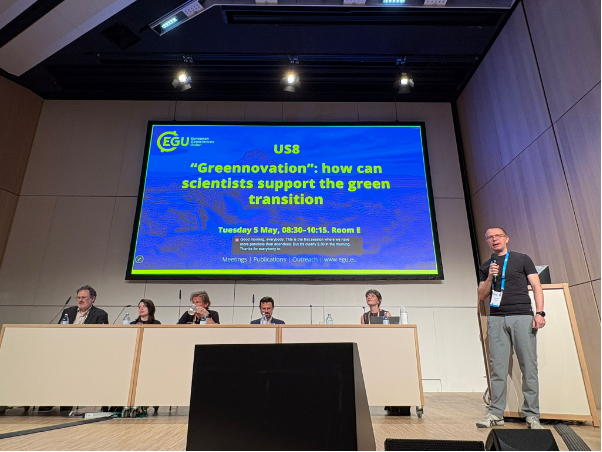
Revisiting the key Science for Policy conversations at EGU26
As we left EGU26 behind with record participation, it was amazing to see increased interest in science-policy sessions from the scientific community. Thanks to all panellists who contributed to the stimulating discussions, and to all participants for igniting them! Below is a look into some of the key themes emerged from the #science4policy sessions at EGU26. Innovation and emerging …[Read More]
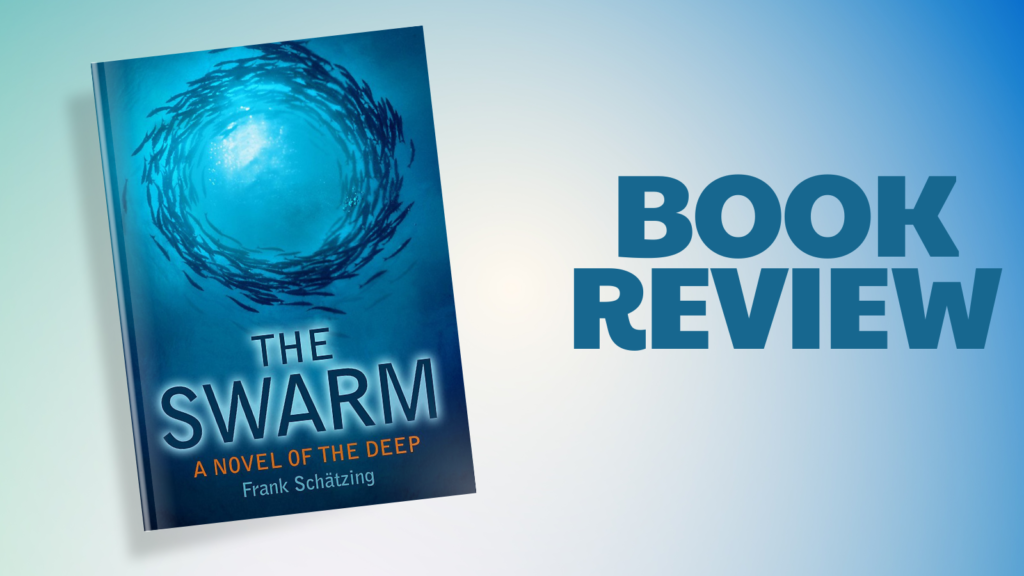
Book Review: The Swarm by Frank Schätzing
So far, our reading adventures have kept us close to reality with Blue Machine by Helen Czerski and Below the Edge of Darkness by Edith Widder. Now, we are turning to a work of fiction. The author did plenty of research and spoke with scientists, who even appear as characters in the book, resulting in the science-fiction eco-thriller The …[Read More]
Interdisciplinary futures in geoscience: Cross-divisional insights from the Division Presidents – Atmospheric Sciences (AS)
This interview is part of an ongoing series exploring the evolving role of interdisciplinarity across the geosciences. As environmental challenges grow more complex, addressing them requires not only disciplinary expertise but also meaningful collaboration and innovation across fields, methodologies, and communities. In each conversation, I ask Division Presidents to reflect on how cross-divisional work is …[Read More]
When multiple hazards interact and the data doesn’t: The multi-hazard modelling problem nobody wants to talk about
There is a quiet contradiction at the heart of natural hazard science. The regions most exposed to multi-hazard events are precisely the regions where we know the least. The Global South (comprising lower- and middle-income countries in Africa, Asia, Latin America and the Caribbean) is disproportionately affected by climate-related natural hazards, yet it is largely …[Read More]
Pride month in the era of DEI rollbacks: Reflections on resilience, and why pride was a riot after all
Pride month arrives this year against a backdrop of institutional irony. In the United States, federal research funding has been thoroughly weaponised and forced a massive scientific brain drain across the Atlantic. In Europe, a multi-million-euro effort to capture that exiled talent is underway, even as Europe’s own domestic politics fracture along the exact same …[Read More]
The Arctic’s Blind Spot: Why Satellites Struggle Where Ice Meets the Coast
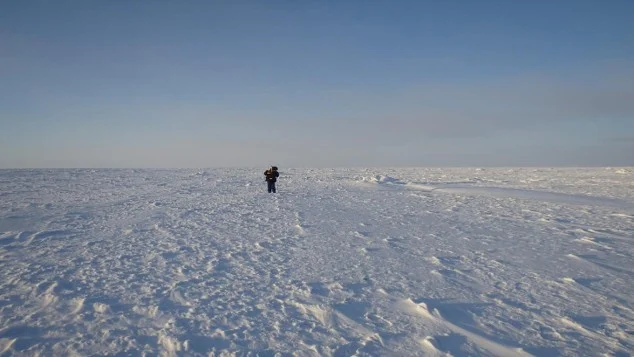
The first time I stood on sea ice, I could not tell which direction the coast was. A community member named Bryan could. That gap in situational awareness, between what a trained remote sensing scientist could read from the landscape and what a local hunter understood instinctively, turned out to mirror almost exactly the gap …[Read More]
Geodesy Cartoons – A Creative Tool for Outreach and Education
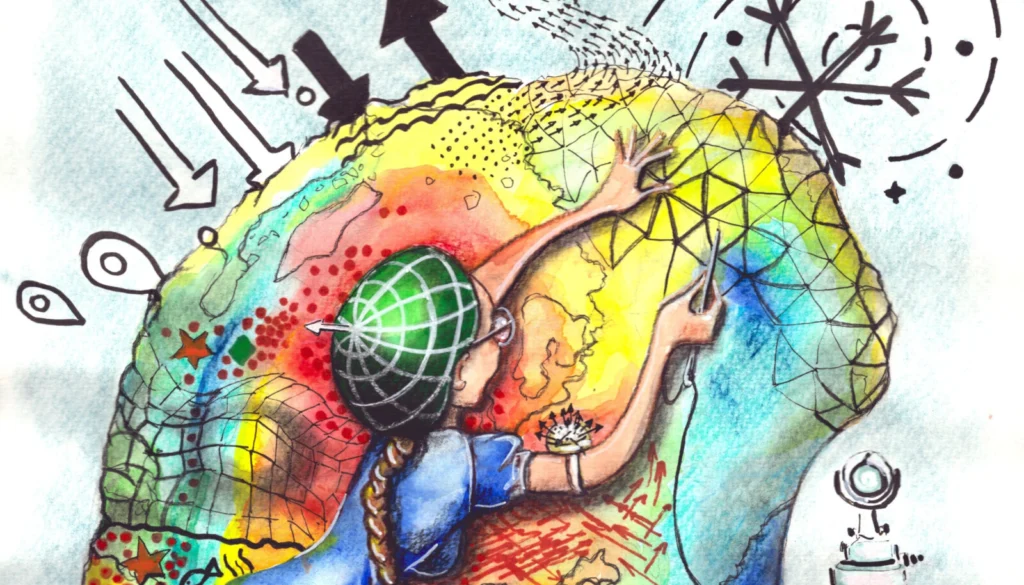
Geodesy is fundamental to understanding our dynamic planet. From monitoring sea-level rise and glacier melt to maintaining precise terrestrial reference frames for GNSS and Earth observation, geodesy provides the scientific backbone for many disciplines represented within the EGU and beyond. Despite its importance, geodesy often remains invisible outside the scientific community. Even within geosciences, many people …[Read More]
HydroTalks podcast: Introducing Ilias Pechlivanidis, the HS Division President-elect
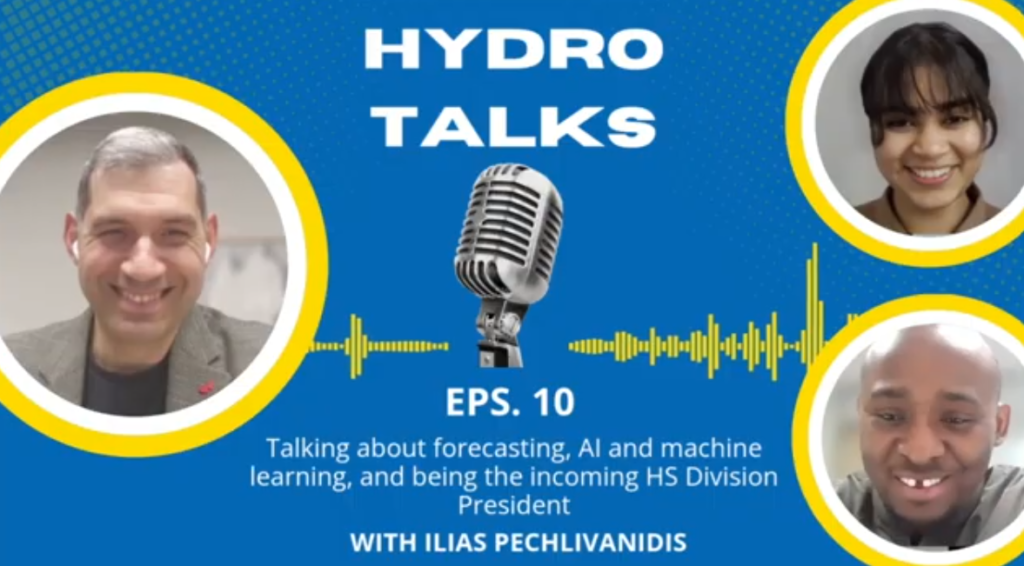
For this episode of HydroTalks, we’re thrilled to welcome Dr. Ilias Pechlivanidis, Senior Researcher and Associate Professor (Docent) in hydrology and water resources at the Swedish Meteorological and Hydrological Institute (SMHI), and Visiting Researcher at Uppsala University. He is currently the Vice President of the EGU Hydrological Sciences Division and will serve as Division President …[Read More]