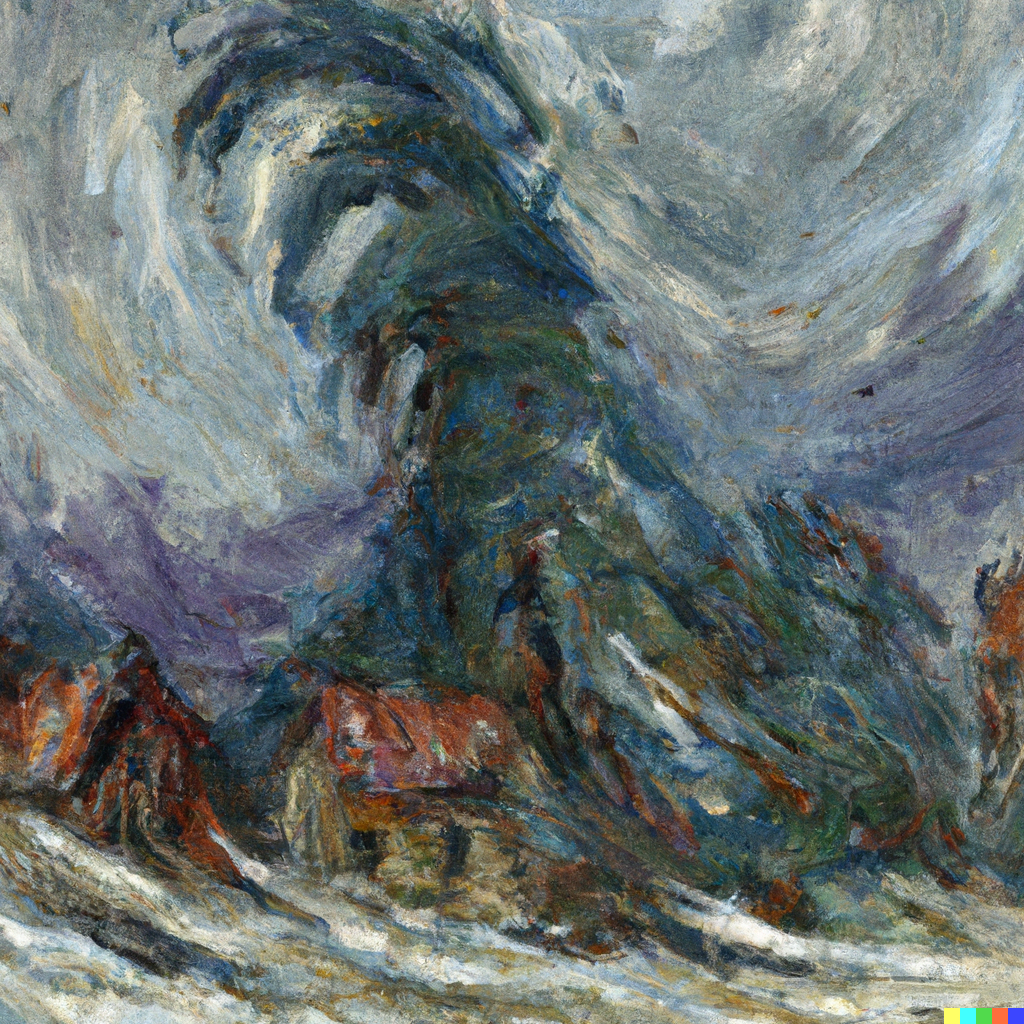
Most people would not relate Central Europe to a tropical environment today. During the Middle Jurassic (174-163 Ma ago), however, such conditions prevailed in most parts of the nowadays landmass that was almost completely covered by a shallow epicontinental sea (estimated 0-100 m water depth) except for several emerged areas and islands. During this time, …[Read More]
Latest posts
GeoLog
How to EGU23: using your personal programme to schedule the week
Now that you have had a quick look at our programme for EGU23, maybe found your abstract or session, you probably have a few questions! This year’s scientific programme of the General Assemby includes Union-wide Sessions, such as the medal lectures, great debates, short courses, education and outreach sessions, as well as townhall and splinter meetings, just to name a …[Read More]
GeoLog
GeoRoundup: the highlights of EGU Journals published during March!
Each month we feature specific Divisions of EGU and during the monthly GeoRoundup we put the journals that publish science from those Divisions at the top of the Highlights roundup. For March as we approach the General Assembly we are not highlighting any specific Division, so this month our GeoRoundup Journals will be alphabetical! …[Read More]
Cryospheric Sciences
Highlighted Paper – The ice factories of the Arctic Ocean
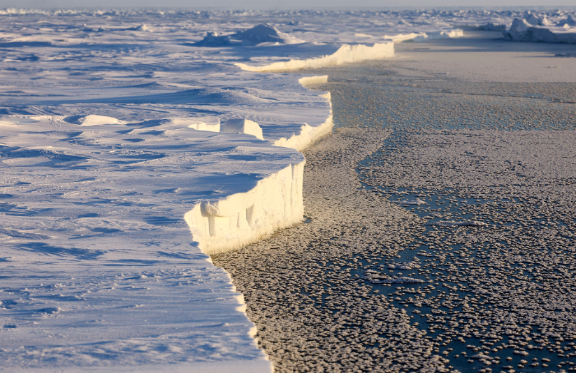
Each year, the Arctic sea ice goes through a cycle of melting and freezing. From March to September, sea ice gradually melts and becomes thinner, and from October to March, the water freezes again. In our warming climate, we see that more and more ice melts each year. One would expect that the ice would …[Read More]
GeoLog
How to run your own event with our pop-up networking scheduler at EGU23
Attendees at the EGU23 General Assembly can organise their own events using the the Pop-up Networking Scheduler! Registered participants can use the online tool to organise networking events both inside, outside, and beyond the conference centre – including virtually. All events organised using the Pop-up Networking Scheduler will appear on the conference programme. The scheduler …[Read More]
Geodynamics
How does slab tearing evolve?
Slab tearing refers to the gradual propagation of the break-off of a subducting plate. As observed in numerous modern and ancient convergent tectonic settings, the growth of the tear “window” in the downgoing plate has strongly influenced various geologic and geodynamic processes, such as depocenter migration of foreland basins, uplift rates in mountain ranges, earthquakes, …[Read More]
Hydrological Sciences
New spheres of scientific publishing
Many of you have noticed that EGUsphere went online, the new preprint repository hosted by EGU, as a service for the entire geosciences community. This repository can be used by any geoscientist to deposit their preprint even those that are not submitted to Copernicus journals. If you submit a preprint, your manuscript will receive a …[Read More]
Biogeosciences
Guest post: Pal(a)eoPERCS
June 2020, amidst a global COVID-19 pandemic where social distancing and isolation brought the world to a standstill, a grassroots seminar series (Pal(a)eoPERCS) was started with the aim to bolster scholarly engagement and create a convivial space through weekly virtual seminars for Early Career Researchers and Professionals (ECRs). Three years later, with June 2023 quickly …[Read More]
GeoLog
GeoTalk: meet General Assembly decision makers, Maria-Helena Ramos and Athanasios Nenes
Hello! Thank you for joining this special edition of GeoTalk. Before we dig deeper, could you both introduce yourselves? Hello! I am Helena, a research scientist in hydrology at INRAE, a national research institute in France. I have been involved with EGU for several years now, first as presenter (my first participation to an EGU …[Read More]
GeoLog
Imaggeo On Monday: the EGU Photo Competition – ONE WEEK LEFT!
In 2010 EGU held our first annual Photo Competition at the General Assembly in Vienna. Since then hundreds of photos have been shared on imaggeo by geoscientists and researchers just like you, with a lucky few being selected each year to be highlighted during the meeting and voted on by our members. These images …[Read More]