With 2021 coming to an end, we wanted to wrap up the year with a blog post summarizing all the things that happened within the Geodesy division. And, although we are still in the middle of a pandemic, there are a number of things to look forward to in 2022! Looking back on 2021 New …[Read More]
2110 search results for "researcher"
If you didn't find what you were looking for, try searching again.
NP Campfire: “Scaling and multifractals : from historical perspectives to recent developments”
Scaling law behaviours are ubiquitous in geosciences both from a theoretical and practical point of view. They are required to better understand, analyse and simulate the underlying processes, which yields the observed variability of geophysical fields over wide ranges of spatio-temporal scales. A group of scientists within the Nonlinear Processes in Geosciences (NP) Division of …[Read More]
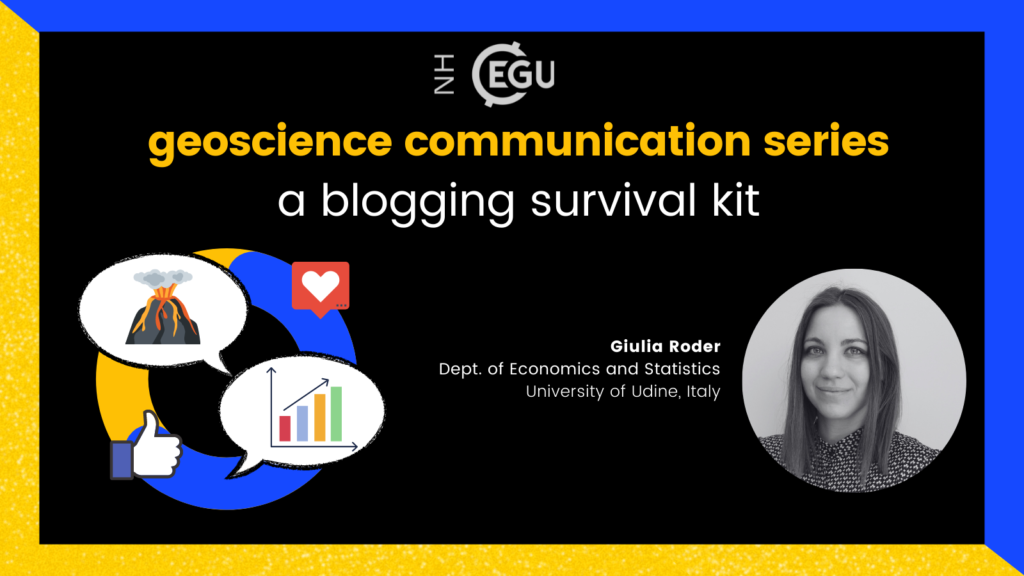
Geoscience communication series: a blogging survival kit
Science communication is the practice of informing and inspiring the public about scientific knowledge. It comes in different forms, from documentaries, books, academic publishing, mass media journalism, to public talks. These days, digital communication, including blogging, vlogging, podcasting, and social media, has become an increasingly popular form of science communication, reaching a wide audience. But …[Read More]
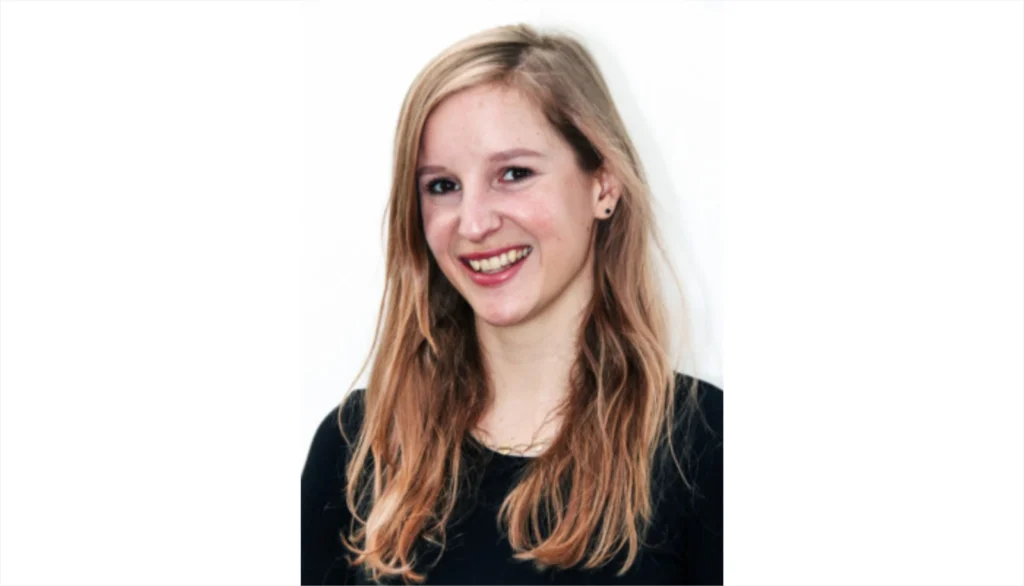
GeoTalk: Meet Larissa van der Laan, glaciologist and science-artist!
Hi Larissa, thankyou for spending time with us today! To break the ice, could you tell us a little about yourself and your research? Ha, I see what you did there. I’m Larissa, she/her, 29, and a PhD candidate at the Institute of Hydrology and Water Resources Management in Hannover, Germany. I’ve been fascinated by …[Read More]
Life of a Climate Scientists presents: Dr. Kaja Fenn
About the blog series: Life of a Climate scientist Life of a Climate Scientist is a new blog series started by the EGU Climate Division. The main focus of this series is to provide a platform for climate scientists to tell their stories of life in research. We will be covering a wide-range of subjects, …[Read More]
NPG Paper of the Month: “Comparing estimation techniques for temporal scaling in palaeoclimate time series”
The NPG paper of the month of July was awarded to Comparing estimation techniques for temporal scaling in palaeoclimate time series by Raphaël Hébert, Kira Rehfeld and Thomas Laepple (https://doi.org/10.5194/npg-28-311-2021). Raphaël Hébert is currently a post-doctoral researcher at the Alfred-Wegener-Institut in Potsdam (Germany) in the Earth System Diagnostics group of Thomas Laepple, where he also …[Read More]
The European Science-Media Hub: Bringing scientists, journalists and policymakers together
This month’s GeoPolicy blog post introduces the European Science-Media Hub (ESMH) along with its key initiatives. It also takes a deeper dive into the organisation through a Q&A that we were thrilled to have with the Head of the European Parliament’s Scientific Foresight Unit Theo Karapiperis and the coordinator of the ESMH Svetla Tanova-Encke. …[Read More]
CryoAdventures – Three months in Nuuk, the world’s northernmost capital!
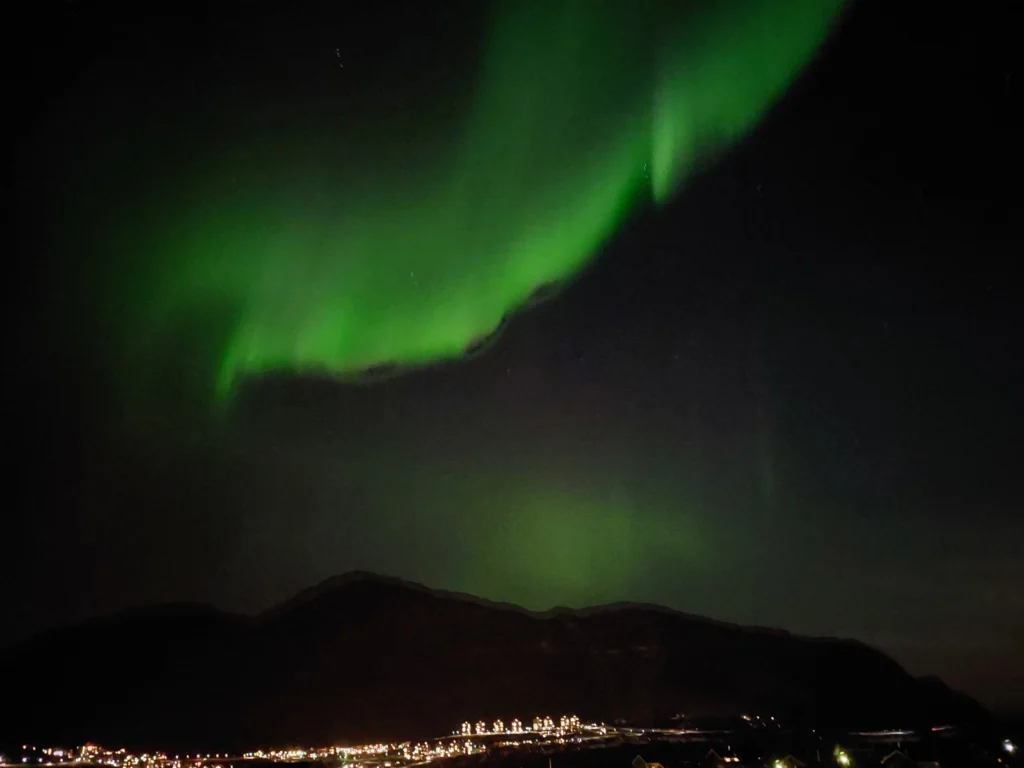
I have just returned from nearly three months in Nuuk, the capital of Greenland, where I was doing my PhD placement at Asiaq Greenland Survey. Read on to find out what science I got up to… everything from mapping mountain glacier snowline change to avalanches! How do you map glacier snowline evolution? During my PhD …[Read More]
Unearthing a new editorial team for Water Underground
Post by Tom Gleeson (University of Victoria) The Water Underground blog has existed for about 10 years, largely led by myself with many contributions from around the world (see About). I am excited to announce a new editorial team for the blog. They have emerged from the depths to bravely lead Water Underground into the …[Read More]
Using comics to talk about sexism in science: how ‘Did this really happen?!’ is trying to change the conversation
1953: Marie Tharp created a map that showed the seafloor was spreading via the Mid-Atlantic Ridge and therefore proved the theory of plate tectonics, only for it to be dismissed as “”girl talk” by her (male) supervisors. 1968: A few years after winning the Nobel Prize (without crediting her work), James Watson wrote about Rosalind …[Read More]