
Mountain hazard regimes are fundamentally shifting. There is consensus not just among concerned scientists, but practitioners of risk management, that mountain hazard regimes are affected by warmer temperatures and intensifying precipitation events. The effects of these changes are further amplified by increasing population density in known hazard zones; with more infrastructure and human settleme ...[Read More]
If you didn't find what you was looking for try searching again.
Hydrological Sciences
Drought in Europe
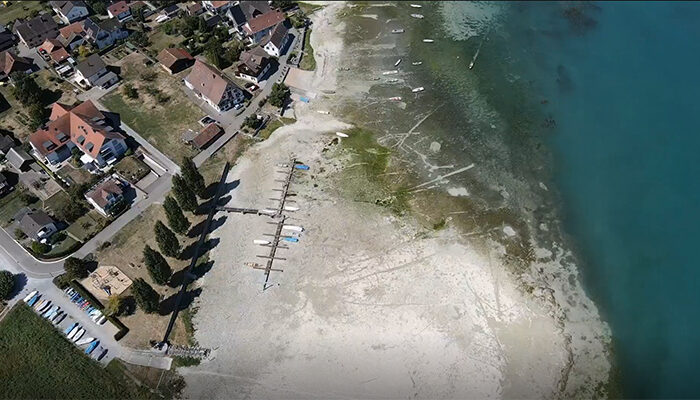
Many of us are experiencing it right now: Europe is suffering from a long lasting large scale drought (Fig. 1), with record heat and low-flow levels that probably nobody of us has seen before; and current forecasts do not announce any relieve for the coming weeks. The pictures of record low levels in the river Rhine are scaring – knowing how strongly Europe depends on this fluvial transport ...[Read More]
Geomorphology
In the News: A Geomorphologists’ perspective on the Strait of Hormuz
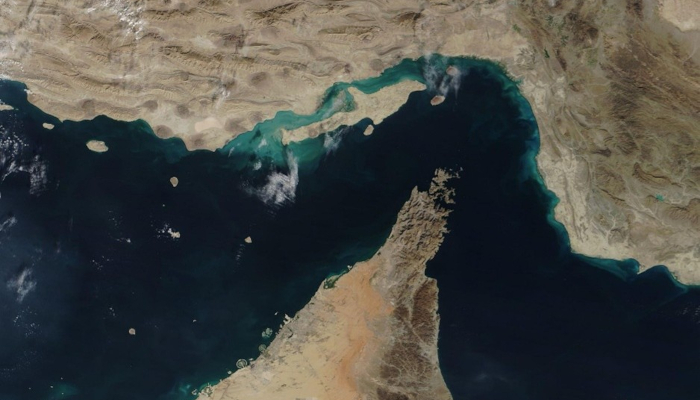
Welcome to In the News: A Geomorphologist’s Perspective! The intent of this series is to explore the geology and geomorphology of places that are currently in the news. For this first installment, we’ll do a quick tour of how geological processes have laid the groundwork for current fighting over control of the Strait of Hormuz. The Iran war, and the Strait of Hurmuz, have dominated the news ...[Read More]
GeoLog
Under the Mediterranean sun: The thousand year tale of changing skies
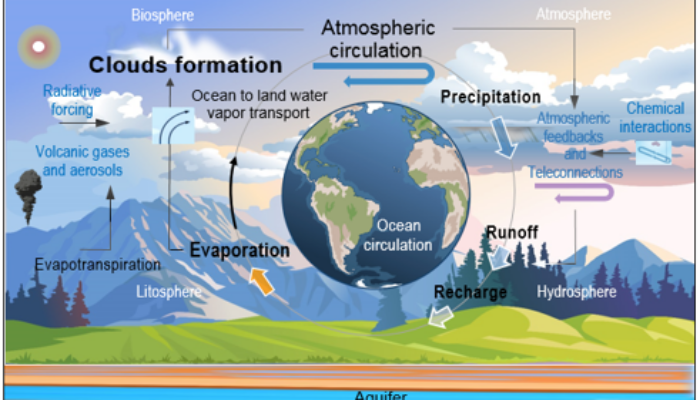
When you picture the western Mediterranean, you likely imagine sun-drenched beaches, terracotta roofs, and bright blue skies. But has it always been this sunny? A groundbreaking study published in the journal Research provides a definitive answer: it has not. By pulling back the curtain – or rather, the cloud cover – on a thousand years of climate history, scientists have developed the ...[Read More]
Hydrological Sciences
Has groundwater finally gone mainstream?
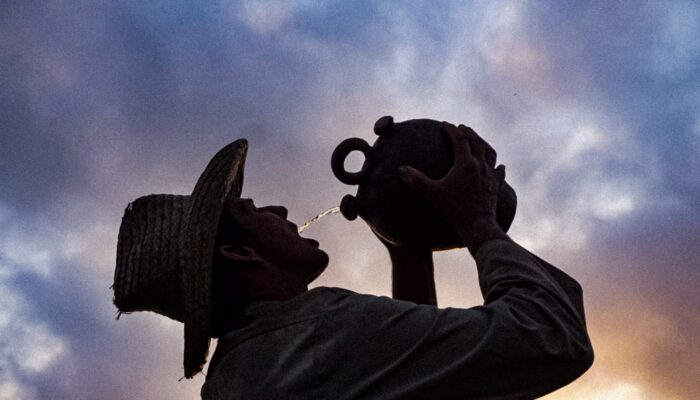
Groundwater has always had an image problem. Throughout my career, I have lost count of how many times we have described groundwater as an “invisible resource” or similar. It is almost a cliché in hydrogeology. We use the phrase because it captures something really fundamental: groundwater is hidden physically, but it has also been hidden from public consciousness. What people cannot see or easily ...[Read More]
Geochemistry, Mineralogy, Petrology & Volcanology
Minoan Meltdown: Could an eruption spark the myth of Atlantis?
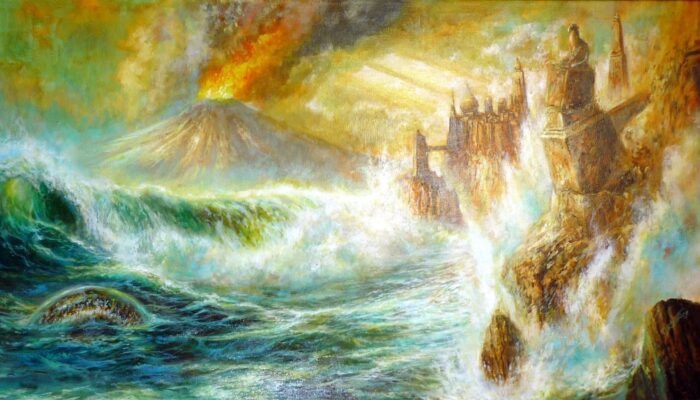
We live in a world full of mysteries and wonders… or at least that is the view of most ancient philosophers, such as perhaps Plato in ancient Greece. Atlantis, the legendary island that lay in the middle of the Atlantic Ocean, is said to have been completely destroyed overnight. To this day, numerous artists and scientists have sought to unravel the mystery of its demise, sometimes suggesting a vo ...[Read More]
Geodynamics
Mobilidiocy

Guess who’s back? Back again! Sassy’s back, tell your colleagues! This week I am going to shoot the elephant in the room by answering Will’s question “Is Mobility a plus or a must for a research career?” Now I know I have already answered a similar question some time ago, but a changing world requires an updated saucy answer. Disclaimer: The reflections presented here reflect my perspective ground ...[Read More]
GeoLog
A geoscience reality check on World Biofuels Day
On a humid morning in Augsburg, Germany, on August 10, 1893, a ten-foot iron cylinder roared to life for the first time. The engine belonged to Sir Rudolf Diesel, and running through its veins was not the petroleum distillate we associate with his name today, but in fact, peanut oil! Diesel’s early experiment proved something revolutionary for the late Industrial Revolution: the engines driving hu ...[Read More]
Ocean Sciences
When the atmosphere moves the sea: Meteotsunami waves
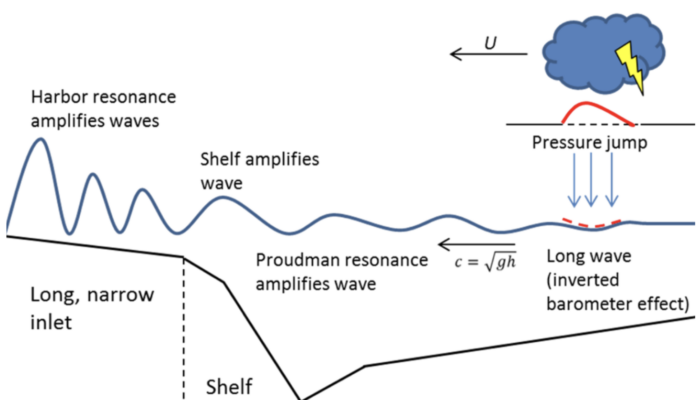
Meteotsunamis or meteorological tsunamis are globally occurring progressive shallow water waves with a period of between 2 to 120 minutes which results from an air-sea interaction. They tend to be initiated by sudden pressure changes and wind stress from moving atmospheric systems with sources ranging from convective clouds, cyclones, squalls, thunderstorms, atmospheric gravity waves and strong mi ...[Read More]
GeoLog
Thirty years after Biescas: Rethinking alluvial fan flooding and infrastructure failure
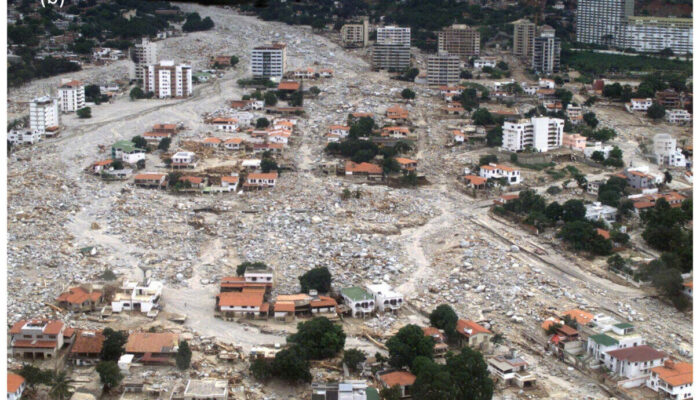
Thirty years ago, in August 1996, a catastrophic flash flood swept through the Las Nieves campsite on the alluvial fan of the Barranco de Aras near Biescas in the Central Pyrenees of Aragón, Spain. The tragedy claimed 87 lives and injured over 180 people. This makes it one of the most severe weather-related disasters in modern European history. In the decades following the disaster, geoscientists ...[Read More]