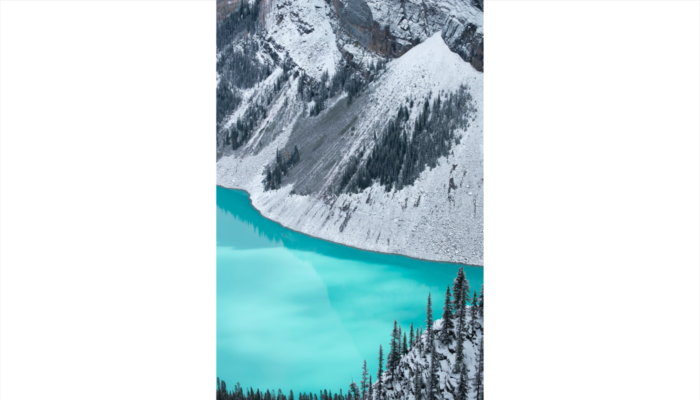
Mechanisms for stab stagnation are essential for understanding the mantle circulation patterns. This week, Diandian Peng, a graduate student from University of Illinois explores how dynamic pressure gradients can pull the slabs sideways stagnating them at the Mantle Transition Zone. Seismic imaging provides critical constraints on the structure and evolution of subducted slabs. Numerous tomographi ...[Read More]
If you didn't find what you was looking for try searching again.
Geodesy
EGU Campfire Geodesy – Share Your Research – Fifth Edition
We all welcome you around our fifth EGU Geodesy Campfire to listen to two exciting talks by Eva Börgens and Sandro Krauss. The Geodesy EGU Campfire Events “Share Your Research” will give (early career) researchers the chance to talk about their work. Below you can find detailed descriptions about their talks. We will have time for networking after the presentations. Please join us on Zoom o ...[Read More]
Biogeosciences
What more can we do as climate scientists to address climate change?
Fig 1 — Artist impression of Earth (source: Unsplash, Elena Mozhvilo) The much anticipated COP26 — even more so because of its postponement — is now already a few months behind us. There has been a lot of attention in the media, including on the BG blog. We have seen mixed reactions following the final statement at COP26: ranging from disappointment about lack of ambition to realism ...[Read More]
Geodynamics
The Sassy Scientist – Chill Pill Refill
Angela is one to stress out just a wee bit every time a conference is right around the corner. It’s almost like she consistently doesn’t prepare in time. Ever so slightly concerned, her office mate asks: How last minute is too last minute when preparing for a conference? Dear Angela, Just take a breather and come down from your academic productivity high! It’s an untenable situat ...[Read More]
GeoLog
GeoPolicy: How a professional YouTuber inspired a science-policy debate in Europe
I recently had the opportunity to talk with Joachim Allgaier, Professor for Communication and Digital Society at the Fulda University of Applied Sciences in Germany, about how video platforms such as YouTube support science communication and influence political decisions. This month’s GeoPolicy blog post explores some of the benefits of having an accessible online source of information and ...[Read More]
Cryospheric Sciences
You left us too early: a eulogy to permafrost
Most problems faced in research are complex and require creativity and critical thinking. Thus, we need to be creative in science! Or maybe, science itself is creative and there is no such thing as non-creative science. Anyhow, in today’s world, where TED-talks, science slams and elevator pitches, not to mention tweets, are ubiquitous, it is important that scientific expression takes on a form tha ...[Read More]
WaterUnderground
World water day events – making the invisible visible by getting together (even though we barely can these days)
Here at the Water Underground blog we are excited by the myriad of events that are happening on and after March 22, World Water Day which is celebrating groundwater for the first time ever. The flagship kick-off will be the 9th World Water Forum in Diamniadio (Dakar) with other events around the world in March and throughout the year, culminating in the UN-Water Summit on Groundwater in Paris. UNE ...[Read More]
Geodynamics
Paleogeography and the Northern Hemisphere Oceanic Gateways
Eivind Straume a Postdoctoral fellow at the Department of Geological Sciences within the Jackson School of Geosciences explores how the opening and closing ocean gateways have influenced the Earth’s climate in the past. Changes in Earth’s geography due to tectonic plate motions and mantle convection influence climate evolution on geological timescales. Over millions of years, continen ...[Read More]
Atmospheric Sciences
Crowdsourcing air quality management data from: A pilot study in India
India is experiencing an “Air apocalypse” and the Global Burden of Disease study has estimated the death toll has reached 1.67 million in 2019. Almost 100% of the population is now exposed to PM2.5 level higher than WHO (World Health Organization) recommendations. However, common citizens are generally unaware of the seriously damaging effects of poor air quality, largely because of the lack of ad ...[Read More]
GeoLog
GeoRoundup: the highlights of EGU Journals published during February!
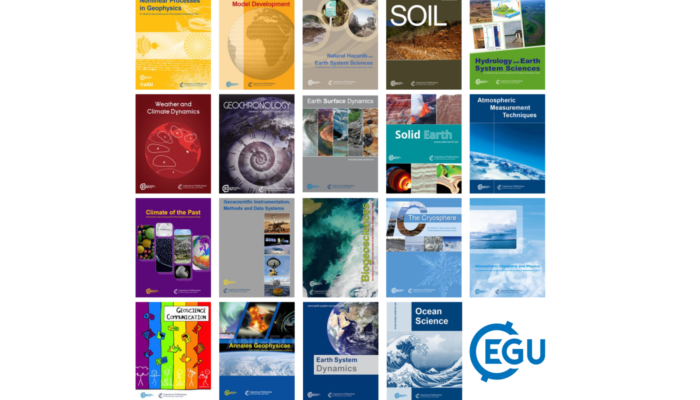
Each month we feature specific Divisions of EGU and during the monthly GeoRoundup we will be putting the journals that publish science from those Divisions at the top of the Highlights roundup. For February, the Divisions we are featuring are: Hydrological Sciences (HS) and Stratigraphy, Sedimentology and Palaeontology(SSP). They are served by the journals: Geoscientific Model Development (GMD), H ...[Read More]