
Robin Wylie studied geophysics at the University of Edinburgh, and then spent some time working at a volcanic observatory in Hawaii before starting his Master’s in Earth and Atmospheric Physics at the University of Leeds. Robin is now doing a PhD at University College London, looking at magma chamber processes at Mt Etna, Sicily. This is …[Read More]
Latest posts
Friday Photo (63): Active Geology – Mt Etna Spitting Lava
Following on from last week’s spectacular photo, we have a photo of an active vent at Mt Etna, Sicily. Credit: Robin Wylie (c) Geology for Global Development
A story of Spitfires? Archaeological geophysics in Burma (Part 3)
Buried beneath the soils of Burma lies a mystery that has been almost 70 years in the making: were a shipment of Spitfire aircraft concealed beneath a British airbase at the end of the Second World War? Dr Adam Booth, a geophysicist at Imperial College London and regular GeoLog contributor, is part of an archaeological …[Read More]
Translate Radioisotope Hydrogeochemist – #1000simplewords
There is a new craze sweeping twitter…at least among those that I follow, which is mostly geoscientists. This is of course the #1000simplewords challenge. In essence the challenge is to explain your profession using only the 1000 most common words in the English language. The most complex/specific title that I could come up with for …[Read More]
Thinking Development: An Academic Partnership Between London and Haiti.
The Sisters of St Joseph provided education for a large number of young girls in Haiti, but their school was destroyed in the 2010 earthquake. It is vital that it is rebuilt. The sisters have many years of teaching experience, but no experience in construction. At University College London (UCL) there is plenty of expertise …[Read More]
Geology Photo of the Week # 18 – Jan 13-19
The photo for this week is something that I stumbled upon the other day when looking for directions to a friend’s house. It is a large scale concentric feature on the landscape and is located about 40 minutes north of Kingston near the hamlet of Holleford. I have actually been to this location in person …[Read More]
Imaggeo on Mondays: Storm in Mount Waddington
This week’s Imaggeo on Mondays is brought to you by the photographer herself, Marion Bisiaux (now at Stendhal University, Grenoble, France), who tells us about her exciting field trip to the British Columbia’s Coast Range. This picture was taken during the Waddington Range Ice Core Project in which I participated during my PhD at the …[Read More]
Natural Resources: our Responsibility?
Last week I discussed the inherent problems associated with the extraction industry. Now I ask, do companies and governments play a role in exacerbating these problems? Although I manage the GfGD blog, in this instance I am blogging in a personal capacity, and the views expressed are my own, and not policy positions of GfGD as …[Read More]
Field report: Pumice
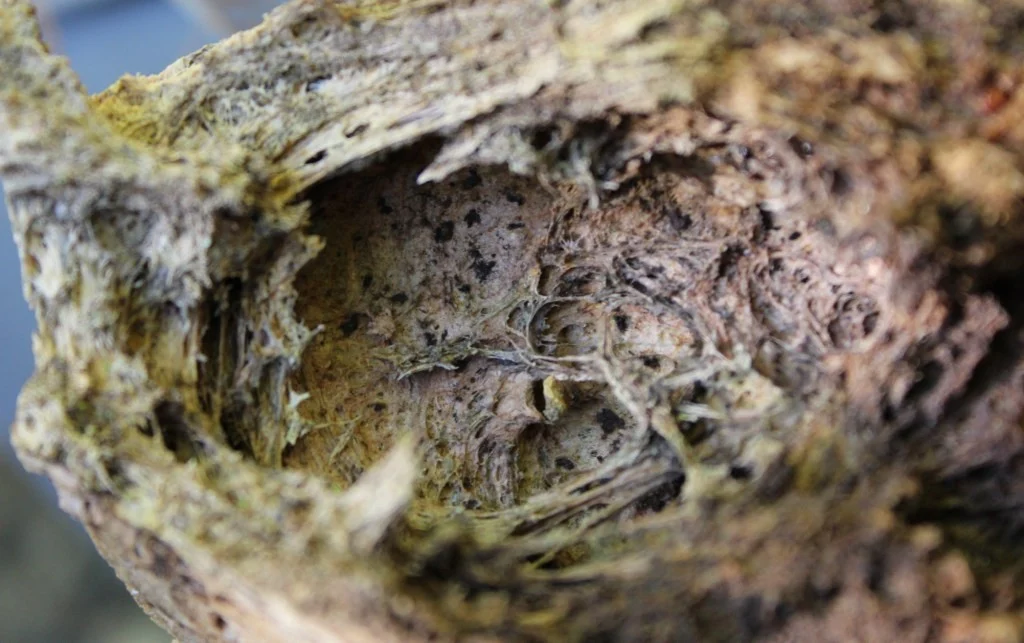
One of the most rewarding parts of fieldwork on volcanoes is when the parts start to fit together, and hunches turn into firmer ideas. When piecing together ancient volcanic eruptions, the process often starts with the discovery of the trace of a new deposit in a road cut section. This might be something as simple …[Read More]
Geosciences Column: Spotting signs of sea-quakes
A French and Algerian study team seeks markers of underwater earthquakes off the Algerian coast. The team also matched the site’s paleoseismic history to land-based historical reports. Wayne Deeker reports. The Mediterranean Sea represents the boundary between the African and Eurasian plates. Yet the fault segment off the Algerian coast is one of the most …[Read More]