
Two new feathered dinosaur articles appeared in the latest edition of Nature Communications; one on gender identification in a well-known theropod (the meat noshing ones), and the subject of a forthcoming blog post, and another on a new feathered fiend from, surprise surprise, China. I normally really don’t like writing about theropods, especially of the feathered …[Read More]
Latest posts
Geology Photo of the Week #19 – Jan 27 – Feb 2
Hi Everyone, Sorry this post is a bit late. Things have been crazy the last few days in the lab. I am trying to get enough done in the next few weeks to submit an abstract to a conference and I still have quite a long way to go. The 19th photo of week was …[Read More]
Geosciences Column: Hazard perception – how great is the risk of a rockfall?
In this month’s Geoscience’s column, Sara Mynott discusses the geological hazards associated with climate warming and how recent research sheds new light on our understanding of rockfall frequency. Rockfalls are the free-falling movement of bedrock material from a rock face, a phenomenon also encompassed by the terms ‘landslide’, ‘rockslide’ and ‘rock avalanche’. They range from …[Read More]
Resources: ‘World We Want’ Discussion forums
It’s been a while since we posted anything in our resources series. This week we direct you to a group of discussion forums on the ‘world we want’ website. They have discussion boards covering a range of development themes, some of which are particularly relevant to GfGD; water, energy and environmental sustainability. They direct you …[Read More]
DINOSAUR! But what does it mean..?
Palaeontology probably isn’t the most difficult of sciences, but it does incorporate aspects of chemistry, biology, and physics to a certain degree, as with many other geoscientific disciplines. Palaeontologists are also well known for the mysterious and unintelligible ‘science-speak’ that they use in research papers, fueled by this combination of a multitude of various sciences, …[Read More]
Imaggeo on Mondays: Rainbow in stone
Nothing better characterises the wild US West than endless landscapes of red hoodoos, spires of rock protruding from the bottom of an arid drainage basin or badland. Found mainly in desert and dry, hot areas, hoodoos are distinctive from similarly-shaped formations, such as spires or pinnacles, because their profiles vary in thickness throughout their length. …[Read More]
Guest Blog: From the President of the International Association for Geoethics
Prof. Jesús Martínez-Frías is the head of the planetology and habitability department in the ‘centro de astrobiologica’ in Madrid. He is also the new president of the International Association for Geoethics (IAGETH). We did a short piece promoting another geoethics organisation in December, and here Jesús elaborates on the history and significance of geoethics… Although Geoethics is …[Read More]
Guest Lecture – Dr. Tim Lowenstein
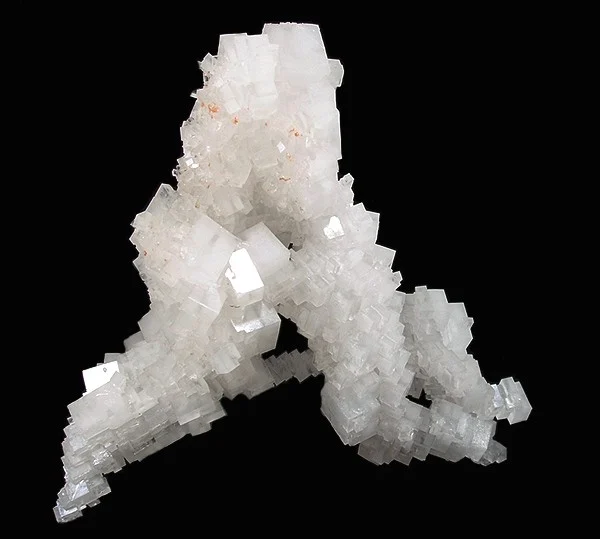
Our department was recently lucky enough to have Dr. Tim Lowenstein from SUNY Binghamton come give a guest lecture on the changes in the chemistry of seawater throughout geologic time. Originally, we thought that the major ion chemistry in the past was more or less the same as it is today. However, over the last …[Read More]
Friday Photo (64): Geologists in the field – snow in Greece
After our successful ‘active geology’ series, we begin a new, fun photo series looking at ‘geologists in the field’. This week, clearing snow off the outcrop on an undergraduate field trip to Greece, December 2009. Please send us your favourite field photos! (c) Geology for Global Development
Which direction to take!?
One of the most important things palaeontologists and taxonomists do is the description of new species or fossils. Focussing on dinosaurs, because they’re the ones I know the best, there is a whole host of descriptive anatomy to get your head around. It’s not just the names of the bones; it’s also the names of …[Read More]