
Energy resources are a key issue in the mountainous Ladakh Region of India – all oil has to be imported by lorry over windy mountain passes that are often blocked by landslides. Any methods by which Ladakh can produce its own energy are very welcome. Solar panels can provide a significant amount of energy during …[Read More]
Latest posts
Reporting on a recent visit to the NERC Radiocarbon Facility (East Kilbride, Scotland)
I (Daniel) recently had the opportunity to visit the Natural Environment Research Council (NERC) Radiocarbon Facility – Environment (NRCF-EK), hosted at the Scottish Universities Environmental Research Centre (SUERC), a collaborative facility between the Universities of Glasgow and Edinburgh. The lab is located in East Kilbride, a 30-minute train ride south of Glasgow city centre. The …[Read More]
Science Snaps (4): vivid volcanoes
This week we couldn’t just stick to one “Science Snap” so we went for four – one from each of the contributors! We’ve all chosen a volcano dear to our hearts being ones we’ve either visited or studied. James: The giant Uturuncu volcano in southern Bolivia has been slowly uplifting for over 45 years. High-precision …[Read More]
Peligros Geológicos: Conference in Arequipa
We’ve heard about an event that some of our followers in South America (and elsewhere!) may be interested in. The conference will cover risk reduction, development projects, urban planning and more. Peligros Geológicos will be held in Arequipa City, Peru, between the 14th and 16th October 2013, and there is currently a call for posters. …[Read More]
Applications for the 2014 GIFT workshop are open!
Every year, the EGU Committee on Education organises a workshop that spreads first-hand scientific information to teachers. The theme of this year’s Geosciences Information For Teachers (GIFT) workshop is Our Changing Planet and it will be taking place on April 27–30 2014 at the EGU General Assembly in Vienna, Austria. The workshop will explore some of the …[Read More]
The Long Life of Ruzi Mohammed
Ruzi Mohammed thinks that he is around 110 years old. He keeps track of the years using the changing seasons, and there is no missing them in Turtuk, where winters reach -20˚C, and summers are warm and pleasant. Too high for mosquitos, and low enough for a good harvest, Turtuk is a paradise in the …[Read More]
Geology beyond science
This was originally posted at: http://www.nature.com/scitable/blog/earthbound/geology_beyond_science So people who read this blog (*one person cheers off in the distance*) may have noticed that my partner-in-crime, Jane Robb, recently abandoned me to the fusty claws of Nature. *sniff* Fear not though! Jane is pursuing awesome things now with the European Geosciences Union, the other organisation I also happen …[Read More]
Back to Basics on Groundwater
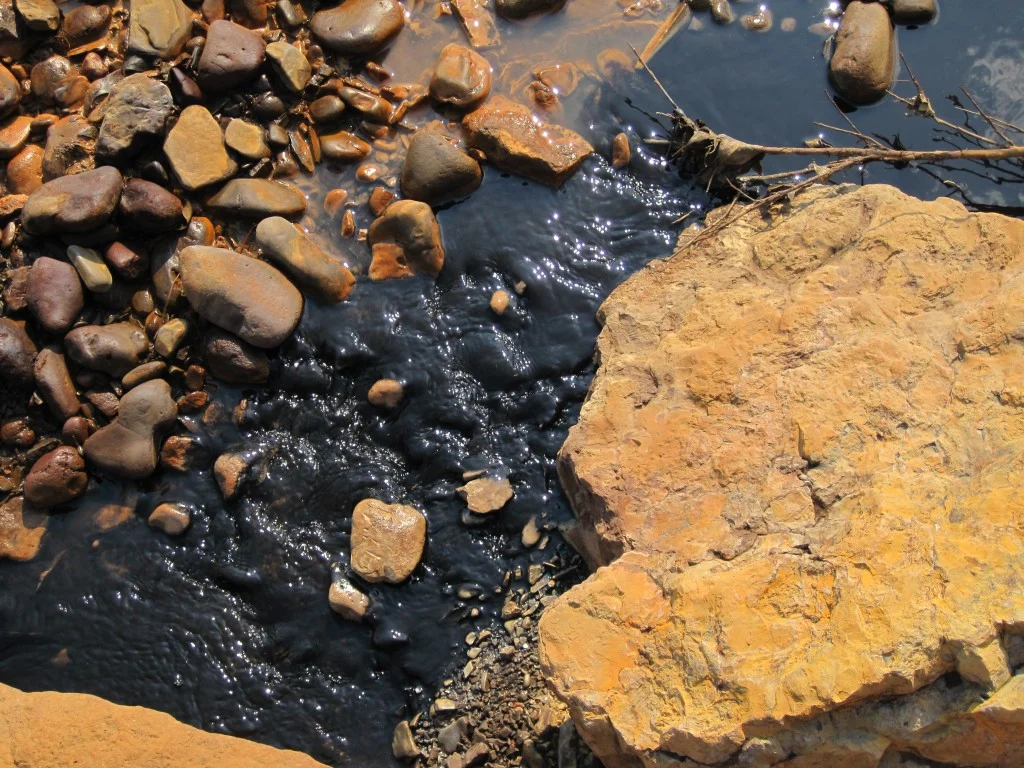
When many people hear the word groundwater they imagine a raging underground torrent of water flowing along a pathway called an aquifer. Well, sorry to disappoint you, but you could not be more wrong about how groundwater exists and flows. In this post we will discuss the very basics of groundwater science (hydrogeology) and flow. What is …[Read More]
Soils at Imaggeo: when a soil is born
Artemi Cerdà, University of Valencia, Valencia – Spain Soil development is based on the weathering of rocks and the deposition and decomposition of litter and roots, which are the main source or soil organic matter. Mosses are one of the key actors on those processes, as they are present at the initial stages of pedogenesis. …[Read More]
Imaggeo on Mondays: Surface spirals
This week’s Imaggeo on Mondays is no ordinary image; it’s a snapshot of surface ocean speeds and the extent of ice cover in the North Atlantic. It was produced using a high resolution model of ocean eddies – high resolution here means that details are simplified into grids 3 km across, or one 20th of …[Read More]