
Nachshon U, Ireson A, van der Kamp G, Davies SR, Wheater HS. 2014. Impacts of climate variability on wetland salinization in the North American prairies. Hydrology and Earth System Sciences 18, 1251-1263. DOI: 10.5194/hess-18-1251-2014. Abstract The glaciated plains of the North American continent, also known as the “prairies”, are a complex hydrological system characterized by hummock ...[Read More]
Seismology
ECGS & ESC/EAEE Joint Workshop: Earthquake and Induced Multi-Risk Early Warning and Rapid Response
A joint workshop about earthquake and induced risk, early warning and rapid response is going to take place in Luxembourg, between the 18th and the 20th of November this year. The long list of researchers involved in the scientific committee, invited lecturers, and, the number of organisations supporting this workshop make this meeting one not to be missed. The supporting organisations are the Eur ...[Read More]
Seismology
Visual simulations of seismic waves
Sometimes it is not easy to understand (or explain) how seismic waves propagate through Earth. Recently, a number of very nice graphic examples have been uploaded on vimeo.com. The videos show the basic concepts of a travelling seismic wave such as the propagation of waves from a central source (similar to the ripples in a pond after a stone has been dropped in). The other animations show more com ...[Read More]
GeoLog
Geosciences Column: The quest for life on Mars
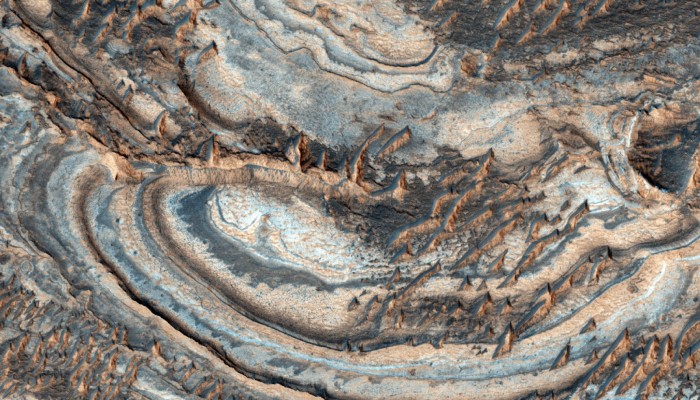
Understanding where we come from and whether Earth is the only habitable planet in the Solar System has been a long standing conundrum in science. Partly because it is our nearest neighbour, partly because of its past and current similarities with our own home, Mars, the red planet, is a likely contender in the quest for extra-terrestrial life. In this guest blog post, James Lewis, a PhD student a ...[Read More]
Energy, Resources and the Environment
Geomorphology Re-blog: Our EGU session died, what went wrong?
The EGU General Assembly 2015 is approaching, and with that a whole bunch of interesting new talks, posters and sessions! Or not!? What do you do when your proposed session has died because it simply did not attract enough submissions? Sabine Kraushaar did some session soul-searching and shared her advice on the Geomorphology Division Blog. Here’s what happened… *** “Have you eve ...[Read More]
VolcanicDegassing
Landslides, lake tsunamis and the tragedy of Lago Cabrera
Fifty years ago, on 19th February 1965, a rock and ice landslide fell from the summit face of Volcan Yate in southern Chile. It was mid-summer, and was one of the warmest and wettest February records in that part of Chile on record. The debris slid rapidly down a narrow gully, losing at least 1500 metres in elevation, until it emerged into the southern end of a small montane lake. This triggered a ...[Read More]
Geomorphology
Our EGU session died, what went wrong?

Have you ever had this experience? You develop a session which you think could be such a great platform or a subject that definitely interests a lot of people and then only a few people register…this happened to Jan, me, and several others this year and our proposed sessions (GM1.2 Emerging research fields in geomorphology and GM 1.4 Data wealth versus data poverty – new strategies for geomo ...[Read More]
Green Tea and Velociraptors
Palaeontology in the 21st Century
Palaeontology is the study of the history of life on Earth. Whenever I get asked what I do, my answer always gets a predictable response: either “Oh, like Ross from Friends?” “So Jurassic Park?” or “So you dig dinosaurs?” Neither of these are close to what myself, my colleagues, or the broader field are doing. Well, apart from the digging dinos. We have to have some perks (not that I’ve actually e ...[Read More]
GeoLog
Science Policy Fellowship at the EGU – open for applications!

Do you have an interest in science policy and the geosciences? Then this fellowship might be just right for you! EGU fellowships offer early career researchers the opportunity to gain experience in science management and communication in a large scientific union through a targeted assignment at the EGU Executive Office in Munich, Germany. Fellows are strategically deployed to develop new initiativ ...[Read More]
Soil System Sciences
Soils at Imaggeo: Gypsum concretions in a soil horizon
Antonio Jordán, University of Seville, Sevilla, Spain Most Gypsisols are formed when gypsum (calcium sulfate) from gypsiferous parent materials is dissolved and moves through soil water, precipitating in an accumulation soil horizons. Triassic rock outcrops in almost all Andalusia consist mainly of red and variegated clays and in some cases by clays of different colors are known as the iridescent ...[Read More]