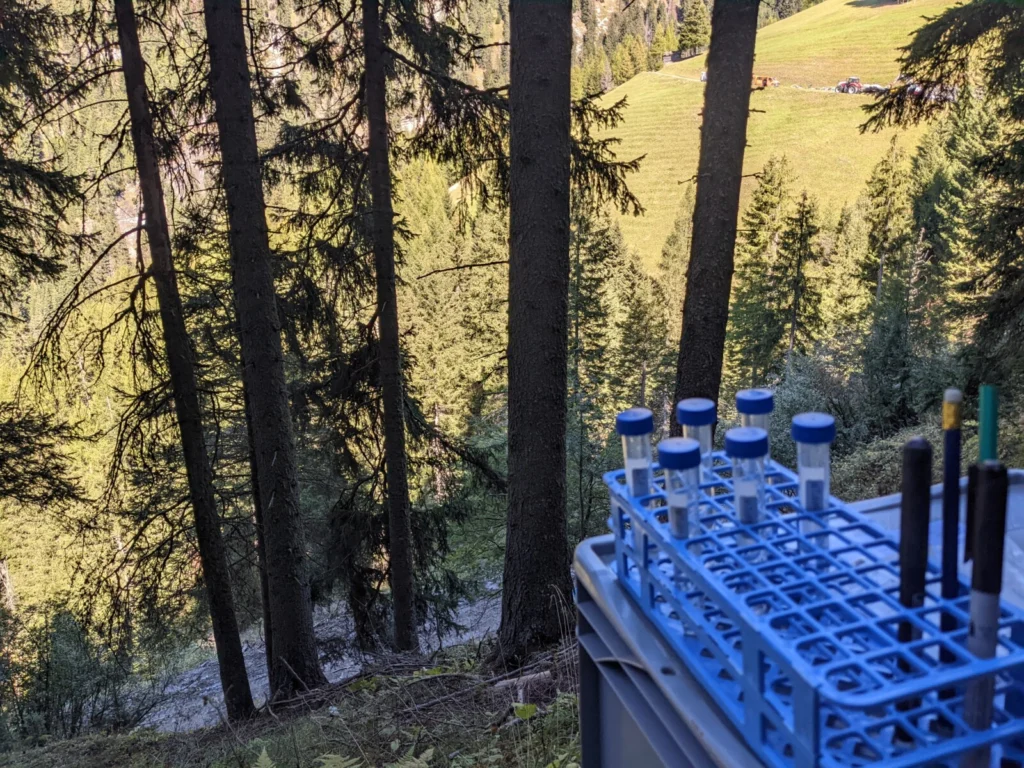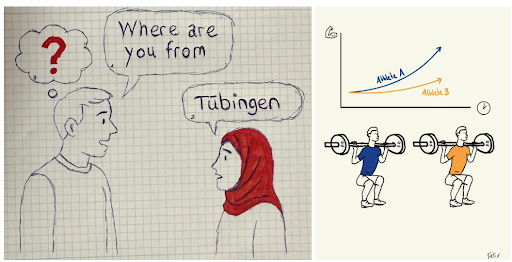
Groundwater has always had an image problem. Throughout my career, I have lost count of how many times we have described groundwater as an “invisible resource” or similar. It is almost a cliché in hydrogeology. We use the phrase because it captures something really fundamental: groundwater is hidden physically, but it has also been hidden from public consciousness. What people cannot see or easily ...[Read More]
Geochemistry, Mineralogy, Petrology & Volcanology
Minoan Meltdown: Could an eruption spark the myth of Atlantis?
We live in a world full of mysteries and wonders… or at least that is the view of most ancient philosophers, such as perhaps Plato in ancient Greece. Atlantis, the legendary island that lay in the middle of the Atlantic Ocean, is said to have been completely destroyed overnight. To this day, numerous artists and scientists have sought to unravel the mystery of its demise, sometimes suggesting a vo ...[Read More]
Geodynamics
Mobilidiocy
Guess who’s back? Back again! Sassy’s back, tell your colleagues! This week I am going to shoot the elephant in the room by answering Will’s question “Is Mobility a plus or a must for a research career?” Now I know I have already answered a similar question some time ago, but a changing world requires an updated saucy answer. Disclaimer: The reflections presented here reflect my perspective ground ...[Read More]
GeoLog
A geoscience reality check on World Biofuels Day
On a humid morning in Augsburg, Germany, on August 10, 1893, a ten-foot iron cylinder roared to life for the first time. The engine belonged to Sir Rudolf Diesel, and running through its veins was not the petroleum distillate we associate with his name today, but in fact, peanut oil! Diesel’s early experiment proved something revolutionary for the late Industrial Revolution: the engines driving hu ...[Read More]
Ocean Sciences
When the atmosphere moves the sea: Meteotsunami waves
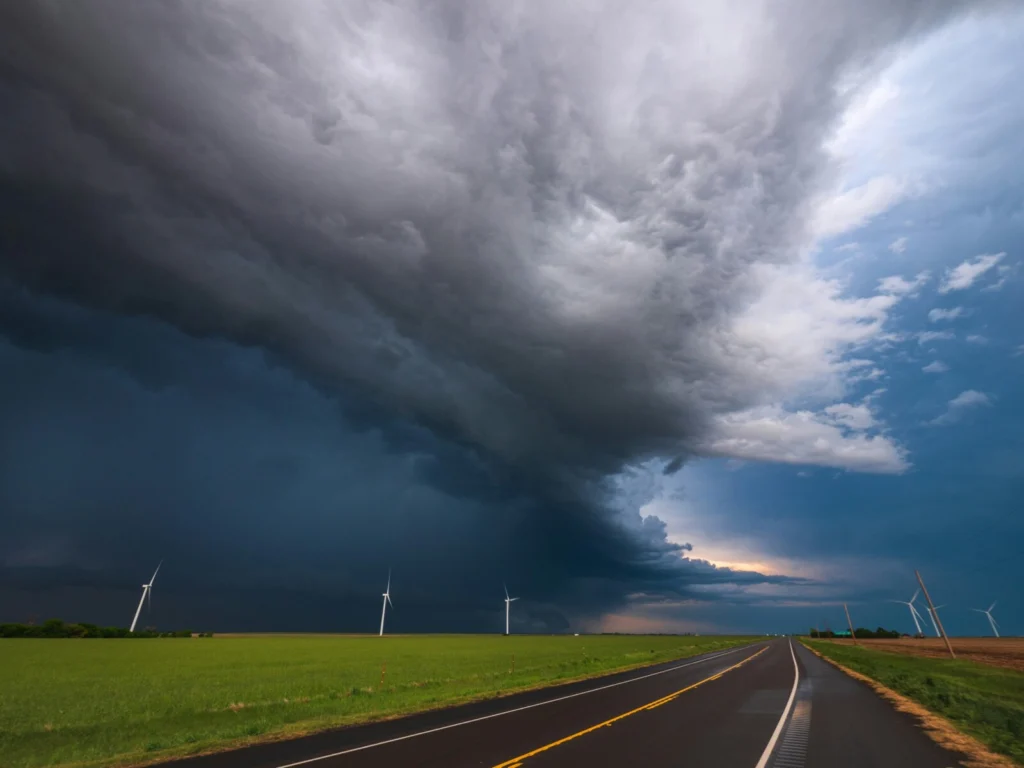
Meteotsunamis or meteorological tsunamis are globally occurring progressive shallow water waves with a period of between 2 to 120 minutes which results from an air-sea interaction. They tend to be initiated by sudden pressure changes and wind stress from moving atmospheric systems with sources ranging from convective clouds, cyclones, squalls, thunderstorms, atmospheric gravity waves and strong mi ...[Read More]
GeoLog
Thirty years after Biescas: Rethinking alluvial fan flooding and infrastructure failure
Thirty years ago, in August 1996, a catastrophic flash flood swept through the Las Nieves campsite on the alluvial fan of the Barranco de Aras near Biescas in the Central Pyrenees of Aragón, Spain. The tragedy claimed 87 lives and injured over 180 people. This makes it one of the most severe weather-related disasters in modern European history. In the decades following the disaster, geoscientists ...[Read More]
Geodynamics
Science has no borders. Researchers do: a modern Odyssey
When Homer wrote The Odyssey nearly three thousand years ago, he described a journey filled with storms, uncertainty, unexpected detours, and the relentless hope of eventually reaching Ithaca. Today’s journeys may no longer cross the Mediterranean, but they continue to test researchers’ resilience in unexpected ways. Not because researchers sail across unknown seas, but because the pur ...[Read More]
Geomorphology
Great Names in Geomorphology A–Z: Frank Ahnert
Introducing our new mini-series by GM Blog co-editor Wioleta Porębna: Great Names in Geomorphology A–Z! Our readers will choose the next name in alphabetical order – leave your suggestions in the comments! Frank Ahnert (12 December 1927 – 10 September 2017) was a German geomorphologist whose work played a pivotal role in establishing quantitative and process-based approaches to the study of ...[Read More]
GeoLog
GeoRoundup: the highlights of EGU Journals published during July!
Each month we feature specific Divisions of EGU and during the monthly GeoRoundup we put the journals that publish science from those Divisions at the top of the Highlights section. For July, we are featuring the Planetary and Solar System Sciences (PS), Seismology (SM), and Tectonics and Structural Geology (TS). They are represented by the journals Solid Earth (SE), Geoscientific Model Developmen ...[Read More]
Geodesy
Tidal pulse of rivers
The research gap Ocean tides play a significant role on ocean circulation, coastal processes and mass variations. Tides are generated from the gravitational interaction between Earth, Moon and Sun, which typically results in two high and two low tides observed each day. Satellite observations have vastly expanded our understanding of ocean tides. In 2022, the Surface Water and Ocean Topography (SW ...[Read More]