Today, 1st December 2017, marks the 58th anniversary of the signing of the Antarctic Treaty in 1959. The Antarctic Treaty was motivated by international collaboration in Antarctica in the International Geophysical Year (IGY), 1957-1958. During the IGY over 50 new bases were established in and around Antarctica by 12 nations- including this one at Halley Bay which was maintained for over a decade b ...[Read More]
Geology for Global Development
Bárbara Zambelli Azevedo: Access to clean water, gender equality and geosciences
The importance of access to safe drinking water in our lives is quite obvious. Although its relation with gender equality and sustainable development may be less so. In this article, Bárbara Zambelli Azevedo explores the relationship between the two and discusses what geoscientists can do to improve the situation. In 2017, according to the WHO, over 2.1 billion people still don’t have access to sa ...[Read More]
GeoLog
A first-timer’s guide to the 2018 General Assembly
Will this be your first time at an EGU General Assembly? With almost 14,500 participants in a massive venue, the conference can be a confusing and, at times, overwhelming place. To help you find your way, we have compiled an introductory handbook filled with history, presentation pointers, travel tips and a few facts about Vienna and its surroundings. Download your copy of the EGU General Assembly ...[Read More]
Geochemistry, Mineralogy, Petrology & Volcanology
Update on the Agung volcanic eruption in Indonesia
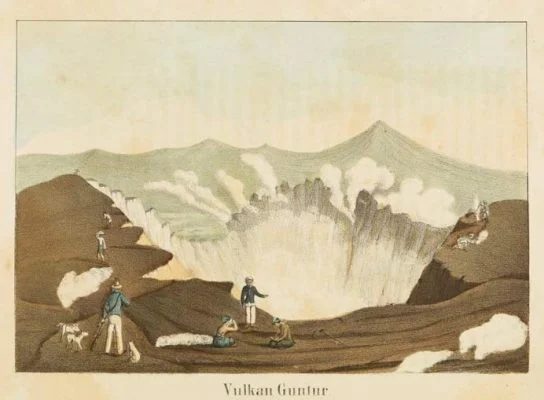
Since our last blog, Agung has had two months to reflect and has recently begun a strong ash venting process, with incandescence visible at night in the summit. Updates from Magma Indonesia, the official communications hub for natural hazards in Indonesia, have highlighted an elevated level of volcanic tremor and an evacuation zone to 12 km radius around the volcano is being enforced. You can foll ...[Read More]
Geodynamics
On the influence of grain size in numerical modelling
The Geodynamics 101 series serves to showcase the diversity of research topics and methods in the geodynamics community in an understandable manner. We welcome all researchers – PhD students to Professors – to introduce their area of expertise in a lighthearted, entertaining manner and touch upon some of the outstanding questions and problems related to their fields. This month Juliane Dannberg fr ...[Read More]
WaterUnderground
Hydraulic fracturing close to groundwater wells
Post by Scott Jasechko, Assistant Professor of Water Resources with the Bren School of Environmental Science & Management, at the University of California, Santa Barbara, and by Debra Perrone, non-resident Fellow at Water in the West and an Assistant Professor, also at the University of California, Santa Barbara, in the United States. _______________________________________________ In December ...[Read More]
Geology for Global Development
Guest Blog: Anthropogenic climate change – what does this mean for groundwater resources in Africa?
On the 25th October, Laura Hunt (Cardiff University) attended the joint meeting of the International Association of Hydrogeologists (IAH) and the Hydrogeological Group of the Geological Society, which included the Ineson Lecture at the Geological Society of London. It is a common misconception that Africa is an entirely dry, arid continent, parched for water. A resource that we in the UK take alm ...[Read More]
GeoLog
Imaggeo on Mondays: Angular unconformity
It is not unusual to observe abrupt contacts between two, seemingly, contiguous rock layers, such as the one featured in today’s featured image. This type of contact is called an unconformity and marks two very distinct times periods, where the rocks formed under very different conditions. Telheiro Beach is located at the western tip of the Algarve; Portugal’s southernmost mainland region and the ...[Read More]
Climate: Past, Present & Future
Forams, the sea thermometers of the past!
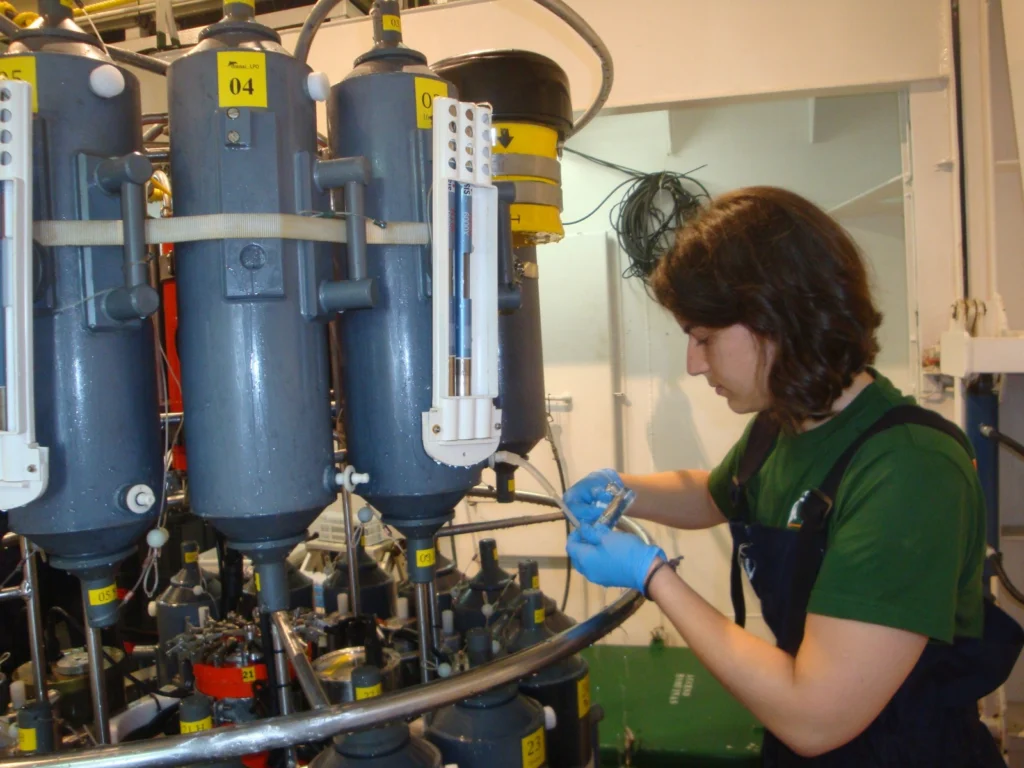
Name of proxy Mg/Ca-SST on planktonic foraminifera shell Type of record Sea Surface Temperature (SST) Paleoenvironment Marine environments Period of time investigated 55 Million years ago to recent times How does it work ? Foraminifera (or Forams) are single-celled organisms varying from less than 1 mm to several cm in size. They are very abundant in the ocean floor (benthic species) or floating a ...[Read More]
Cryospheric Sciences
Image of the Week – Does size really matter? A story of ice floes and power laws
The retreating Arctic sea ice is one of the most well-known facets of Climate Change. Images of polar bears desperately swimming through polar seas searching for somewhere to rest and feed resonate strongly with the public. Beyond these headlines however, the Arctic Ocean is displaying a rapid transition from having mostly permanent ice cover to a more seasonal cover. The Marginal Ice Zone As both ...[Read More]