GeoLog

Space and Planetary Science

Why are NASA scientists holding eggs? The surprising new physics of Jupiter & the latest briefing on Juno’s mission
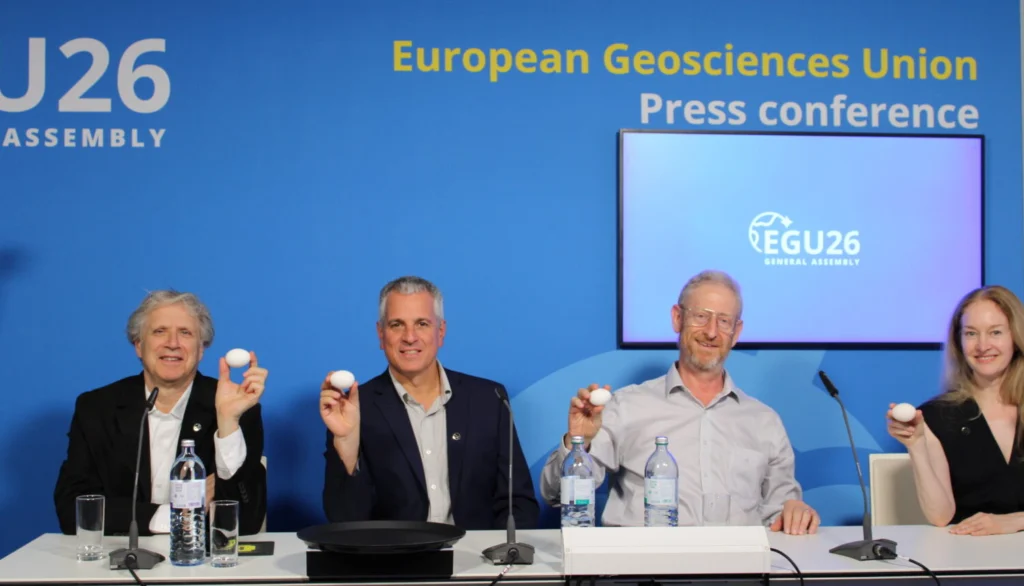
Why are NASA scientists holding eggs? The surprising new physics of Jupiter & the latest briefing on Juno’s mission
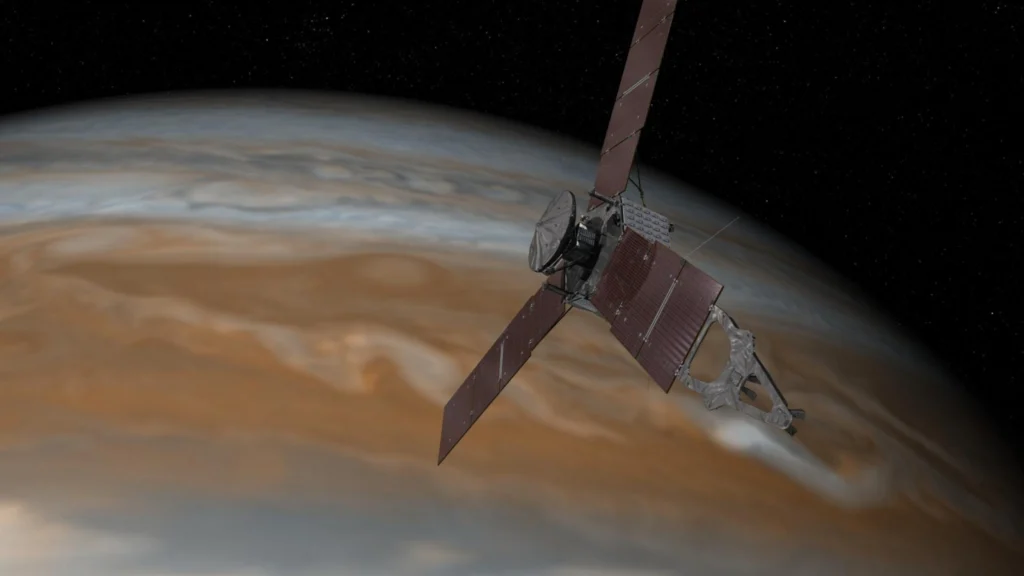
The latest NASA Juno briefing was presented at EGU26 yesterday. Speakers introduced unprecedented results that not only deepened our understanding of Jupiter but also invited us to reflect on the future of scientific methodology. Whether you’re a space geek or a tech enthusiast, hop in, as we’re about to take you on an exploratory journey …[Read More]

Io: a spongy world consumed by molten rock

Io: a spongy world consumed by molten rock

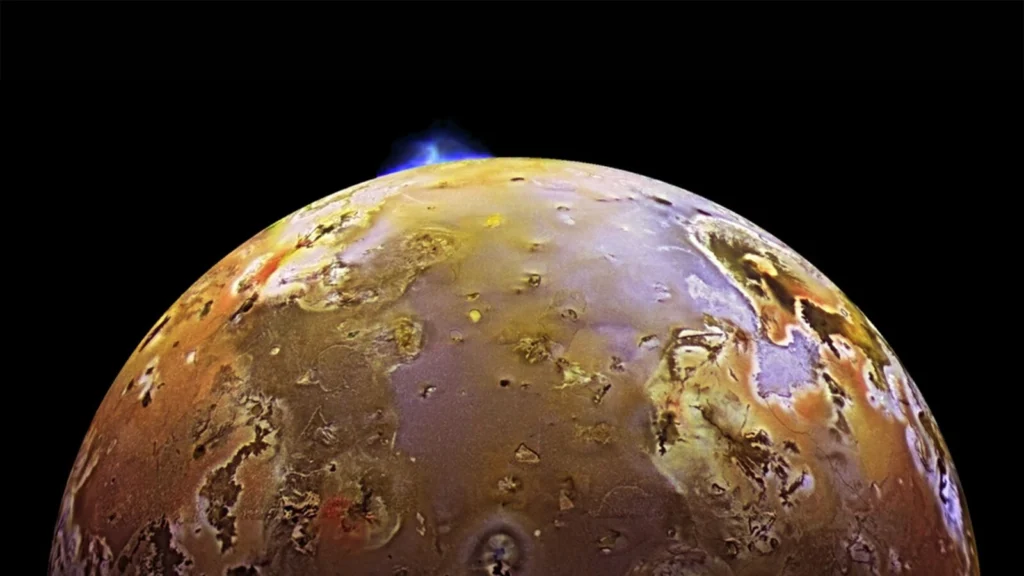
Jupiter’s moon Io is the most volcanically active world in our solar system, with hundreds of volcanoes that constantly erupt on its ever renewing surface. Although Io always points the same side toward Jupiter in its orbit around the gas giant, two other Galilean moons, Europa and Ganymede, pull Io’s orbit into an irregularly elliptical …[Read More]

The most-read EGU journal articles in 2021!

The most-read EGU journal articles in 2021!

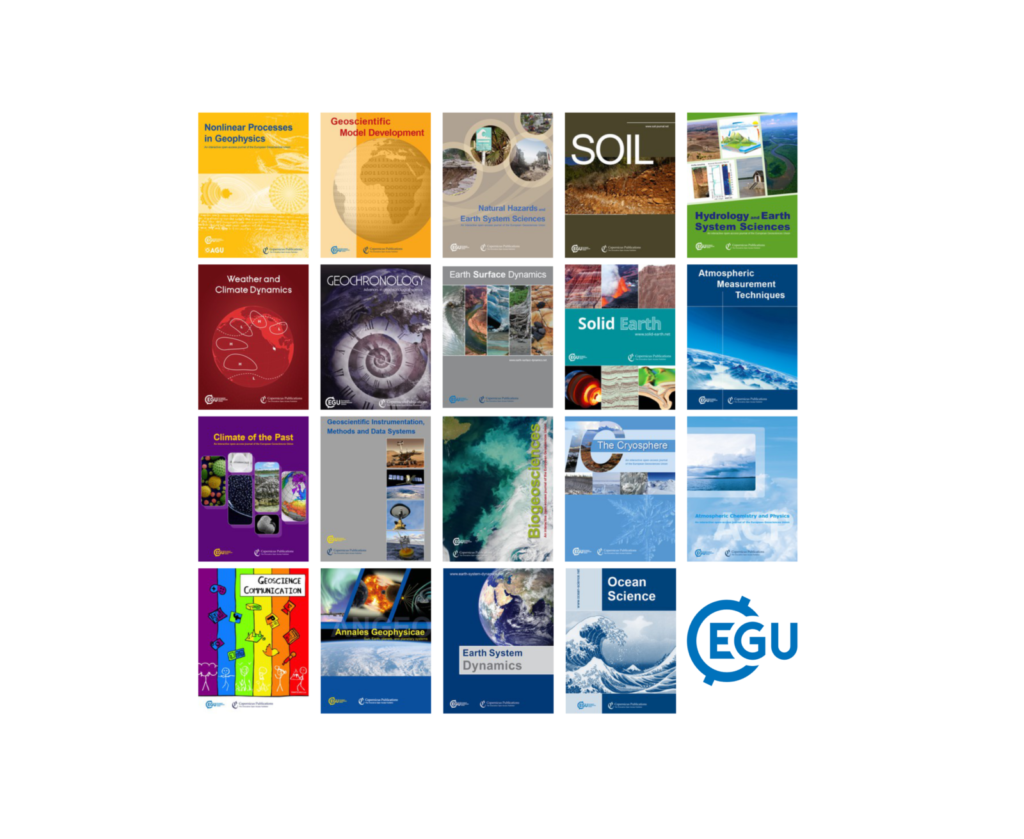
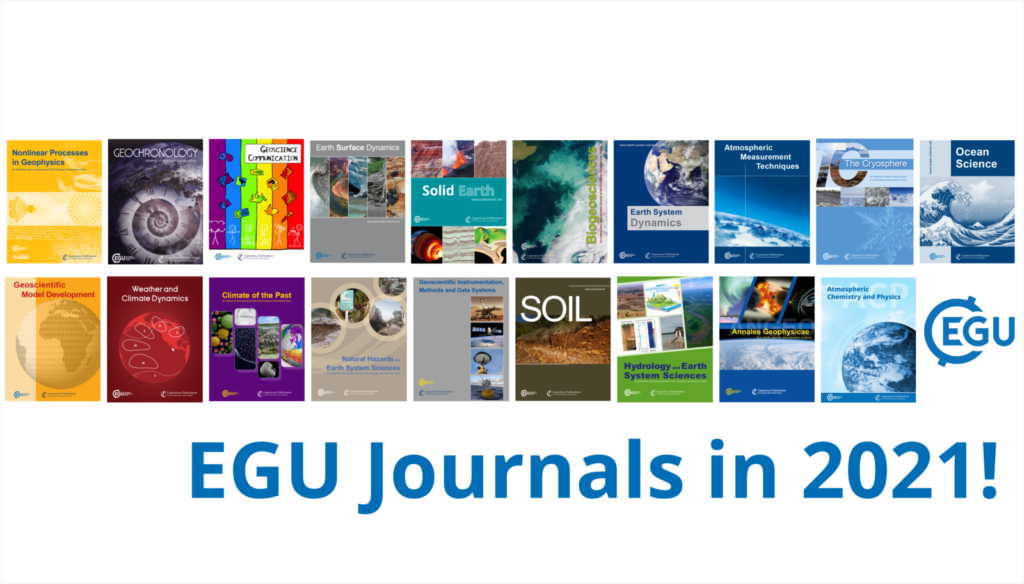
This year EGU published more than 3,375 peer-reviewed articles in our 19 Open Access journals. Upon learning about this impressive number of articles, we wondered: which of these were the most popular? You can find out in the following list of the most-read article for each EGU journal. From rainfall-runoff prediction, tipping points and open …[Read More]

The most-read EGU journal articles in 2020!

The most-read EGU journal articles in 2020!

This year EGU published more than 3,300 peer-reviewed articles in our 19 Open Access journals. Upon learning about this impressive number of articles, which equates to just over 61,000 journal pages, we wondered: which of these were the most popular? You can find out in the following list of the most-read article for each EGU …[Read More]

Imaggeo on Mondays: Simulating a mission on Mars

Imaggeo on Mondays: Simulating a mission on Mars

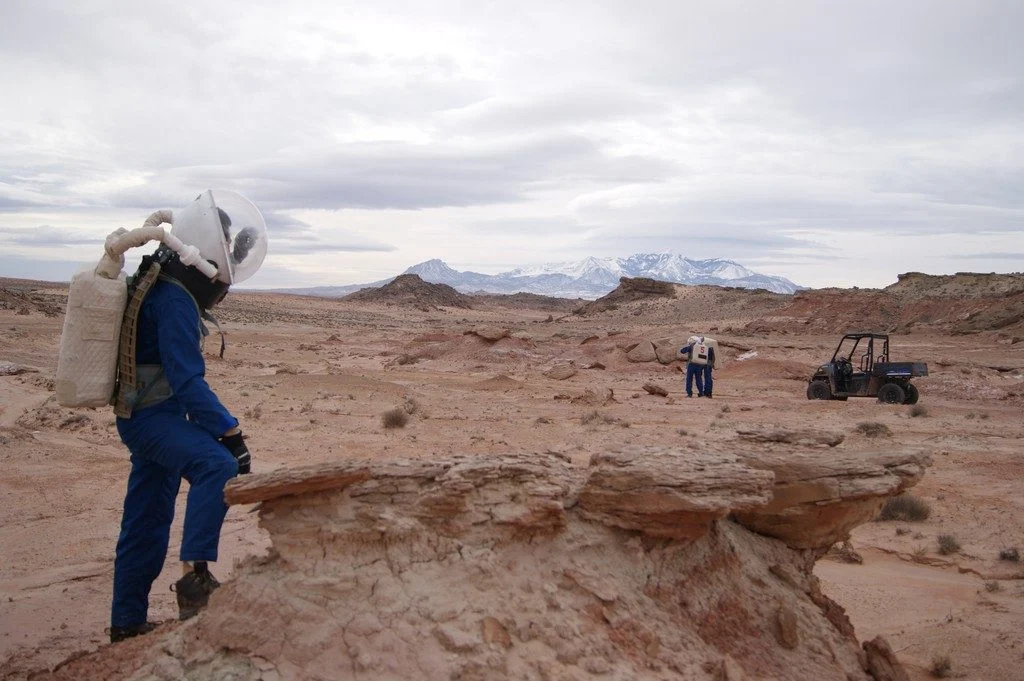
Establishing a human presence on Mars is increasingly seen by space agencies and private organizations as the horizon frontier in human space exploration. These long-duration missions however, impose a high degree of technological, operational, physical and psychological challenges. Mars analog habitats, such as the Mars Desert Research Station (MDRS) in Utah (U.S.) are established to …[Read More]

NASA’s Juno mission reveals Jupiter’s magnetic field greatly differs from Earth’s

NASA’s Juno mission reveals Jupiter’s magnetic field greatly differs from Earth’s

NASA scientists have revealed surprising new information about Jupiter’s magnetic field from data gathered by their space probe, Juno. Unlike earth’s magnetic field, which is symmetrical in the North and South Poles, Jupiter’s magnetic field has startlingly different magnetic signatures at the two poles. The information has been collected as part of the Juno program, …[Read More]

GeoTalk: Matt Taylor of ESA’s Rosetta mission

GeoTalk: Matt Taylor of ESA’s Rosetta mission

In November 2014, space exploration history was made. Millions of kilometres away, orbiting a piece of ice and rock, the European Space Agency’s (ESA) Rosetta mission sent its probe Philae to become the first spacecraft to soft-land on a comet. After the tense 7-hour wait that followed the separation from the main orbiter, a tweet …[Read More]