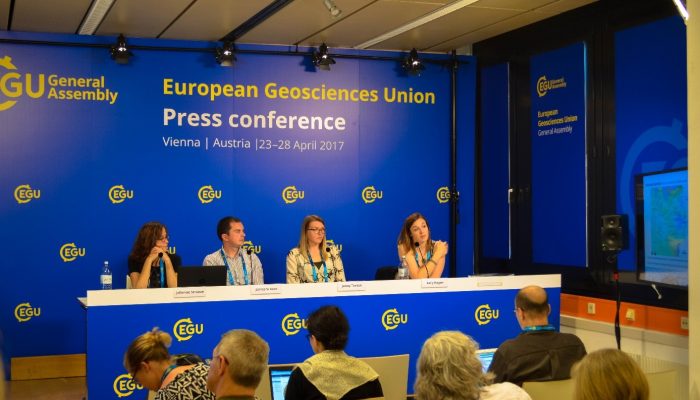
We have several vacancies for science-communication or science-journalism students in Europe to work at the press centre of the 2020 General Assembly, which will be held in Vienna, Austria, from 3–8 May. Applications from geoscience students with experience in science communication are also very welcome. This is a paid opportunity for budding science communicators to gain experience in the working ...[Read More]
Winners of the EGU Best Blog Posts of 2018 Competition
There is no doubt that 2018 was packed full of exciting, insightful and informative blog posts. An impressive 382 posts were published across the EGU’s official blog, GeoLog, as well as the network and division blogs! In December, to celebrate the excellent display of science writing across the network and division blogs, we launched the EGU Blogs competition. From a list of posts selected by our ...[Read More]
Looking back at the EGU Blogs in 2018: a competition
The past 12 months has seen an impressive 382 posts published across the EGU’s official blog, GeoLog, as well as the network and division blogs. From an Easter-themed post on the convection of eggs, features on mental health in academia, commentary on the pros and cons of artificial coral reefs, advice on presenting research at conferences, through to a three-part “live-series” on the ...[Read More]
Job opportunity at the EGU General Assembly: press assistant
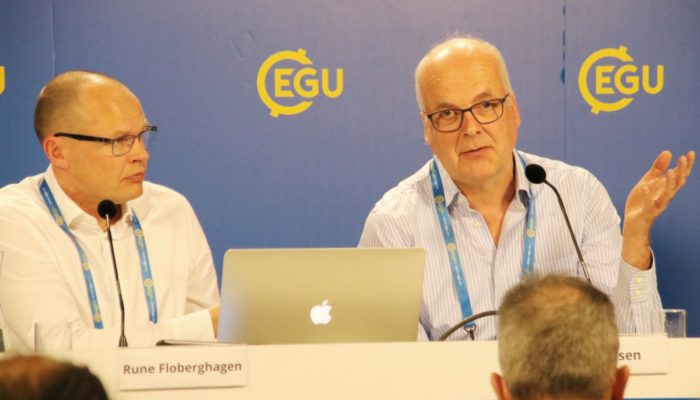
We have two vacancies for science-communication or science-journalism students in Europe to work at the press centre of the 2019 General Assembly, which is taking place in Vienna, Austria, from 7–12 April. Applications from geoscience students with experience in science communication are also very welcome. This is a paid opportunity for budding science communicators to gain experience in the worki ...[Read More]
Enmeshed in the gears of publishing – lessons from working as a young editor
Editors of scientific journals play an important role in the process research publication. They act as the midpoint between authors and reviewers, and set the direction of a given journal. However, for an early career scientist like me (I only defended my PhD in early December 2016) the intricacies of editorial work remained somewhat mysterious. Many academic journals tend to appoint established, ...[Read More]
Announcing the winner of the EGU Best Blog Post of 2016 Competition
There is no doubt that 2016 was packed full of exciting, insightful and informative blog posts. An impressive 360 posts were published across the EGU’s official blog, GeoLog, as well as the network and division blogs! In December, to celebrate the excellent display of science writing across the network and division blogs, we launched the EGU Blogs competition. From a list of posts selected by our ...[Read More]
Looking back at the EGU Blogs in 2016: a competition
The past 12 months has seen an impressive 360 posts published across the EGU’s official blog, GeoLog, as well as the network and division blogs. From a lighthearted Aprils Fools’ Day post featuring an extreme chromatic phenomenon (otherwise known as FIB); through to how climate change is affecting mountain plant’s sex ratios; features on natural hazard events throughout the year and children’s dis ...[Read More]
Join the EGU Blog Network!
After announcing earlier this week that we are sadly saying goodbye to the EGU network blog Between a Rock and Hard Place, the time has come to find a new blog to take their place. If you are an Earth, planetary or space researcher (a PhD student, an early career scientist, or a more established one) with a passion for communicating your work, we’d like to hear from you! We currently feature blogs ...[Read More]
GeoTalk: Simon Redfern on science communication
This week in GeoTalk, we’re talking to Simon Redfern, renowned scientist and science communicator and the man behind An Atom’s-Eye View of the Planet. What made you first step into science communication? That’s a difficult question for me to answer, since it is not a step that I have consciously recognised myself making. I suppose that I see science as having at least two sides. One is discovery… ...[Read More]