GeoTalk interviews usually feature the work of early career researchers, but this month we deviate from the standard format to speak to Kelly Stanford, an artist based in Manchester, UK who focuses on creating works of art that embody scientific concepts in an accessible and aesthetically pleasing manner which can be used to communicate science …[Read More]
scicomm
GeoPolicy: What inspires you to be a scientist?
What inspires you to be a scientist? For me, the motivation comes from a strong desire to make the world a better place, to use our skills and knowledge as scientists to help society and shape the future. Increasing our collaboration and involvement is an excellent way to expand our influence, but for early career …[Read More]
GeoPolicy: Science in policymaking: Who is responsible?
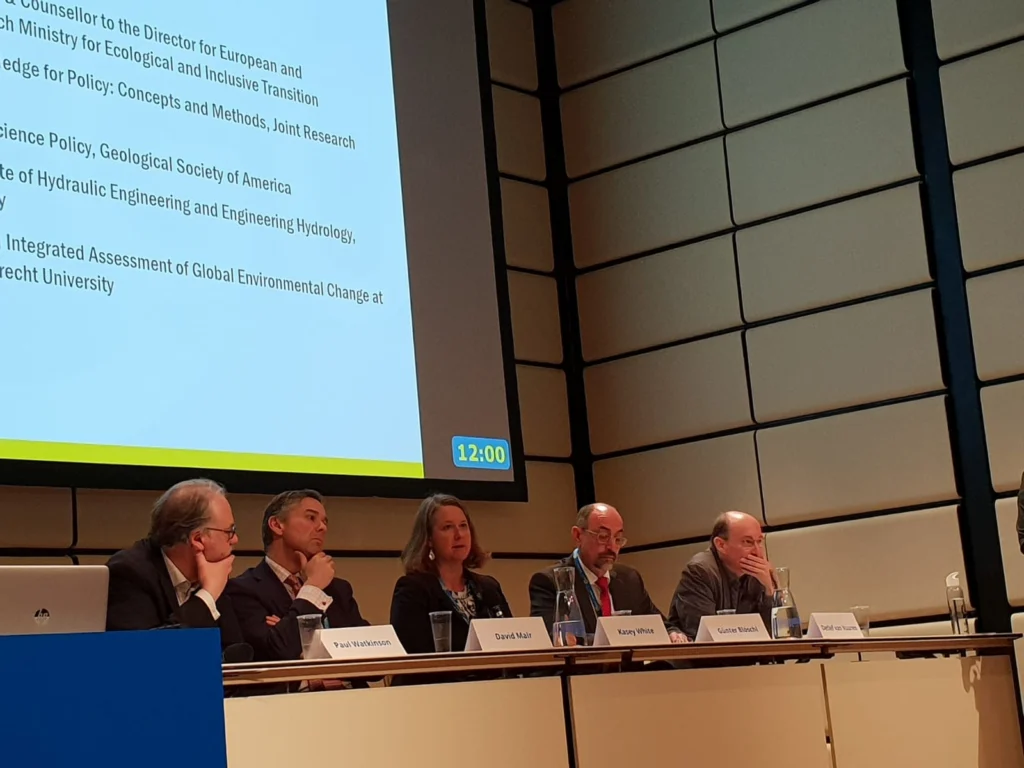
Should scientists actively approach policymakers in order to guide their decision-making processes, or is it the policymakers’ responsibility to seek scientific advice? In the first of the Great Debates at this year’s European Geosciences Union General Assembly in Vienna a mixed panel of policymakers and geoscientists tried to answer who should be responsible for making sure …[Read More]
Geology is boring, right? What?! NO! Why scientists should communicate geoscience
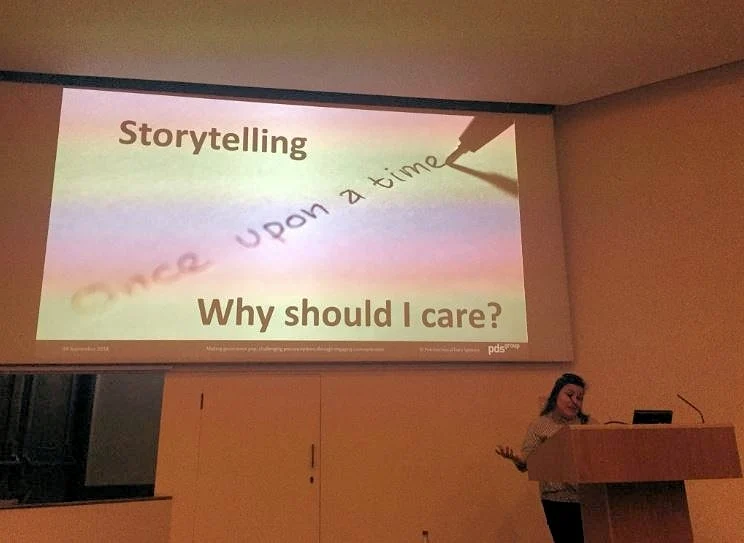
From the highest reaches of the atmosphere to the deepest caverns below, the geosciences is a fascinating field dedicated to understanding just how the Earth (and other worlds) tick. But to many people, the Earth, planetary and space sciences are far from interesting or important. So how can geoscientists share their enthusiasm with the public? Catherine …[Read More]
GeoPolicy: Horizon Geoscience!
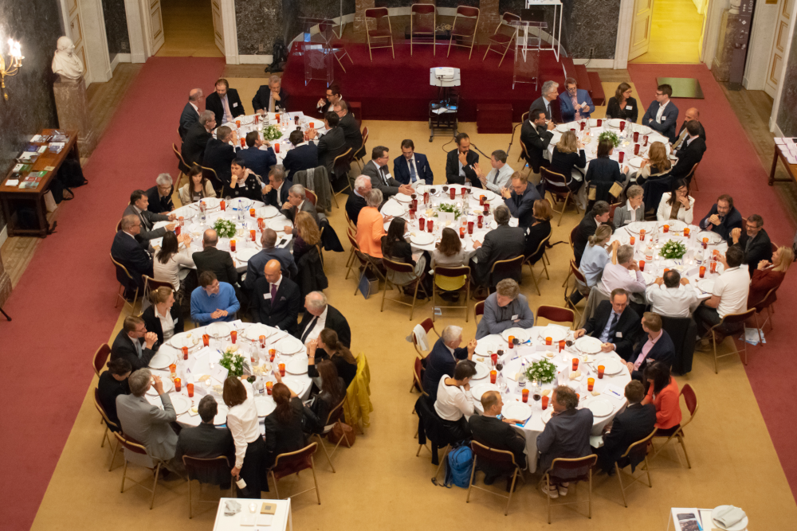
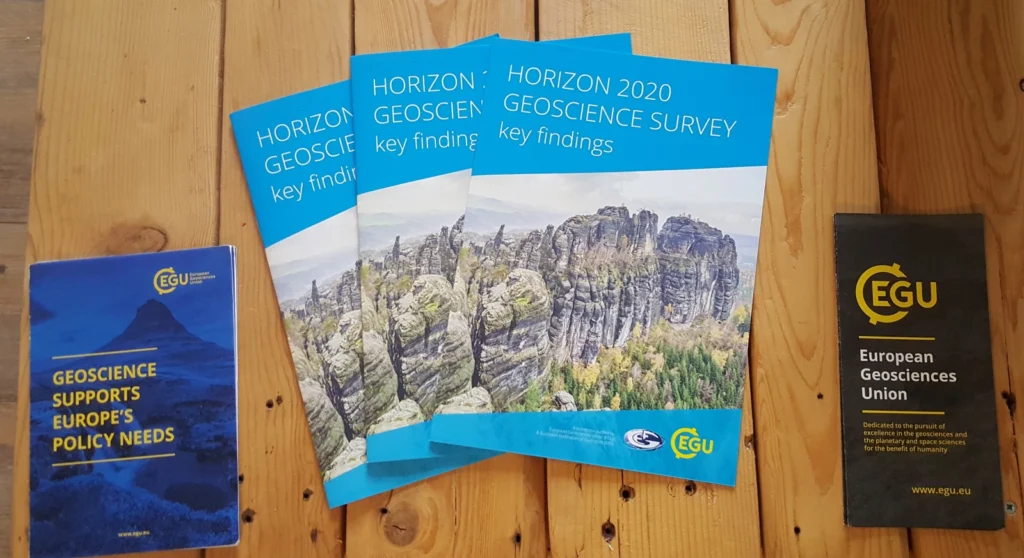
For the last few months the EGU has been working towards both hosting a dinner debate in Brussels, Belgium, and publishing the Horizon 2020 Geoscience Survey Report which was based on a survey conducted within the geoscience community earlier this year. Both of these endeavours were undertaken together with the European Federation of Geologists (EFG) and …[Read More]
Geopolicy: How does scientific uncertainty translate into policy?
Scientific uncertainty is one of the only things in science that is certain. It’s found in complex modelling systems, in the unpredictability of natural processes and even when there seems to be scientific consensus, a new scientific discovery can recreate ambiguity. But how do policymakers deal with scientific uncertainty when they are making decisions? Policymakers …[Read More]
GeoPolicy: What are science-policy placements and are they for you?
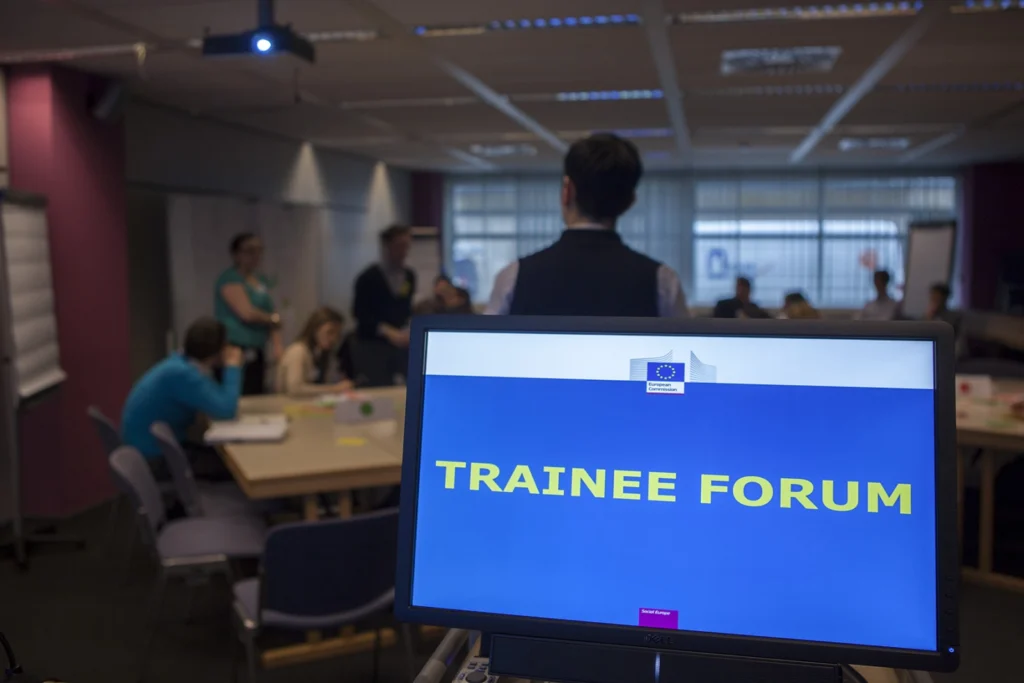
This month’s GeoPolicy blog will examine science-policy internships, fellowships, secondments and pairing-schemes in closer detail – highlighting the reasons for undertaking a placement and interviewing Dr Michelle Cain, an EGU member who participated in NERC’s Policy Placement Fellowship Scheme Science-policy placements provide scientists with the opportunity to use their knowledge within a policy-orientated organisation. This could include working …[Read More]
GeoPolicy: Living in a post-factual society and why it’s more important than ever for scientists to engage
Last week, the EGU Science Policy Fellow packed her bags and flew to Brussels. Now this wasn’t to sample some of the fine beers Belgium has to offer, but to attend the 2nd International Network on Government Science Advice (INGSA) Conference. This conference, co-organised by INGSA and the European Commission, aimed to discuss the major …[Read More]
GeoTalk: Will Morgan on podcasts and polluting the internet
This week in GeoTalk, we’re talking to Will Morgan, atmospheric scientist, podcaster and the blogger behind Polluting the Internet… You recently joined the EGU blog network, but you’ve been writing for a while now. What got you blogging? I guess the ultimate reason is that I enjoy talking about science! I’ve been involved with a …[Read More]