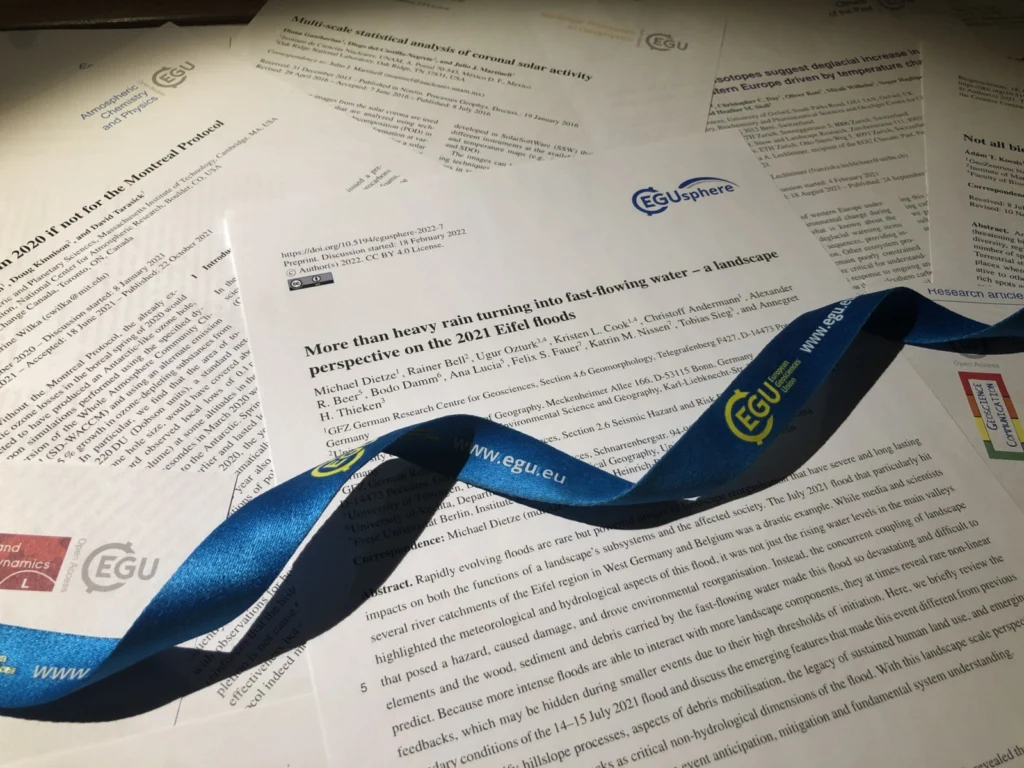
In 2025, Climate of the Past celebrated its 20th anniversary. Over the past two decades, the journal has become a leading open-access publication in paleoclimatology. It provides a platform for research into how the Earth’s climate has changed over time, and how these changes can inform our understanding of the current climate system. To celebrate …[Read More]
publications
Publish or perish? Or is publishing perishing? Reflections from a Great Debate at EGU26
There’s a particular kind of energy you get in a conference room when something is about to matter. You can feel it before anything starts: chairs filling quickly, people sitting closer than usual, no polite gaps left between strangers. This was the case for the Great Debate on The future of scientific publishing: do we …[Read More]
GeoTalk: meet Martin Rasmussen, managing director of Copernicus – EGU’s conference and publications partner!
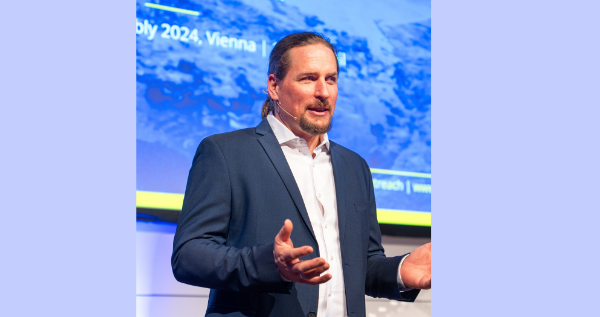
Hello Martin! Welcome to GeoTalk. Could you briefly introduce yourself to our readers? Dear EGU Community! My name is Martin, and since 2004 I have had the honour of being the Managing Director of Copernicus. By training, I am a hydrologist, but even before I graduated, I was drawn into the EGU General Assembly in …[Read More]
What’s on at EGU26: highlights from the Publications Committee!
There are so many great events to participate in at EGU26 this year, in both on-site and virtual formats, that it can be very easy to feel overwhelmed. Whilst we encourage you to make good use of your Personal Programme to help organise your activities, we also reached out to several of EGU’s Committees that …[Read More]
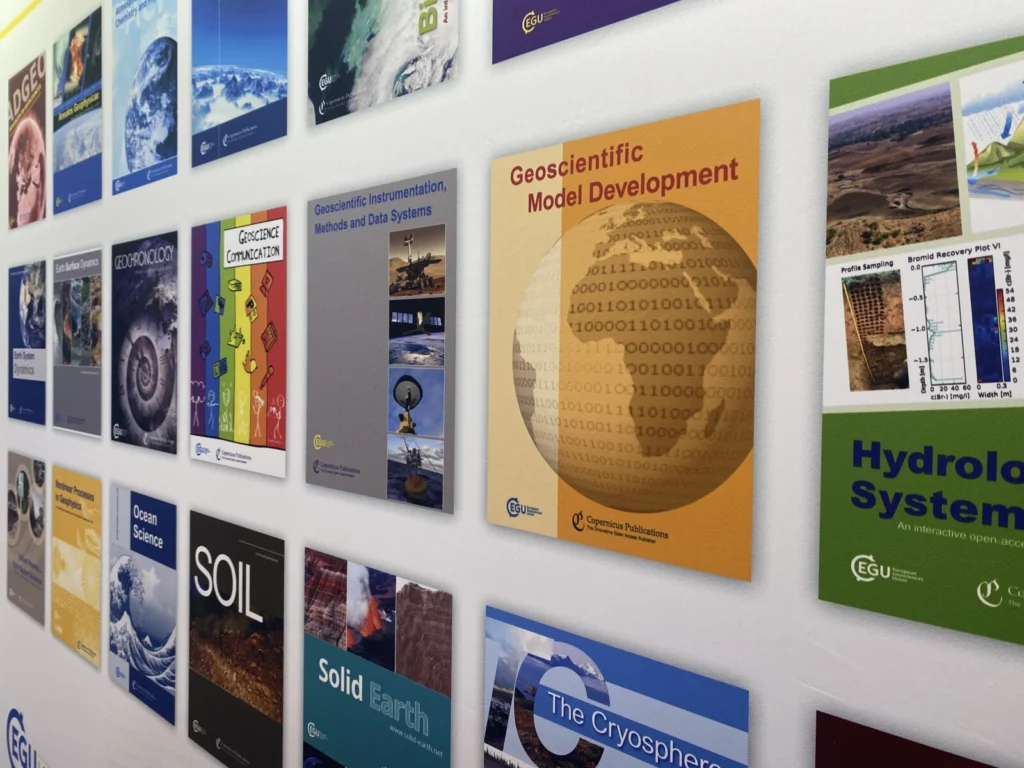
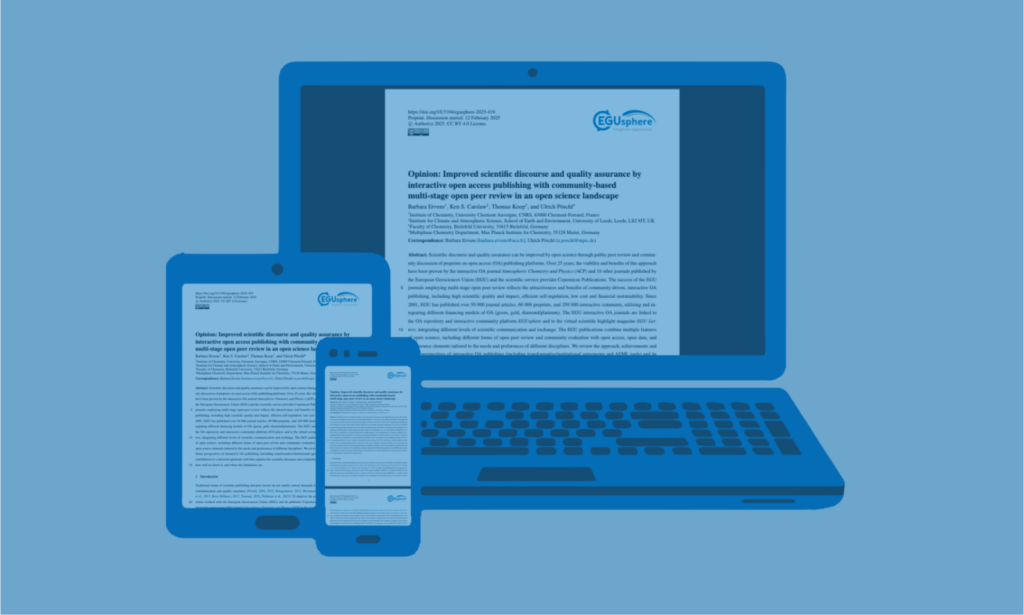
25 years of interactive open access publishing: An interview with current and former EGU Publications Committee chairs Barbara Ervens and Ulrich Pöschl
It is not every day you get to celebrate a silver jubilee in the world of digital publishing, but this year, the European Geosciences Union is doing exactly that. Twenty-five years ago, back when most of us were still navigating dial-up internet, EGU was already flipping the script on the black box of scientific publishing. …[Read More]
How to make your geoscience communication publishable: Find out at EGU25
A long time ago, when I walked into the Ministry of Education building in Dushanbe (Tajikistan) to inquire about offering an earthquake education workshop in a public school, I had no research agenda, let alone thinking about publishing it one day. All I wanted was to do something useful: sharing earthquake science with school children. …[Read More]
AI-based tools in scientific publishing: to what extent can we rely on them?
Academic publishing has considerably evolved in response to technological developments. Current discussions revolve around the rise of generative Artificial Intelligence (AI) tools or Large Language Models (LLM). They exceed the capabilities of simple spelling and grammar checkers or translation software and their use in the publication process has several implications that need to be considered. …[Read More]
Three peer review myths debunked by the First EGU Peer Review Training
In 2023, EGU offered Peer Review Training for the first time, over three virtual sessions in September and October 2023, with a little homework in between. With more than 100 applications, from which we chose 57, mostly Early Career Scientists (ECS) to fill the available places, the desire for this kind of training in the …[Read More]
What is an Impact Factor and why does it matter to me?
You have put in the hours, collected the data and written a great paper, but before you take your next steps you need to choose a journal in which to publish your work and there are a lot of factors in play. One of those, often discussed, is the Impact Factor, a number that each …[Read More]
How to make your geoscience communication publishable: Find out at EGU23
A long time ago, when I walked into the Ministry of Education building in Dushanbe (Tajikistan) to inquire about offering an earthquake education workshop in a public school, I had no research agenda, let alone thinking about publishing it one day. All I wanted was to do something useful: sharing earthquake science with school children. …[Read More]