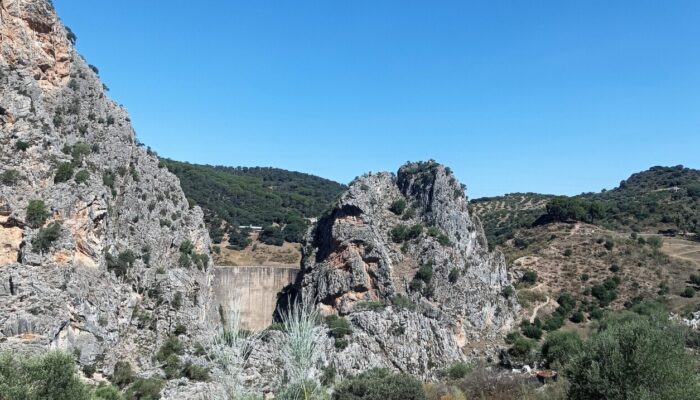
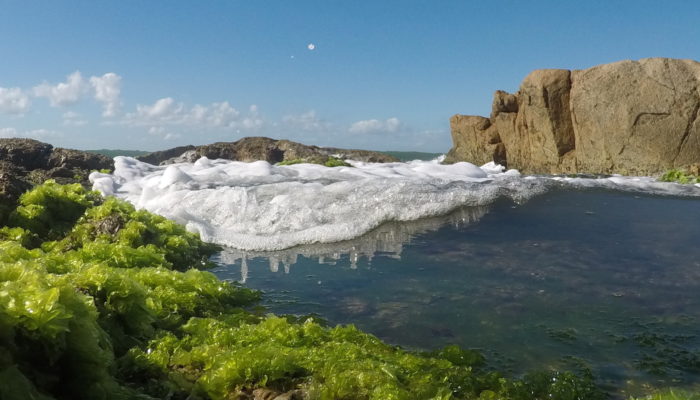
The Montejaque dam, with its 84 meters of height, is one of the first vaulted dams built in Europe. Currently, it remains only as a vestige of one of the major hydroelectric projects by the “Sevillana de Electricidad” company. Preliminary studies for its construction began in 1917. Some of these studies indicated that the project was unfeasible due to the karstic nature of the terrain, ...[Read More]
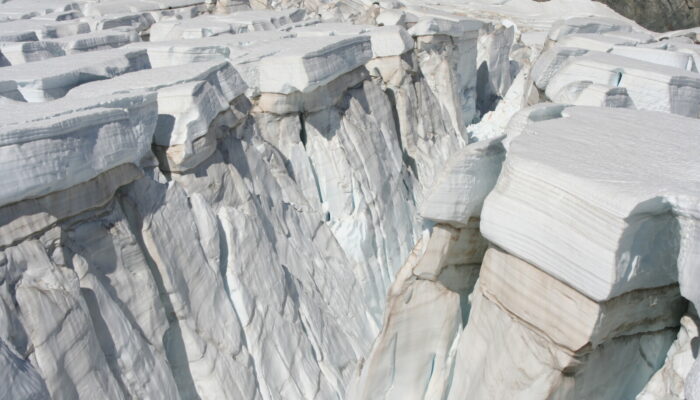
Imaggeo On Monday: Layers of dust and snow
This image shows layers of dust and snow at the surface of Fox Glacier, Southern Alps, New Zealand. The glacier surface in the upper part of Fox Glacier’s ice fall is heavily crevassed and intersected into seracs. Individual layers of fresh and old snow are visible, some with visible thin dust layers at their surface. The more reddish dust layers in the lower part of the image had been gener ...[Read More]
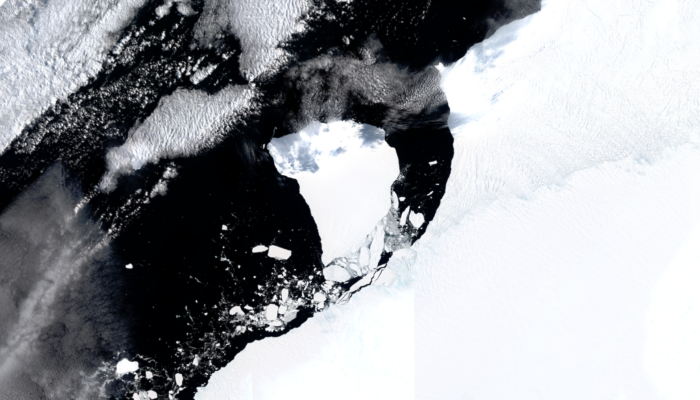
Imaggeo On Monday: Iceberg A-81, Brunt Ice Shelf, Antarctica
Information from a British Antarctic Survey Press Release. A huge iceberg (1550 km²), almost the size of Greater London, has broken off the 150m thick Brunt Ice Shelf. It calved after cracks that have been developing naturally over the last few years extended across the entire ice shelf, causing the new iceberg to break free. This occurred on Sunday 22 January between 19.00 and 20.00 UTC during a ...[Read More]
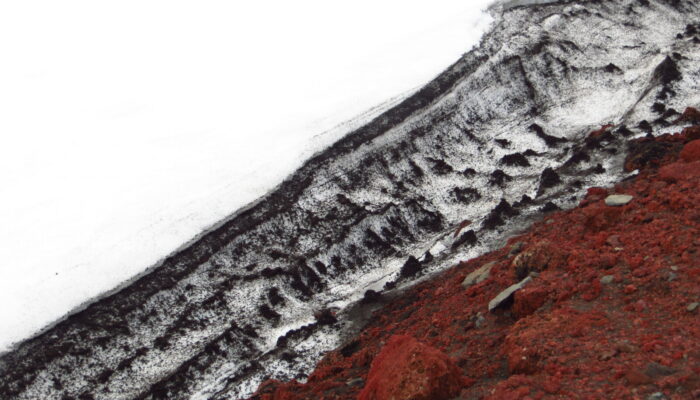
Imaggeo On Monday: Eyjafjallajökull – hot and cold
Active volcano Eyjafjallajökull is covered by 80 square kilometres of glaciers. Quite often one can feel the warmth from the red igneous rocks that protrude from the ice cap. The volcano is known for the eruption in April 2010, which released ash clouds so large that in some areas they turned daylight into darkness. Many flights in Europe were cancelled. A significant part of the glacier melted in ...[Read More]
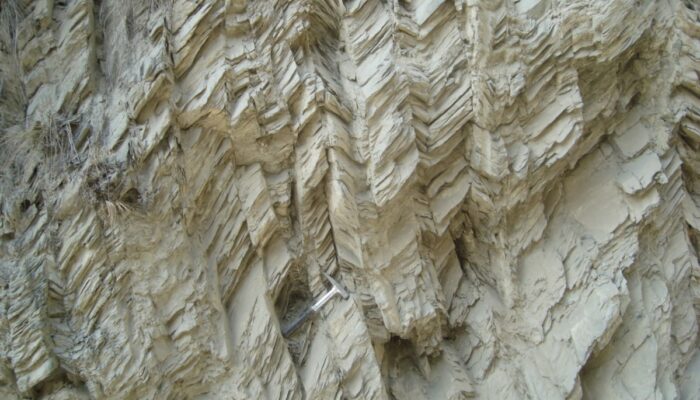
Imaggeo On Monday: High amplitude ‘V-shaped’ kink fold with axial plane cleavage
The Himalayan-Tibetan orogeny has been considered the youngest collisional fold belt in the Earth and a classic example of intercontinental collision orogeny. It is comprised of different litho-tectonic units manifested by normal/thrust faults and suture zones (Valdiya, K.S., 1977). The Himalayan region has experienced multifaced deformation, spectacular rock assemblages with high-pressure-tempera ...[Read More]
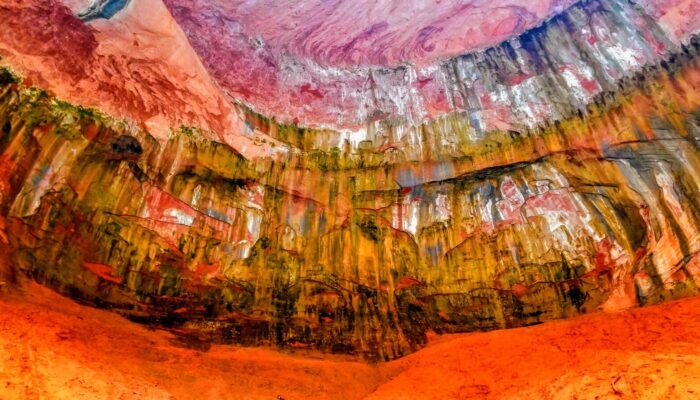
Imaggeo On Monday: Nature’s impressionist painting
The image shows an incredible blend of colors in a natural cave in Kolob Canyons near Zion National Park, Utah. Formed by the oxidation of minerals lining the walls of the cave and snow melt, the sight feels like a natural inspiration for impressionist painting. This well-hidden gem is a lesser known treasure at the end of a hike in a lesser frequented part of the region near the more-famous Zion ...[Read More]
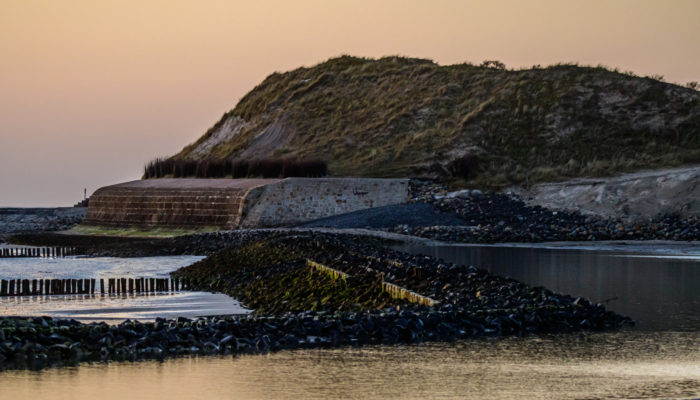
Imaggeo On Monday: Different structures for coastal management
Different structures for coastal management at Spiekeroog, Germany. The structures include a groyne and a revetment. Groynes are cross-shore structures, linearly ordered from the shoreline and into the sea. Typically made of rock or wood, groynes are built to limit the longshore transport and loss of shore material like sand or shingle. The build-up shore material captured by the groynes re ...[Read More]
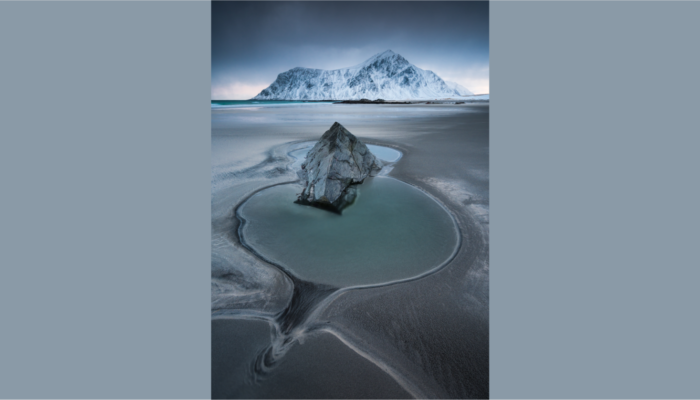
Imaggeo On Monday: Where mountains meet the sea
Skagsanden beach is a stunning destination located in the Lofoten archipelago in Norway. This beautiful white sandy beach stretches for 800 meters and offers breathtaking views of the surrounding mountains and crystal-clear waters. From a geological standpoint, Skagsanden beach is a fascinating site. It is believed that the beach was formed by the erosive power of the sea, which shaped and sculpte ...[Read More]
Imaggeo On Monday: The movement of the tides
Tides are very long-period waves characterized by the rise and fall of sea levels. This phenomenon occurs in response to forces exerted jointly by the moon and sun, generated in the ocean, and propagating toward the coast. Tides can be divided into two main types: low tide and high tide. High tide occurs when sea water rises above the mean level while low tide occurs when sea water falls below the ...[Read More]
Imaggeo On Monday: Pot of Gold: Ngorongoro Crater
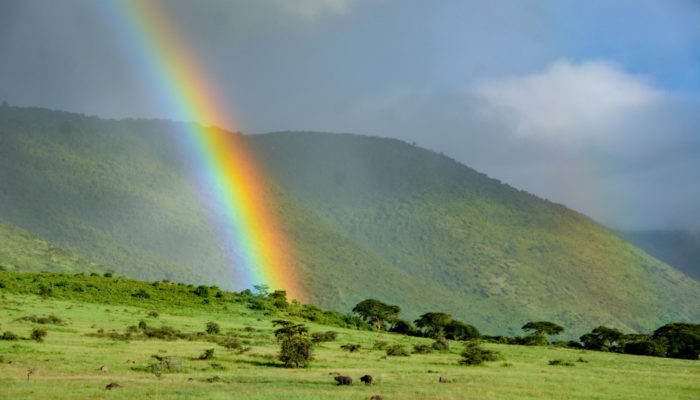
A double rainbow beams into the Ngorongoro Crater after rainfall as a couple of African buffalos graze within this UNESCO World Heritage Site. The largest intact caldera in the world, it extends 20 kilometres in diameter and is home to the Big 5 (lion, leopard, rhino, elephant, and African buffalo) – a true pot of gold. Photo and caption by Jack Park, shared on imaggeo.egu.eu. ...[Read More]