GeoLog

EU

GeoPolicy: Response to the new European climate resilience framework
GeoPolicy: Response to the new European climate resilience framework
Climate change is having a profound impact on the planet. According to several reports, 2023 was the warmest year on record, with the global average temperature over the 12-month period from February 2023 to January 2024 exceeding the 1.5 °C threshold above pre-industrial levels. Climate change acts as a risk multiplier, as its impacts transcend national borders and amplify existing threats and cr ...[Read More]

Rethinking Europe’s historical climate leadership in a ‘Time of Transition’

Rethinking Europe’s historical climate leadership in a ‘Time of Transition’

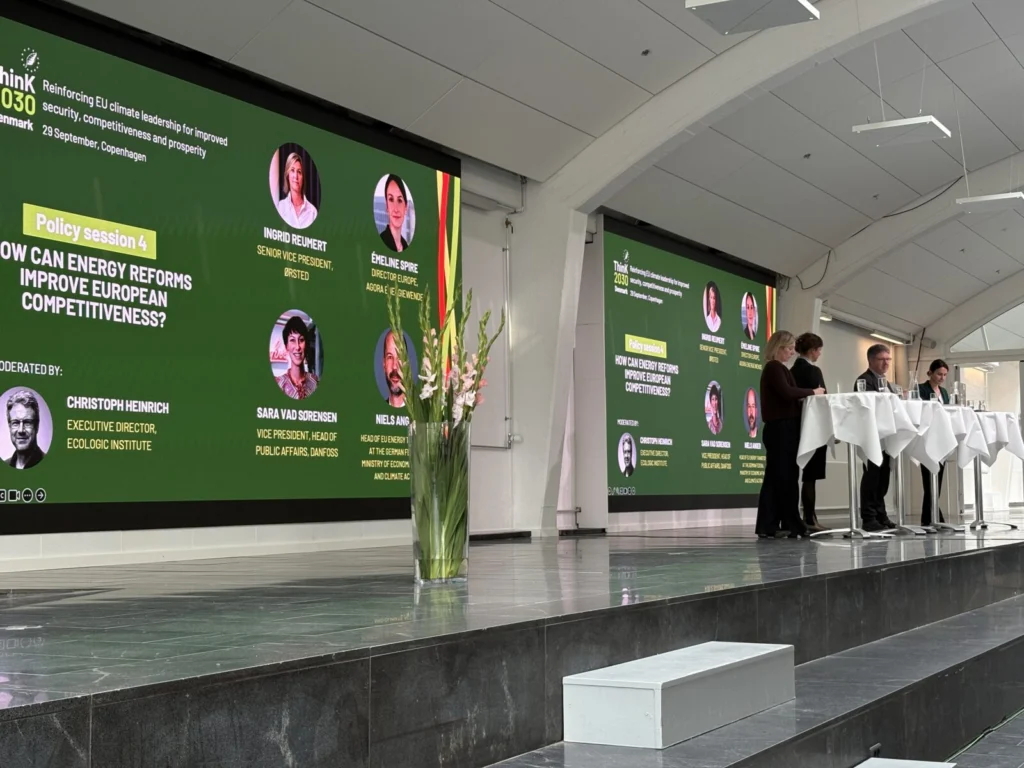
The Think2030 Dialogue Denmark was held in crucial times, since once the uncontested frontrunner in global climate governance, Europe now faces the dual challenge of renewing its leadership and maintaining competitiveness amid a shifting geopolitical and technological landscape, alongside a constantly changing multilateral world order. At a time when global competition over clean technologies, res ...[Read More]

3 ways geoscientists can support the Biodiversity Strategy for the EU’s Green Deal

3 ways geoscientists can support the Biodiversity Strategy for the EU’s Green Deal

The European Union Green Deal outlines an ambitious plan for turning climate and environmental challenges into opportunities to make the EU’s economy sustainable and make Europe the first climate-neutral continent. This plan covers a wide range of topics such as preventing biodiversity loss, achieving net-zero pollution and making the agricultural industry more sustainable. These topics include sp ...[Read More]

GeoPolicy: getting ready for the European Parliament Election

GeoPolicy: getting ready for the European Parliament Election

The European Parliament currently has 751 members who belong to one of the eight political groups, at least one of the 20 different committees and represent approximately 500 million people from the 28 EU Member States. The EU Parliament plays an extremely important role in the EU. It oversees the EU budget, launches investigations into specific issues and shares legislative powers with the Counci ...[Read More]

Can the EU become carbon neutral by 2050? A new strategy from the EU!

Can the EU become carbon neutral by 2050? A new strategy from the EU!

On Wednesday 28 November 2018, the European Commission adopted a strategic long-term vision for a climate neutral economy (net-zero emissions) by 2050!  A Clean Planet for All, tactically released ahead of the 24th Conference of the Parties (COP 24), which will be hosted in Katowice, Poland from 2-14 December, describes seven overarching areas that require action and eight different scenarios that ...[Read More]

GeoPolicy: How do Members of European Parliament learn about science?

GeoPolicy: How do Members of European Parliament learn about science?

Only ~5% of Members of European Parliament, or MEPs, have a background in the physical sciences1, yet many political challenges require an understanding of the science surrounding these issues. Issues such as locating and extracting mineral resources, understanding climate change impacts, and developing new low-carbon technology. The European Commission (EC) and the European Parliament (EP) have s ...[Read More]

GeoPolicy: 8 ways to engage with policy makers

GeoPolicy: 8 ways to engage with policy makers

Scientific research is usually verbally communicated to policy officials or through purposefully written documents. This occurs at all levels of governance (local, national, and international). This month’s GeoPolicy post takes a look at the main methods in which scientists can assist in the policy process and describes a new method adopted by the European Commission (EC) that aims to enhance scie ...[Read More]

GeoPolicy: 8 science-based projects improving regions in the EU

GeoPolicy: 8 science-based projects improving regions in the EU

As scientists, it can sometimes be difficult to see the real-world implications of some of our research. Concepts can often seem abstract and remote when sitting in a lab or taking field measurements. But researching the Earth sciences can have profound effects on global society. Understanding how the natural world works can help protect and improve human, animal, and plant life. This month’s GeoP ...[Read More]