GeoLog

EGU Journals

What does open science mean in the real world? My experiences in becoming EGU’s editorial manager
What does open science mean in the real world? My experiences in becoming EGU’s editorial manager

For nearly 7 months now, I have held the position of EGU’s editorial manager. However, my interest in and passion for open access and open science in general goes back several years. Here, it is important to make the distinction: open science is a broad concept that encompasses transparency and accessibility in the entire research process, while open access is an important component of open scienc ...[Read More]

EGUsphere preprints: new pathways for discussion, sharing and feedback

EGUsphere preprints: new pathways for discussion, sharing and feedback

After a long wait, EGU has this month launched our much-anticipated preprints – the newest feature of the Open Access repository EGUsphere. Now for the first time, authors can upload preprints to the online server, taking advantage of EGU’s pioneering public peer-review process, whilst preparing their papers for future release. Three different roads for preprints are available with EGUsphere: Prep ...[Read More]

Geosciences Column: Spatial seismic hazard in western Indonesia – a new, adaptive, approach

Geosciences Column: Spatial seismic hazard in western Indonesia – a new, adaptive, approach

A Natural Hazards Earth System Sciences (NHESS) paper proposes a new sampling method for reducing uncertainty in geographical location in seismic hazard risk analysis, with implications for the insurance industry and risk communication in general.   Globally, rapid urbanisation is increasing the risk of exposure of human populations and infrastructure to natural hazards, including earthquakes ...[Read More]

Geosciences Column: Thunderstorm asthma, the unexpected impact of lightning storms on pollen allergies.

Geosciences Column: Thunderstorm asthma, the unexpected impact of lightning storms on pollen allergies.

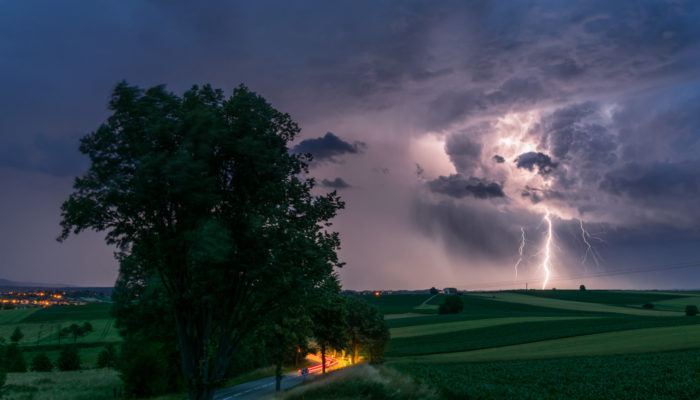
In October 2015 a series of massive thunderstorms rolled across the Eastern Mediterranean. In the hours and days that followed many people living along the Israeli coast had to go to their nearest medical centre because they were experiencing respiratory problems, which appeared very similar to asthma. But what could have caused these breathing problems? Well in research recently published in Natu ...[Read More]

The inaugural EGU webinar: EGU journals and Open Access publishing

The inaugural EGU webinar: EGU journals and Open Access publishing

Last week the EGU executive office debuted something new for our members: the EGU webinar. The first of these focused on the open access journals that EGU publishes in partnership with Copernicus.The webinar discussed the interactive public peer review system, the role of the EGU Publications Committee, how researchers can effectively publish in an EGU Journal and the new EGUsphere.   The web ...[Read More]

Geosciences Column: Landslide risk in a changing climate, and what that means for Europe’s roads

Geosciences Column: Landslide risk in a changing climate, and what that means for Europe’s roads

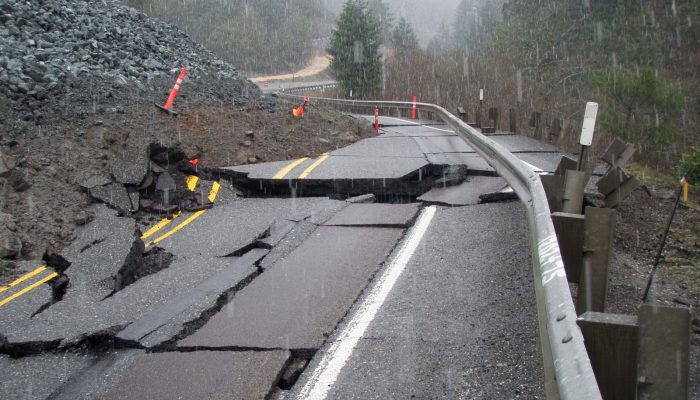
If your morning commute is already frustrating, get ready to buckle up. Our climate is changing, and that may increasingly affect some of central Europe’s major roads and railways, according to new research published in the EGU’s open access journal Natural Hazards and Earth System Sciences. The study found that, in the face of climate change, landslide-inducing rainfall events will increase in fr ...[Read More]

Geosciences Column: How fast are Greenland’s glaciers melting into the sea?

Geosciences Column: How fast are Greenland’s glaciers melting into the sea?

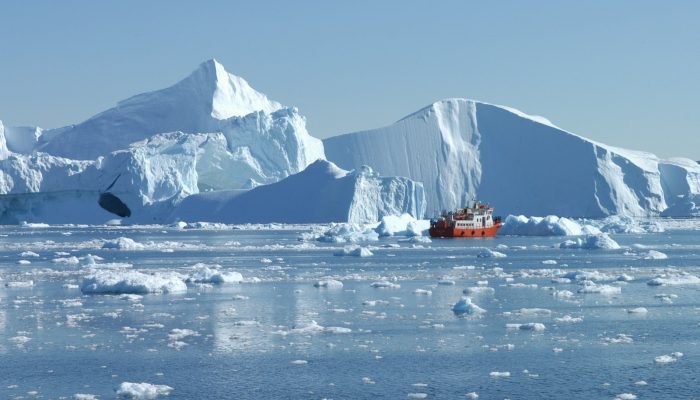
The Greenland ice sheet is undergoing rapid change, and nowhere more so than at its margins, where large outlet glaciers reach sea level. Because these glaciers are fed by very large reservoirs of ice, they don’t just flow to the coast, but can extend many kilometres out into the ocean. Here, the ice – being lighter than water – will float, but remain connected to the ice on the mainland. This phe ...[Read More]

Geosciences Column: The hunt for Antarctica’s oldest time capsule

Geosciences Column: The hunt for Antarctica’s oldest time capsule

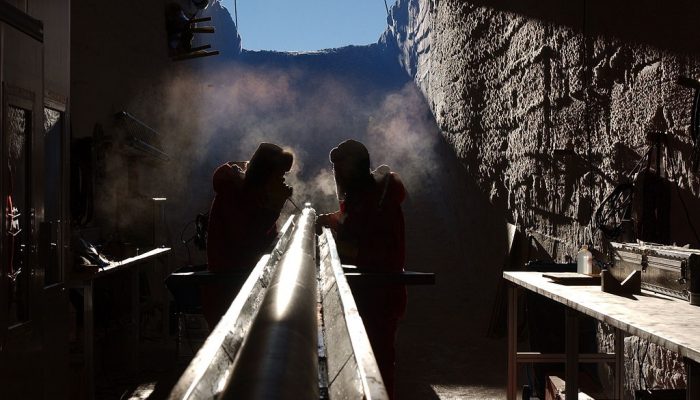
The thick packs of ice that pepper high peak of the world’s mountains and stretch far across the poles make an unusual time capsule. As it forms, air bubbles are trapped in the ice, allowing scientists to peer into the composition of the Earth’s atmosphere long ago. Today’s Geosciences Column is brought to you by PhD researcher Ruth Amey, who writes about recently published resea ...[Read More]

May GeoRoundUp: the best of the Earth sciences from around the web

May GeoRoundUp: the best of the Earth sciences from around the web

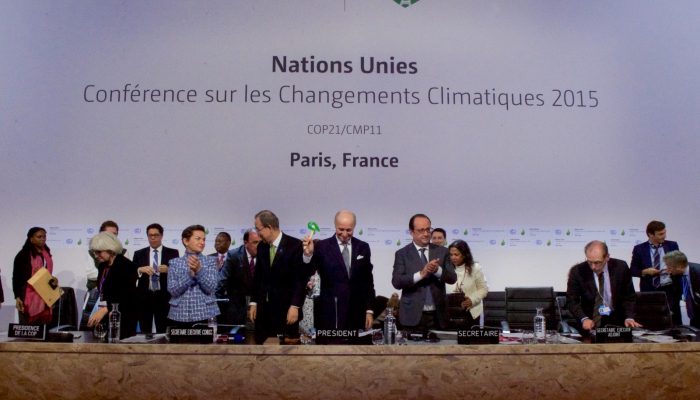
Drawing inspiration from popular stories on our social media channels, as well as  unique and quirky research news, this monthly column aims to bring you the best of the Earth and planetary sciences from around the web. Major Story In the last couple of weeks of May, the news world was abuzz with the possibility of Donald Trump withdrawing from the Paris Agreement. Though the announcement actually ...[Read More]

All you ever wanted to know about EGU publications

All you ever wanted to know about EGU publications

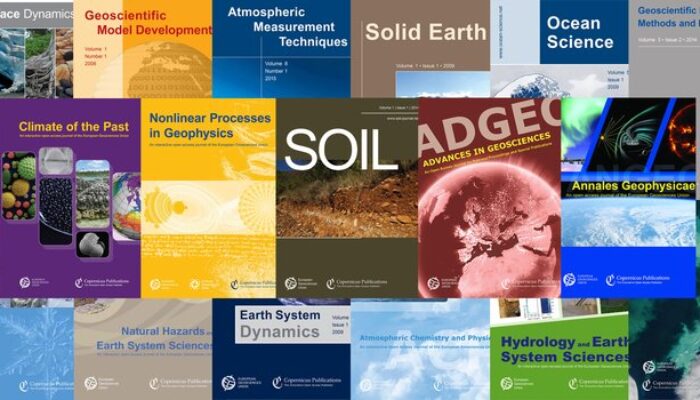
Did you know that, the EGU, through Copernicus Publications, publishes 17 peer-reviewed open-access journals? The journals cover a range of topics within the Earth, planetary and space sciences: with publications spanning the cryospheric sciences, soil system sciences, through to non-linear processes in geophysics, there is something for everyone. Whatever your area of research, chances are you’ll ...[Read More]