GeoLog

EGU General Assembly

How to make the most out of your experience at EGU26 (part 2)

How to make the most out of your experience at EGU26 (part 2)

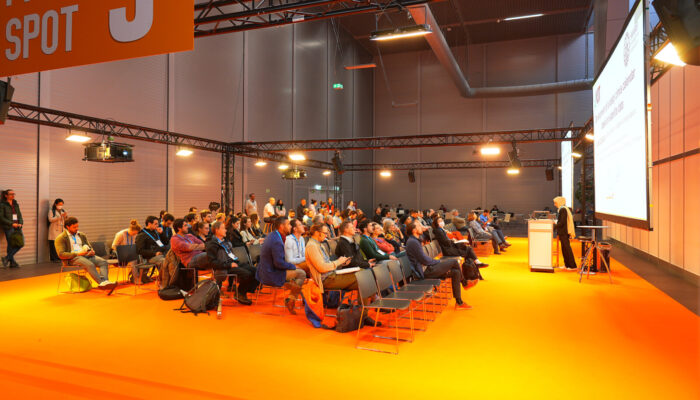
Presenting can be a big topic on its own, so I am about to share some essentials. Let’s suppose you have a talk: have its content completely ready at least a day before, practice it at least three times in full length, and once before you are in front of a real audience. If you don’t have a test audience, you can use a mirror. I know, this can sound embarrassing, and it does take time, ...[Read More]

A Geoscientist’s Colorful Journey from Research to Children’s Books

A Geoscientist’s Colorful Journey from Research to Children’s Books

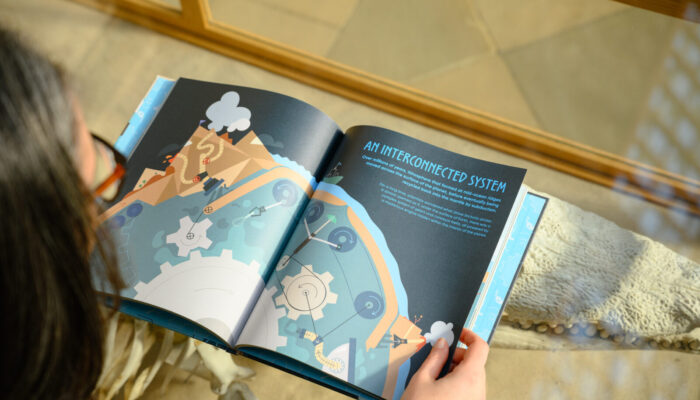
In today’s blog we’re having a chat with our very own Dr Lucia Perez-Diaz. As Lucia put it at the start of this year’s General Assembly, us scientists get to wear many “hats”, and she lives up to that statement. Besides a brilliant geoscientist, she is an incredible artist – also featured as last year’s artist in residence – and a budding press assistant! But more importantly, she is the author of ...[Read More]

Io: a spongy world consumed by molten rock

Io: a spongy world consumed by molten rock

Jupiter’s moon Io is the most volcanically active world in our solar system, with hundreds of volcanoes that constantly erupt on its ever renewing surface. Although Io always points the same side toward Jupiter in its orbit around the gas giant, two other Galilean moons, Europa and Ganymede, pull Io’s orbit into an irregularly elliptical one. Thus, in its widely varying distances from ...[Read More]

Raising the (melt)stakes! How robotic innovation reveals new findings on melting glaciers

Raising the (melt)stakes! How robotic innovation reveals new findings on melting glaciers

In the age of climate change, glaciers across the Arctic are melting, consequently reducing regional freshwater supplies and contributing to the ongoing rise in global sea levels. But how fast do they melt? And is it possible to predict that? A new study on the Xeitl Sit’ (LeConte) glacier in Alaska aims to answer these questions. The research group from Oregon State University, Harvard University ...[Read More]