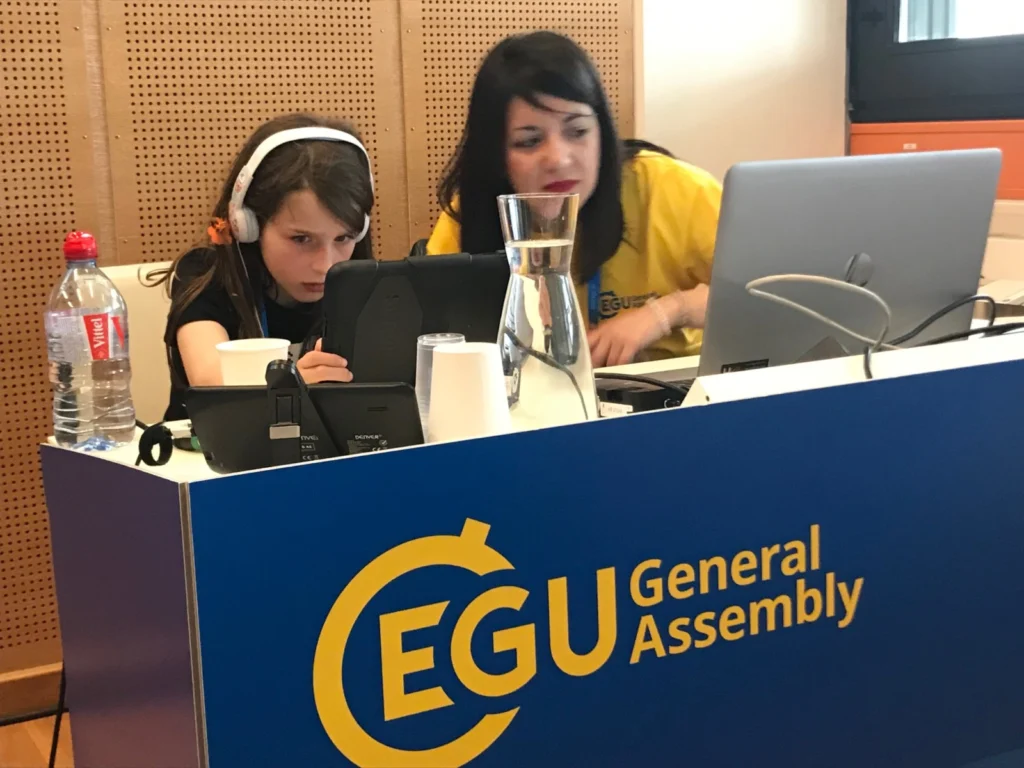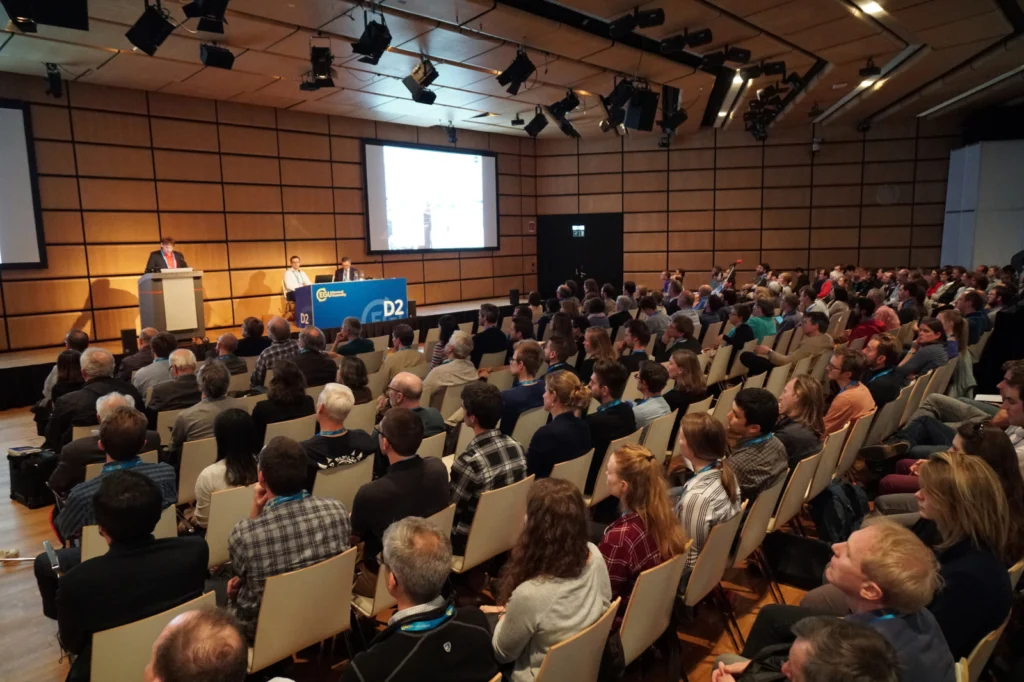
“Thanks for coming, but no time for celebratory drinks,” I told my colleagues. I arrived in Brussels right after defending my doctoral thesis to brief the Finnish Member of the European Parliament (MEP) Miapetra Kumpula-Natri and her team about the impact of sea-level rise and climate change on the coastal communities of the Baltic Sea. Climate science? Baltic Sea? EU Parliament? I was soon bombar ...[Read More]
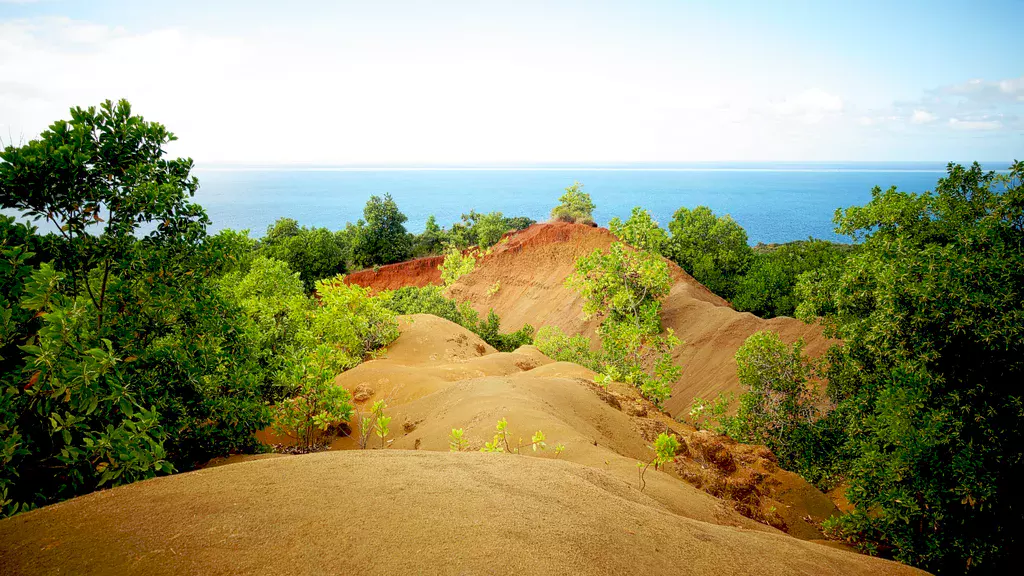
Imaggeo On Mondays: Contrasted island in the Mozambic Canal
Mayotte, the so-called “perfume island”, is a volcanic island of the Comoros Archipelago and a French overseas department which hit the headlines in 2018-2019 with an enigmatic as well as frightening seismic swarm, recently linked to the appearance of a new submarine volcano nearby. Surrounded by one of the largest lagoons in the World and sprinkled with small islands, Mayotte only rea ...[Read More]
GeoTalk: A biogeocaching scavenger hunt for Earth science outreach
Did you know that the EGU has a public engagement grant scheme? We’ll be awarding three EGU members with 1500€ to help them develop an outreach project that aims to raise awareness of geosciences outside the scientific community. The 2020 call for applications is currently open. In this GeoTalk interview, Olivia Trani talks to Astrid Harjung, Laura Coulson, Romana Hödl and Katrin Attermeyer, resea ...[Read More]
Imaggeo on Mondays: Santorini cliffs sculpted by wind and sea
The cliffs look like a bas-relief sculpted by a tireless artist. Naturally carved by the wind and sea, Vlychada’s white cliffs border its black sands, on the southern shore of Thera (Santorini), Greece. Both are of volcanic origin. The material originates from the Late Bronze Age eruption around 1600 BCE, which also buried the prosperous Akrotiri settlement. This massive Plinian eruption led to th ...[Read More]
Winners of the EGU Best Blog Posts of 2019 Competition
2019 was a brilliant year for our blogging network here at EGU. Across the EGU’s official blog, GeoLog, as well as the network and division blogs there were so many interesting, educational and just downright entertaining posts this year it was hard to get the blog editors to choose their favourites! Nevertheless in December, to celebrate the excellent display of science writing across the network ...[Read More]
EGU Photo Competition 2020: Now open for submissions!
If you are pre-registered for the 2020 General Assembly (Vienna, 3 – 8 May), you can take part in our annual photo competition! Winners receive a free registration to next year’s General Assembly! The tenth annual EGU photo competition opened on 15 January. Up until 15 February, every participant pre-registered for the General Assembly can submit up to three original photos and one moving image on ...[Read More]
Imaggeo on Mondays: Sampling sulfurous sinkhole water
Sampling of water present in sinkhole formed in superficial salt-rich lacustrine deposits at Ghor Al-Haditha, Dead Sea eastern shore, Jordan, during a field campaign in October 2018. The water in this sinkhole flows into the Dead Sea in a surface stream channel formed in 2012. The water was highly acidic and extremely conductive, with a strong sulfurous odour. Understanding the chemistry of the wa ...[Read More]
The Carbon Potential of Peat
2020 is being described by many as a tipping point: the year that humanity as a species must take concrete and measurable action to prevent catastrophic climate change. But even if we do manage to slow carbon emissions from 2020 onwards, how would the planet deal with all the carbon dioxide we have produced so far? How much capacity do the planet’s natural carbon sequestration reserves actually ha ...[Read More]
Being a mentor at the General Assembly 2020
With more than 16,000 participants, 5,000 oral presentations, 9,000 posters and 1,200 PICO presentations, the EGU General Assembly can be an overwhelming experience for any scientist, whether it’s your first time or 10th time attending. However, you can make conference networking a bit easier by signing up for the EGU 2020 Mentoring Programme! This mentoring scheme aims to facilitate new connectio ...[Read More]
Imaggeo on Mondays: When boulders hitch a ride from glaciers
Glen More, on the Isle of Mull, Scotland, is a classic locality for studying glacial landforms and sediments. Here, two prominent ice-transported boulders stand guard at the head of the valley, left behind after the Loch Lomond Readvance (Younger Dryas stade), the final pulse of Quaternary glaciation in Scotland. Behind them in the characteristic U-shaped valley, hummocky morraines are littered wi ...[Read More]