GeoLog

GeoLog

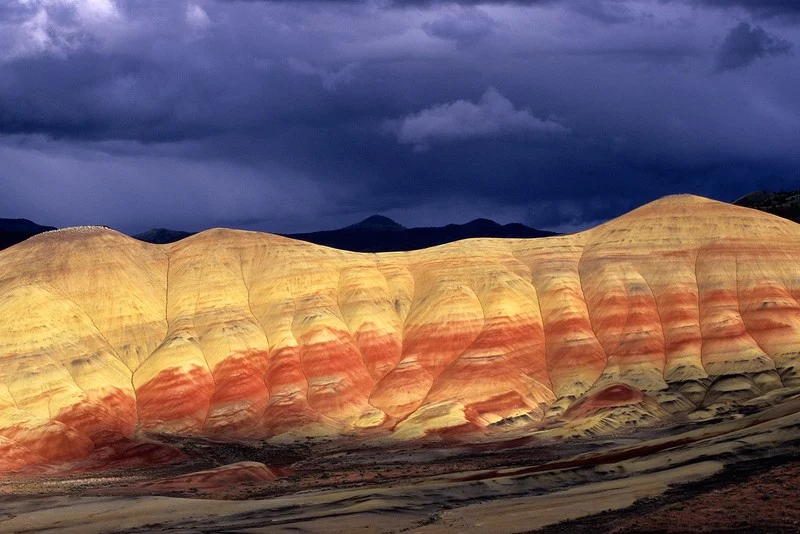
Imaggeo on Mondays: Painted Hills after the storm.

The geological record preserved at John Day Fossil beds, in Oregon, USA, is very special. Rarely can you study a continuous succession through changing climates quite like you can at this National Park in the USA. It is a treasure trove of some 60,000 plant and animal fossil specimens that were preserved over a period of 40 million years during the Cenozoic era (which began 66 million years ago). ...[Read More]

GeoTalk: Beate Humberset

GeoTalk: Beate Humberset

In this edition of Geotalk, the regular feature were we highlight the work and achievements of early career researchers, we are talking to Beate Humberset, the winner of the Outstanding Student Poster (OSP) Award for the Solar- Terrestrial Sciences Division (ST) in 2013. In addition, Beate is the Young Scientist Representative for the ST Division so we will also touch upon her responsibilities in ...[Read More]

Imaggeo on Mondays: Salted Moon

The eerie landscape depicted in our Imaggeo on Mondays image, is brought to you by Donatella Spano (University of Sassari, Italy). This picture was taken at Mammoth Hot Springs, one of the largest hot spring areas at Yellowstone National Park, Wyoming, United States on August 10, 2010. Mammoth Hot Springs is divided into two sections, the Lower Terrace and the Upper Terrace Loops. The photo below ...[Read More]

The known unknowns: Climate, Life, and the Solid Earth (Part V)

After four fascinating instalments in the known unknowns series we have (sadly) come to the final post. Since the series began in September we have explored the top questions that still remain unanswered when it comes to understanding the inner workings of the planet as well as how the interplay of a number of systems that occur at the Earth’s surface give rise to its varied landscapes. The series ...[Read More]

EGU2015: Applying for financial support to attend the General Assembly

The EGU is committed to promoting the participation of both young scientists and established researchers from low and middle income countries who wish to present their work at the EGU General Assembly. In order to encourage participation of scientists from both these groups, a limited amount of the overall budget of the EGU General Assembly is reserved to provide financial support to those who wis ...[Read More]

Imaggeo on Mondays: Polygon ponds at sunset.

Thinking of the Arctic conjures up images of vast expanses of white icy landscapes punctuated by towering icebergs and a few dark rocky masses; certainly not a green landscape with a series of water pools amongst rolling hills. The image below is perhaps more reminiscent of the temperate Scottish or Welsh countryside; but don’t be fooled, out Imaggeo on Monday’s image was captured by Reinhard Pien ...[Read More]

Open Access: Access to knowledge

“Access to knowledge is a basic human right.” Yet sadly as scientists we are often forced to operate in a framework in which this is not always the case. This week sees the celebration of the eighth Open Access Week, and whilst there have undoubtedly been many achievements by the Open Access (OA) movement since 2009, there is still a long way to go before mankind’s basic human right to knowledge i ...[Read More]

EGU 2015: Call-for-papers is now open!

From now, up until 7 January 2015, you can submit your abstract for the upcoming EGU General Assembly (EGU 2015). In addition to established scientists, PhD students and other early career researchers are welcome to submit abstracts to present their research at the conference. Further, the EGU encourages undergraduate and master students to submit abstracts on their dissertations or final-year pro ...[Read More]

Imaggeo on Mondays: Fresh breakout in the lava fields

Kate Dobson was a volunteer at the Hawaii Volcano Observatory (HVO) in 2001/02 and revisited the stunning Big Island in 2006. During her holidays Kate ventured out to the coastal section of the Pu’uO’o lava flow field and captured this spectacular image of a fresh lava breakout. The Pu‘u ‘Ō‘ō vent is in the East Rift Zone of Kīlauea Volcano and began erupting on January 3, 1983, and has continued ...[Read More]

The known unknowns – the outstanding 49 questions in Earth Sciences (Part IV)

We are coming to the end of the known unknowns series and so far we have explored issues which mainly affect the inner workings of our planet. Today we’ll take a look at the surface expression of the geological processes which shape the Earth. Topography significantly affects our daily life and is formed via an interplay between primarily tectonics and climate, but it also affected by biological, ...[Read More]