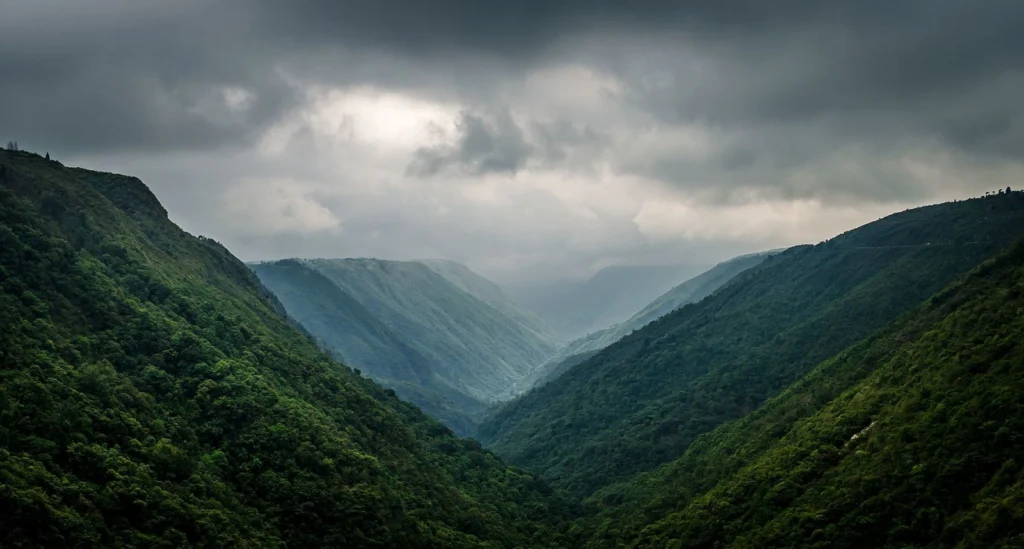
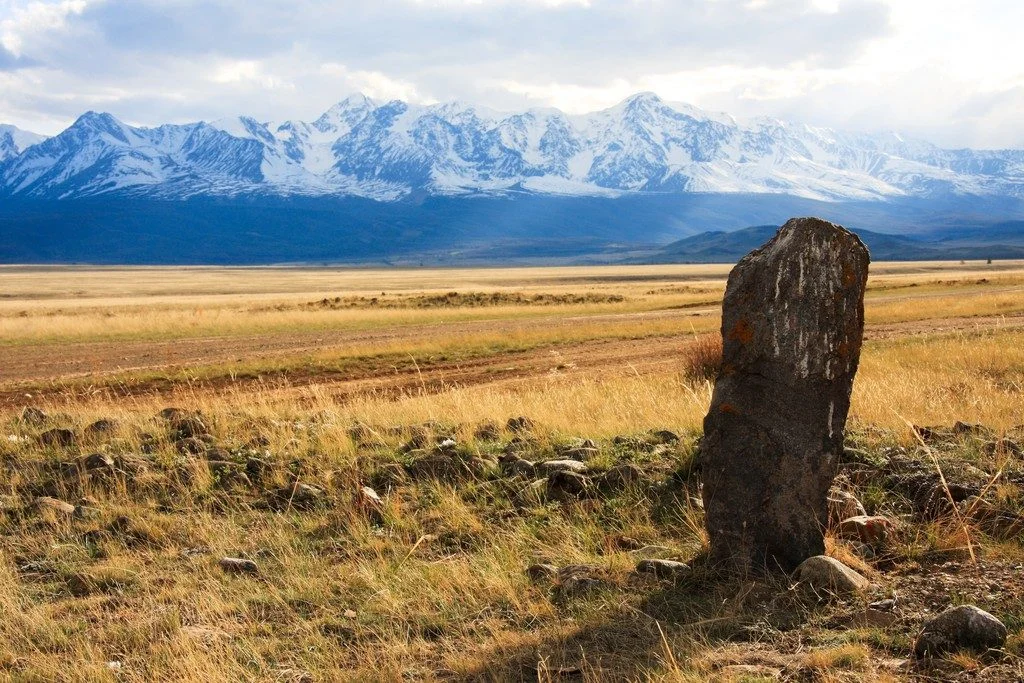
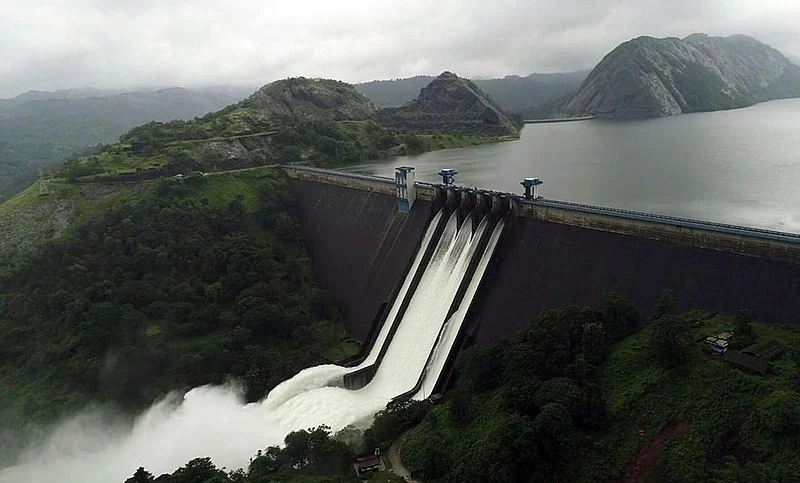
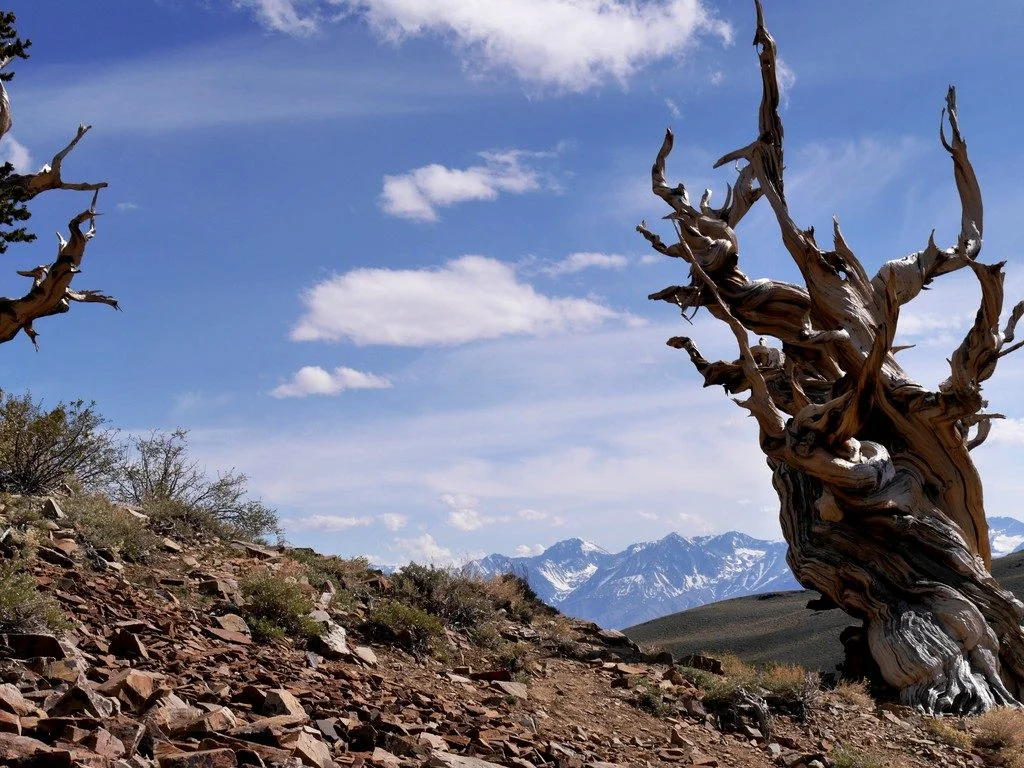
About 5,000 years ago, the ancient city Troy was founded, Stonehenge was under construction, and in the rugged Sierra Nevada mountain range, groves of bristlecone pine seedlings began to take root. Many of these pines are still alive today, making them the world’s oldest known living non-clonal life forms. Raphael Knevels, a PhD student from the Friedrich-Schiller-University’s Department of Geogra ...[Read More]
GeoLog
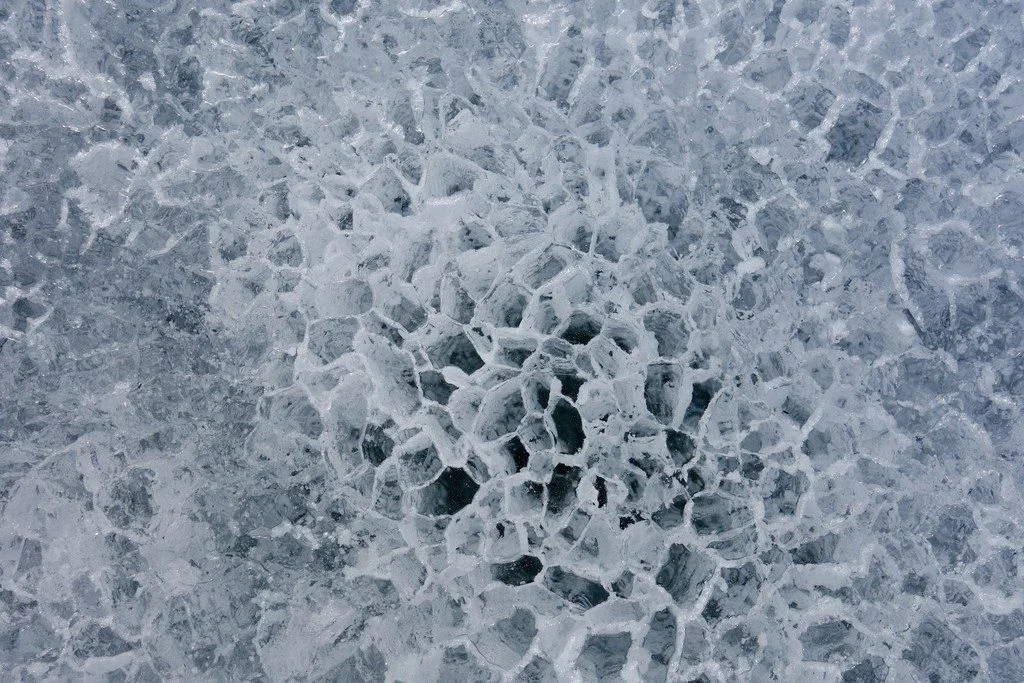
Imaggeo on Mondays: Antarctic winds make honeycomb ice
These delicate ice structures may look like frozen honeycombs from another world, but the crystalline patterns can be found 80 degrees south, in Antarctica, where they are shaped by the white continent’s windy conditions. In Western Antarctica is a 9-kilometre line of rocky ridges, called Patriot Hills. Often cold wind furiously descends from the hills across Horseshoe Valley glacier, sculpting do ...[Read More]
An overnight train view of China’s Anthropocene – Part 2
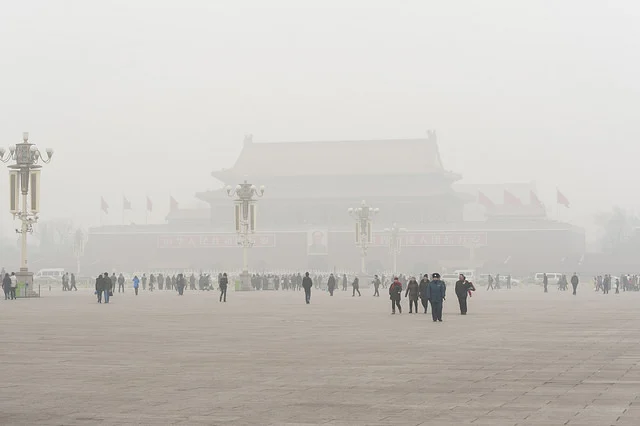
Science fiction is no match for industrial non-stop China. Electric bikes zip across the cities of Shanghai and Beijing, and soundtrack the neon nights with their passing whirr. Here, some kind of two-wheeled revolution has taken place which are we completely unaware of in the West. It’s Blade Runner meets Total Recall in a future which has already come to pass. The very existence of our ele ...[Read More]
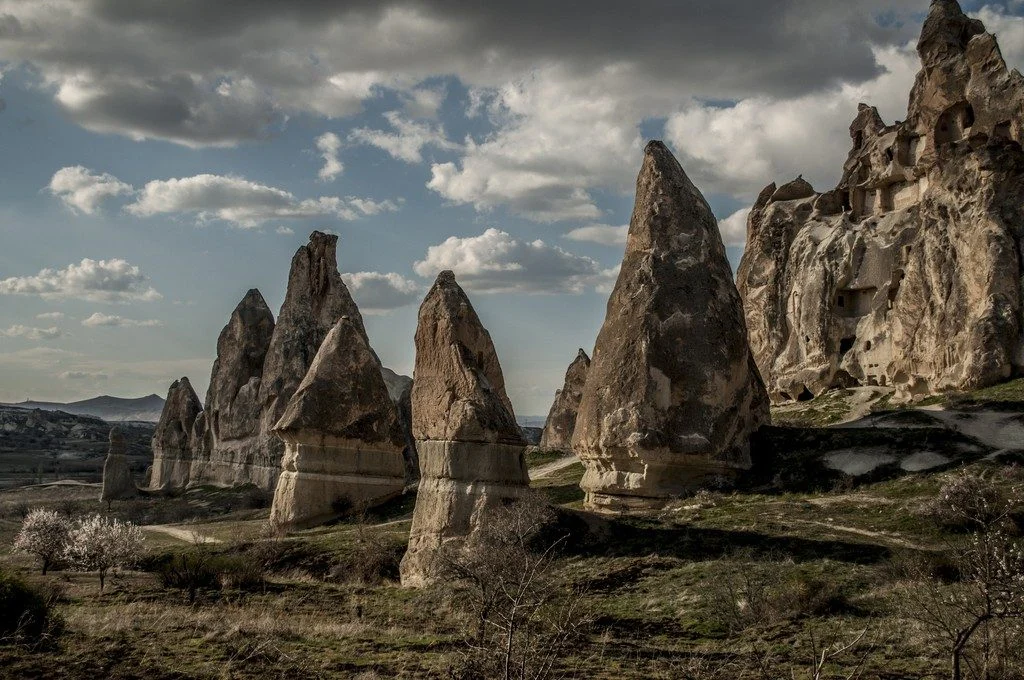
Imaggeo on Mondays: Fairy chimneys in Love Valley
Every year tourists from around the world flock to Love Valley in Göreme National Park in the Cappadocia region of central Turkey to marvel at the region’s peculiarly pointy geological features. These cone-shaped formations, known as ‘fairy chimneys’ or hoodoos, dominate the park’s skyline, with some rocky spires extending up to 40 metres towards the sky. While the name ‘fairy chimney’ suggests my ...[Read More]
GeoTalk: To understand how ice sheets flow, look at the bedrock below
Geotalk is a regular feature highlighting early career researchers and their work. In this interview we speak to Mathieu Morlighem, an associate professor of Earth System Science at the University of California, Irvine who uses models to better understand ongoing changes in the Cryosphere. At the General Assembly he was the recipient of a 2018 Arne Richter Award for Outstanding Early Career Scient ...[Read More]
An overnight train view of China’s Anthropocene – Part 1
The nighttrain from Shanghai to Beijing is a comfortable affair. The train is new and clean. My travel partner and I can charge our phones and relax on soft beds. The railway is almost frictionless, and overall the experience is similar to any ride in the West. But outside, as the vehicle roars through the early night, things become increasingly hazy. As we reach further out from the Shanghai metr ...[Read More]
Imaggeo on Mondays: Getting involved with EGU!
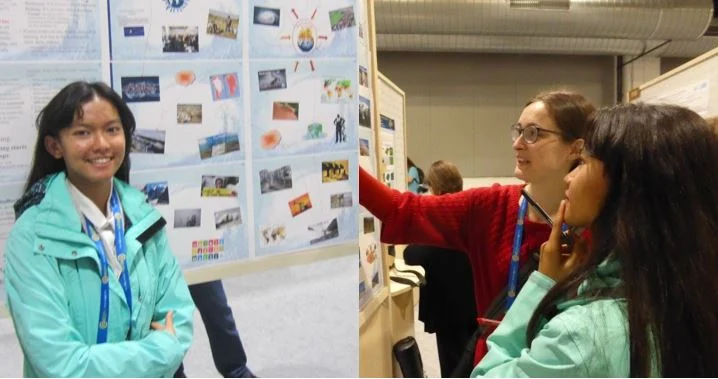
Today’s featured photo comes from the 2017 General Assembly. Did you enjoy this year’s 666 unique scientific sessions, 68 short courses and 294 side events? Did you know that EGU members and conference attendees can play an active role in shaping the scientific programme of the conference? It’s super easy! You can suggest a session (with conveners and description), and/or modific ...[Read More]
Help shape the conference programme: Inter- and Transdisciplinary Sessions at the 2019 General Assembly
Do you enjoy the EGU’s annual General Assembly but wish you could play a more active role in shaping the scientific programme? Now is your chance! But hurry, the session submission deadline is fast approaching. You’ve got until September 6th to propose changes. As well as the standard scientific sessions, subdivided by Programme Groups, EGU coordinates Inter- and Transdisciplinary Sessions (ITS) a ...[Read More]
Imaggeo on Mondays: The Gower Peninsula, a coast marked by time
The Gower Peninsula in South Wales, United Kingdom, is a spectacular site to view a sunset. However, to geologists, the shore is also a prime spot to find artifacts from Earth’s ancient and recent past. “The limestone coastline is dotted with caves that are rich in Quaternary flora and fauna,” said Mike Smith a visiting researcher at Plymouth University (UK) and photographer of this featured image ...[Read More]
Organise a short course at EGU 2019: follow this simple guide!
When it comes to supercharging your scientific skills, broadening your base science communication, or picking up tips on how to boost your career, short courses can be one of the highlights of the General Assembly programme. But, did you know that any EGU member (you!) can propose a short course? You’ve got until 6 September 2018 to complete the application. This quick guide, will give you some po ...[Read More]