Earlier this year, the EGU hosted the Integrating science into the EU Green Deal event in collaboration with the Intergroup on Climate Change, Biodiversity and Sustainable Development to outline how the geosciences can most effectively support the European Green Deal and ensure its ambitious biodiversity and zero-pollution targets are reached. The event provided policymakers, scientists and indust ...[Read More]
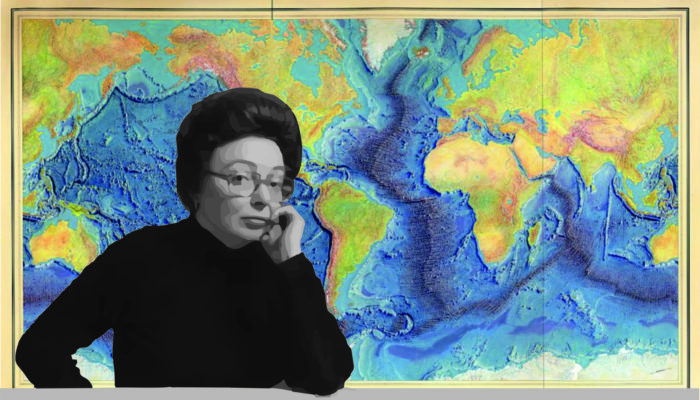
Marie Tharp: an inspiration for the past, present and future!
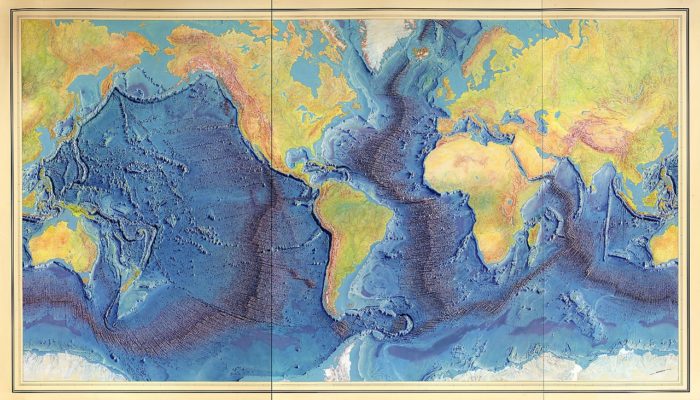
Today marks the centennial of the birth of Marie Tharp, the person responsible for creating the first map of our planet’s ocean floors. Though her work was underappreciated at the time of its publication – mainly because she faced many significant barriers due to her gender – her maps ended up being instrumental evidence in support of the theory of plate tectonics. Marie herself ...[Read More]
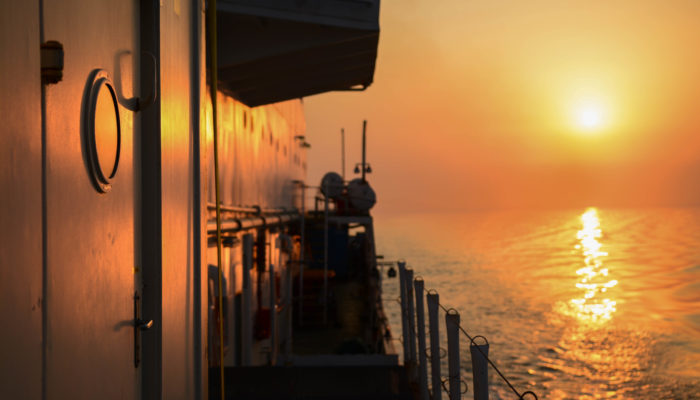
Imaggeo On Monday: Sunset in the Arabian basin
We know the topography of the moon better than the Earth’s seafloor, so we need to keep studying the ocean, and, for me, going to sea is the best way. Only twenty percent of the seafloor is already mapped (see the Seabed 2030 Project), leaving eighty percent of our ocean unmapped, unobserved, and unexplored. This is why ocean going research is fundamental, not only for seabed mapping, ...[Read More]
GeoTalk: Hali Felt, author of ‘Soundings: The Story of the Remarkable Woman Who Mapped the Ocean Floor’
This month for GeoTalk, as we approach the centennial of Marie Tharp’s birth next week, we were lucky enough to speak with the author of her biography ‘Soundings: The Story of the Remarkable Woman Who Mapped the Ocean Floor‘; Hali Felt. Hali has a Master of Fine Arts degree from the University of Iowa and has completed residencies at MacDowell, the Sitka Center for Art and Ecolog ...[Read More]
Imaggeo On Monday: Under the sea, in the deep, where fire meets water and life emerges III
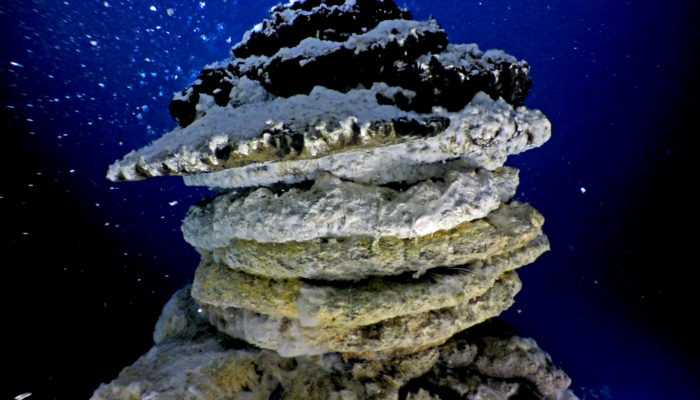
650 metres below the chilly waves of the North Atlantic Arctic Ocean, equidistant between Norway, Iceland and Greenland, are the Jan Mayen Vent Fields. Home to a series of hydrothermal vents strung along a set of normal faults and fissures that run parallel to the seafloor ridge, this is a strange and fascinating place. Hydrothermal vents are places where tectonic activity provides a way for the h ...[Read More]
Imaggeo On Mondays: “The most valuable thing we extract from the ocean is our existence” Dr Sylvia Earle
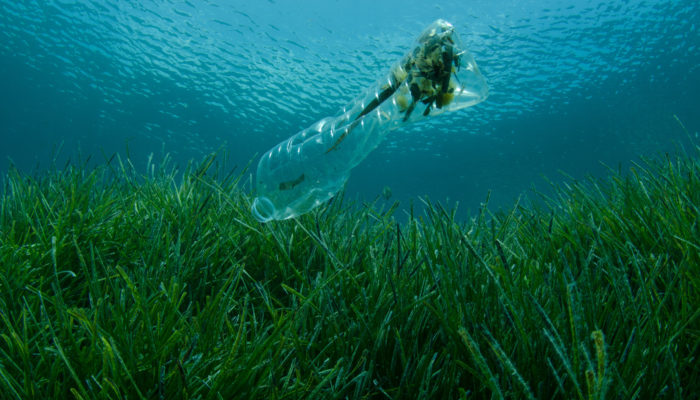
Marine plastic is just one of the many challenges facing the future of our oceans. For many years researchers have been attempting to understand this problem, but it can be surprising to learn how many things are still unknown, even in oceans we may think of as being familiar. The Mediterranean Sea is one such place, where this photograph was taken by David Jones just off the coast of Malta.   ...[Read More]
Public Engagement Grant Winner – Crabby’s Reef
Ocean acidification could be described as climate change’s evil twin, not that it needs one. The world’s oceans are partly absorbing the carbon dioxide we are pumping into the planet’s atmosphere, which then reacts with seawater and forms carbonic acid. This process decreases the pH of the oceans, making them more acidic. If you are a crab resident of the ocean, this is not good news. Norma ...[Read More]
#shareEGU20: meet the EGU Early Career Scientist Representatives (pt3)!
Now #shareEGU20 has come to an end, division officers have changed and this includes the Early Career Scientists (ECS) Representatives. Time to meet them! Union-level and Deputy Union-level ECS Representatives Anouk Beniest and Anita Di Chiara Display "Anouk and Anita" from YouTube Click here to display content from YouTube. Learn more in YouTube’s privacy policy (opens in a new t ...[Read More]
All at sea: UK women’s experiences of female leadership roles on ocean-going research vessels
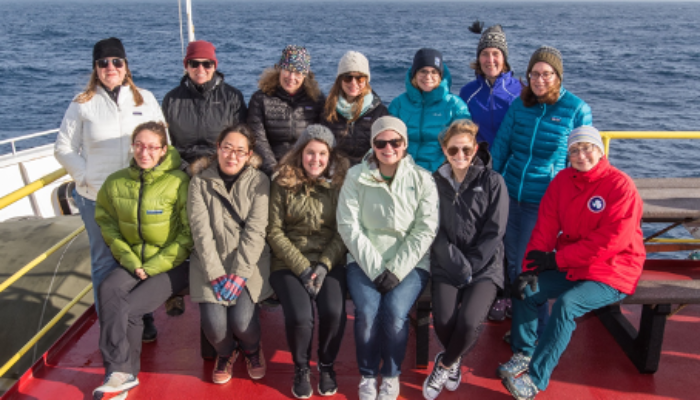
As I read the abstract of ‘Women in UK Ocean Science: Experiences of female leadership roles at sea’ by Katharine Hendry et al., it reminds me my own experience at sea! Indeed, more than one year ago, I had the chance to join the IODP Exp 379 in the Amundsen Sea (Antarctica) which was co-led by a woman, Julia Wellner from the University of Houston. It was her first IODP (International ...[Read More]
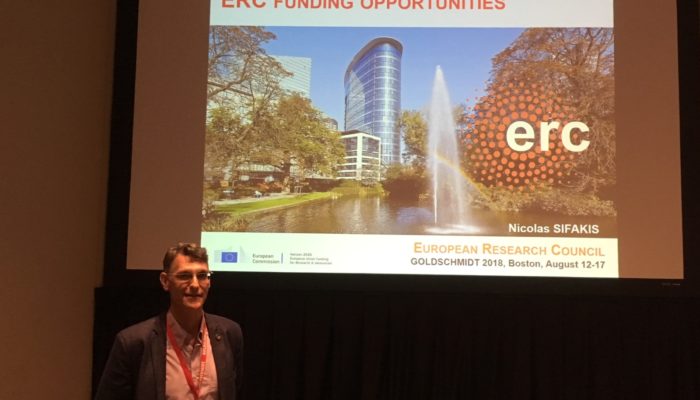
GeoPolicy: How to become a Seconded National Expert for the European Commission
The European Seconded National Expert programme is a fantastic opportunity for scientists who are currently working in a national, regional or local public administration of an EU member state or an intergovernmental organisation to gain experience working within a European policy institution. In most cases, secondments are between six months and four years during which time the Seconded National ...[Read More]