GeoLog

Geodynamics

Who do you think most deserves the title of the Mother of Geology?
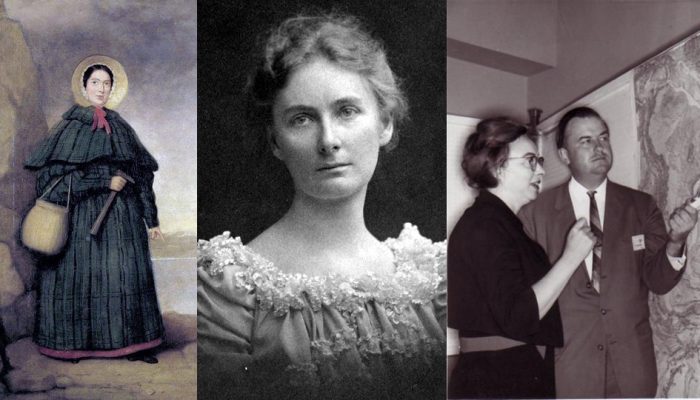
Who do you think most deserves the title of the Mother of Geology?
Much ink is spilled hailing the work of the early fathers of geology – and rightly so! James Hutton is the mind behind the theory of uniformitarianism, which underpins almost every aspect of geology and argues that processes operating at present operated in the same manner over geological time, while Sir Charles Lyell furthered the idea of geological time. William Smith, the coal miner and canal b ...[Read More]

Imaggeo on Mondays: A Bubbling Cauldron

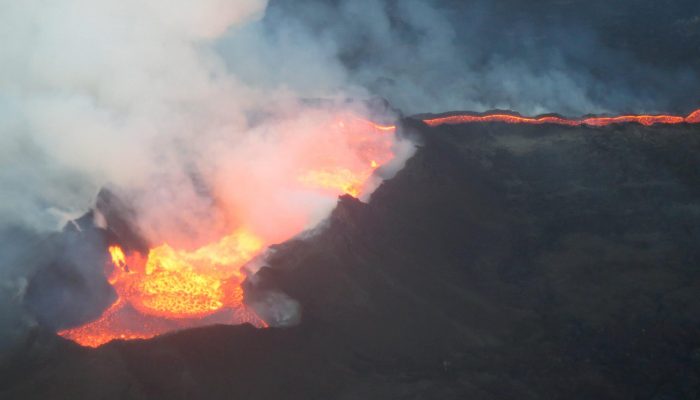
Imaggeo on Mondays: A Bubbling Cauldron

Despite being a natural hazard which requires careful management, there is no doubt that there is something awe inspiring about volcanic eruptions. To see an erupting volcano up close, even fly through the plume, is the thing of dreams. That’s exactly what Jamie  Farquharson, a researcher at Université de Strasbourg (France) managed to do during the eruption of the Icelandic volcano Bárðarbunga. R ...[Read More]

Imaggeo on Mondays: Rock glaciers

Imaggeo on Mondays: Rock glaciers

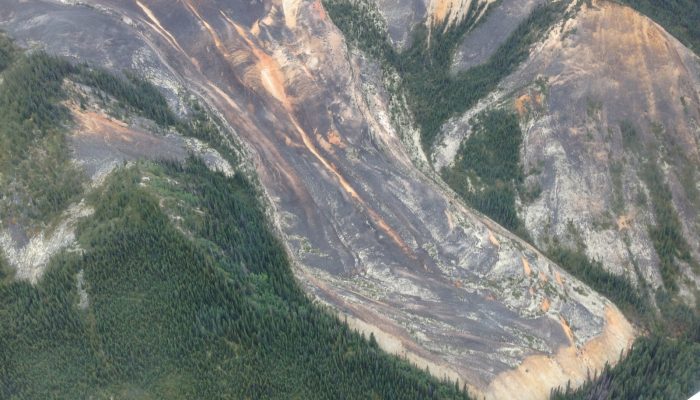
Picture a glacier and you probably imagine a vast, dense mass of slow moving ice; the likes of which you’d expect to see atop the planet’s high peaks and at high latitudes. Now, what if not all glaciers look like that? Take some ice, mix in some rock, snow and maybe a little mud and the result is a rock glacier. Unlike ice glaciers (the ones we are most familiar with), rock glaciers have very litt ...[Read More]

Imaggeo on Mondays: an impressive testimony to the collision between Africa and Europe

Imaggeo on Mondays: an impressive testimony to the collision between Africa and Europe

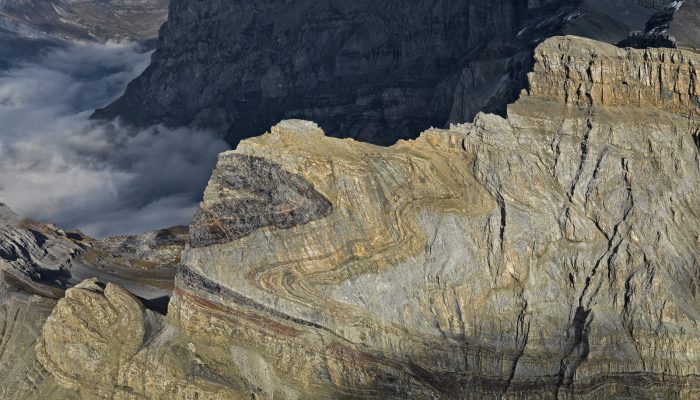
The huge fold in the flank of the 2969 m high Dent de Morcles (in Waadtland Alps, Switzerland) is an impressive testimony to the collision between Africa and Europe (which began some 65 million years ago). The layers, originally deposited on the sea floor in a horizontal position, were compressed and shifted. The darker parts developed during the Tertiary period (66 million years ago). They are yo ...[Read More]

Imaggeo on Mondays: The glacial landscape of Yosemite

Yosemite National Park, in California, is renowned for its beautiful and striking landscapes. So much so, this is the second time it has feature on the blog this summer. While our last post on the park focused on the ancient volcanic history of its landscape, in this post we fast forward to the Plesitocene (some 110,000 to 12,000 years ago) to discover more about how glaciers shaped Yosemite’s lan ...[Read More]

Imaggeo on Mondays: A sunrise over Kelimutu’s three-colour lakes

Imaggeo on Mondays: A sunrise over Kelimutu’s three-colour lakes

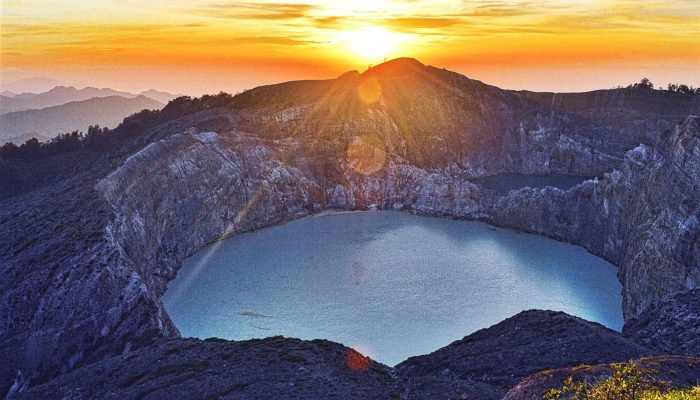
Volcanoes are undeniably home to some of the most beautiful landscapes on Earth. It doesn’t take much imagination to picture slopes of exceedingly fertile mineral rich soils, covered in lush vegetation; high peaks punching through cloud cover offering stunning vistas and bubbling pools of geothermally warmed waters were one can soak ones worries away. What about strikingly coloured crater lakes? Y ...[Read More]

Imaggeo on Mondays: Moving images – Photo Contest 2016

Since 2010, the European Geosciences Union (EGU) has been holding an annual photo competition and exhibit in association with its General Assembly and with Imaggeo – the EGU’s open access image repository. In addition to the still photographs, imaggeo also accepts moving images – short videos – which are also a part of the annual photo contest. However, 20 or more images have to be submitted ...[Read More]

Imaggeo on Mondays: Half dome at sunset

Imaggeo on Mondays: Half dome at sunset

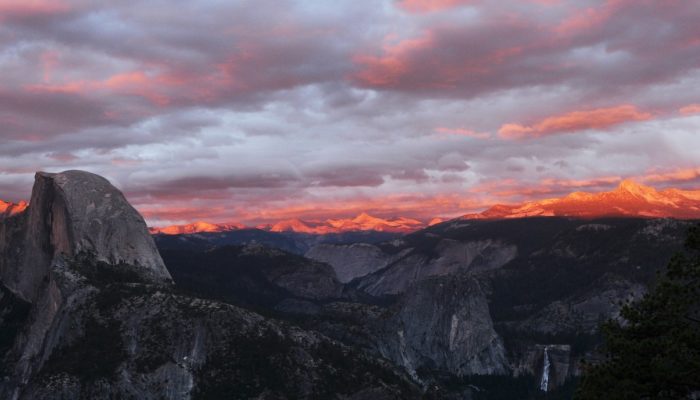
Yosemite’s Half Dome stands, majestic, over a granite dominated terrain in the Yosemite Valley area;  one of the most beautiful landscapes in northern America, and arguably, the world – it is also an Earth scientist’ playground. Stamped into the west slope of the Sierra Nevada range, the Yosemite Valley is a collection of lush forests, deep valleys, meandering rivers and streams, all punctua ...[Read More]

Imaggeo on Mondays: Earth Wave

Imaggeo on Mondays: Earth Wave

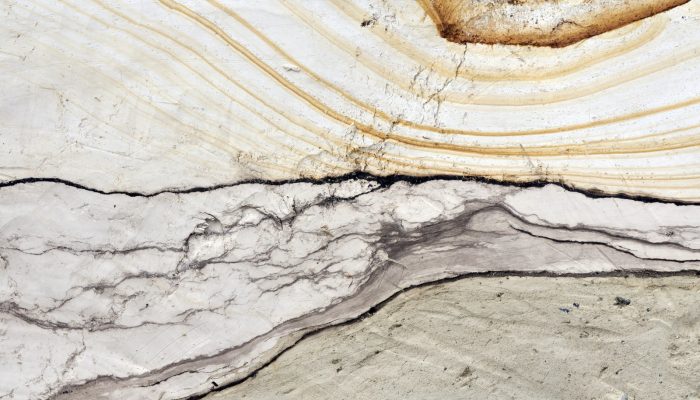
Take a stroll along the norther beaches of the French Channel Coast, some kilometers east from the entrance of the Channel Tunnel, and you’ll encounter an imposing cliff of soft, sandy composition which dominates the landscape. On close inspection, the sediments which make up the Quaternary aged deposits of the Sangatte Cliff, are beautiful, revealing intricate patterns which hold the key to the g ...[Read More]

GeoTalk: A smart way to map earthquake impact

GeoTalk: A smart way to map earthquake impact

Last week at the 2016 General Assembly Sara, one of the EGU’s press assistants, had the opportunity to speak to Koen Van Noten about his research into how crowdsourcing can be used to find out more about where earthquakes have the biggest impact at the surface. Firstly, can you tell me a little about yourself? I did a PhD in structural geology at KULeuven and, after I finished, I started to ...[Read More]