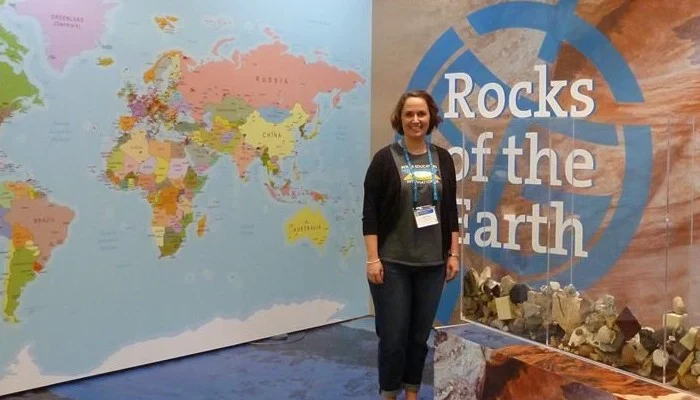
Today’s GeoEd post is brought to you by Susan Tate, an 8th grade teacher from Michigan in the USA. Susan attended the GIFT workshop held during the General Assembly last year. The GIFT programme offers primary school to high school teachers the opportunity to upgrade their knowledge in geophysical themes and to shorten the time between new discoveries and textbook information. After three d ...[Read More]
EGU GA 2014
The ethics of mining
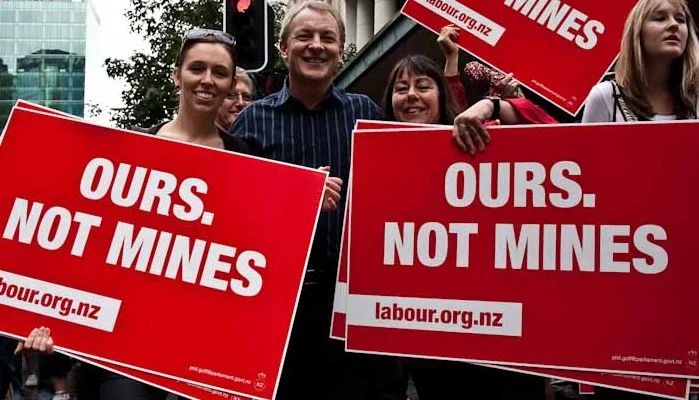
This guest blog post is brought to you by Nick Arndt, Professor at ISTerre and convenor of the the Great Debate at last year’s General Assembly, Metals in our backyard: to mine or not to mine. During the Great Debate the issue of whether the environment impact of mining outweighs the benefits vs. domestic metal production was questioned. With Europe currently importing between 60-100% of the metal ...[Read More]
GeoTalk: Stacia Gordon
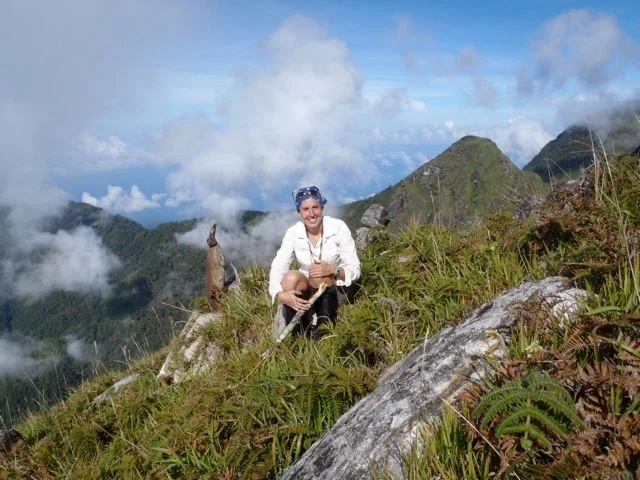
Geotalk is a regular feature highlighting early career researchers and their work. Following the EGU General Assembly, we spoke to Stacia Gordon, the winner of the Tectonics and Structural Geology Division Outstanding Young Scientist Award, 2014. First, could you introduce yourself and tell us a little more about your career path so far? My name is Stacia Gordon. I am an Assistant Professor at the ...[Read More]
GeoTalk: Nick Dunstone, an outstanding young scientist
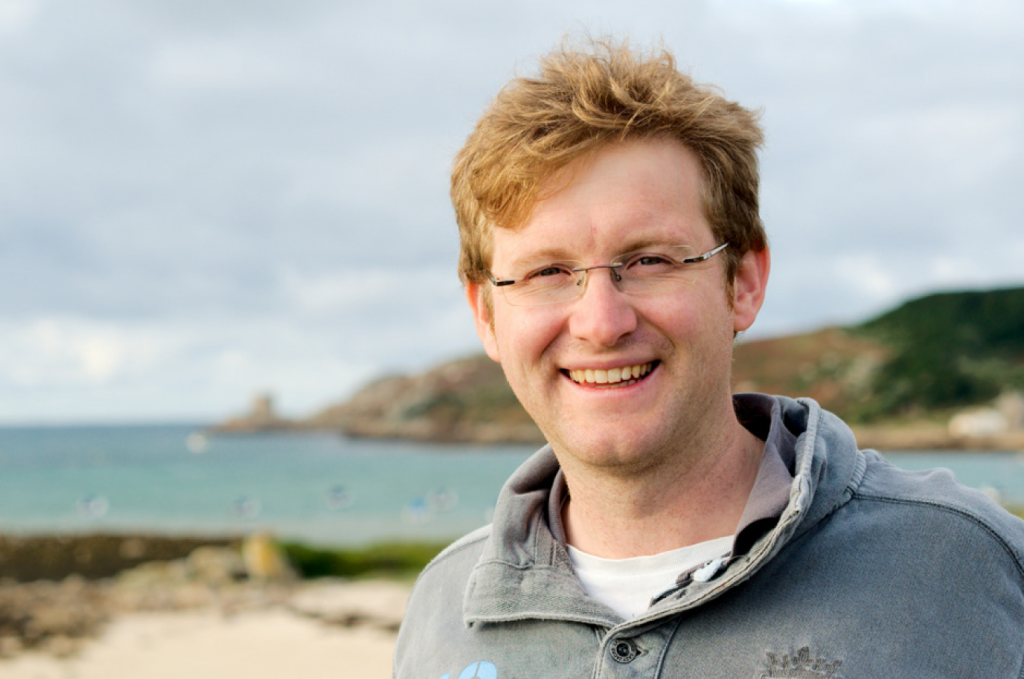
Nick Dunstone, the winner of a 2014 EGU Division Outstanding Young Scientists Award, who studies the Earth’s climate and atmosphere, including how they are impacted by natural variation and anthropogenic emissions talks to Bárbara Ferreira, the EGU Media and Communications Manager, in this edition of GeoTalk. This interview was first published in our quarterly newsletter, GeoQ. First, could you i ...[Read More]
GeoCinema Online: What a difference technology can make.
Advances in technology mean research that was unthinkable some years ago is now possible. For instance, geographically remote areas which were once out of reach have become more accessible through better (not always easier) transportation, so what we understand by ‘remote areas’ has changed significantly over time. The films in this edition of GeoCinema online are fascinating because they showcase ...[Read More]
GeoCinema Online: Trials and tribulations of field work.
Field work is not without its trials and tribulations, getting there, for instance can be an adventure in itself. Once you arrive you can expect long days, sandwiches for lunch and frustration at losing your way or equipment not working as you expect it to. Despite all of that, one of the primary draws of the geosciences is being able to spend time in the great outdoors. In the fourth instalment o ...[Read More]
GeoCinema Online: Our changing Climate
Welcome to the third instalment of Geocinema! The focus this week is on climate change and how it impacts on local communities. Sit back, relax and make sure you’ve got a big bucket of popcorn on the go, as this post features a selection of short documentaries as well as trailers of feature length films. Documenting the effects of the warming conditions on the surface of our planet is the primary ...[Read More]
GeoCinema Online: The Geological Storage of CO2
Welcome to week two of GeoCinema Screenings! In a time when we can’t escape the fact that anthropogenic emissions are contributing to the warming of the Earth, we must explore all the options to reduce the impact of releasing greenhouse gases into the atmosphere. The three films this week tackle the challenge of separating CO2 from other emissions and then storing it in geological formations deep ...[Read More]
GeoCinema Online: Saturn and its Icy Moon
It is day three of the General Assembly in Vienna, there are no sessions directly relevant to your research scheduled in the programme for this afternoon and you would really like to take a bit of a break from the hustle and bustle of the main scientific sessions. Where do you head? Down to the Basement (Blue Level) and to the GeoCinema, of course! GeoCinema has been a regular on the General Assem ...[Read More]
GeoTalk: Matthew Agius on how online communication can help identify earthquake impact
In this edition of GeoTalk, we’re talking to Matthew Agius, a seismologist from the University of Malta and the Young Scientist Representative for the EGU’s Seismology Division. Matthew gave an enlightening talk during the EGU General Assembly on how communication on online platforms such as Facebook can help scientists assess the effect of earthquakes. Here he shares his findings and what wonders ...[Read More]