GeoLog

Planetary and Solar System Sciences

How 40 years of Viking missions decoded the Universe’s most misbehaving matter
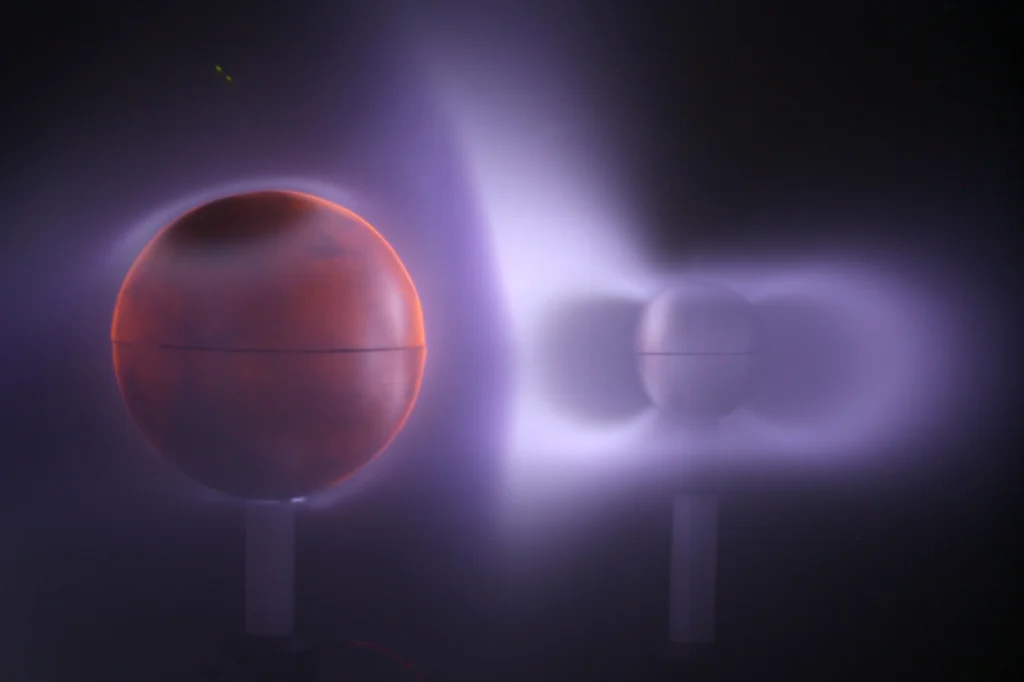
How 40 years of Viking missions decoded the Universe’s most misbehaving matter
In a couple of days, on 22 February, we will mark a major milestone in space history: 40 years since the launch of the first Swedish Viking satellite, when an Ariane rocket from Kourou in French-occupied Guiana launched on 22 February 1986! While the general public might hear the word Viking and picture longboats, heavy axes, and a level of beard maintenance that borders on the professional, space ...[Read More]

Challenger: the lessons of a teacher who never reached space

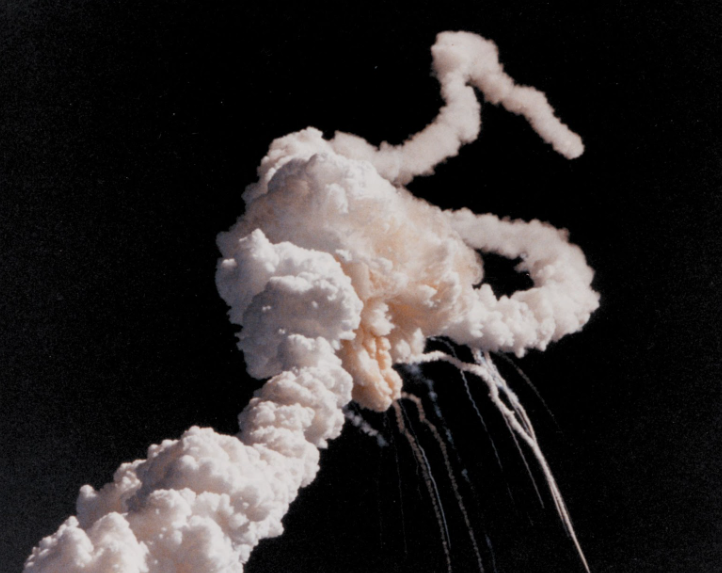
Challenger: the lessons of a teacher who never reached space

Humankind’s development is often associated with facing challenges. The original ideas required to solve new problems keep pushing the power of human creation towards more sophisticated and practical solutions. However, part of the excitement of any challenge comes from the dangers of trying something that nobody has accomplished before. An example of technological advances driven by human a ...[Read More]

Jacobus Kapteyn at 175: Still expanding our cosmic horizon

Jacobus Kapteyn at 175: Still expanding our cosmic horizon

January 19th marked the 175th birthday of Dutch astronomer Jacobus Kapteyn. His work and legacy had a profound yet subtle impact on the astronomical community and our understanding of the cosmos. His lasting contributions and methodologies continue to be refined and provide the foundation for ongoing astronomical research and discoveries. After he completed his studies, Kapteyn worked at Leiden Ob ...[Read More]

GeoTalk: meet Silke Asche, researcher of the origin of life on other planets!

GeoTalk: meet Silke Asche, researcher of the origin of life on other planets!

Hello Silke and welcome to GeoTalk! Before we dig into your topic of expertise, could you introduce yourself to our readers? Hello, Simon. My name is Silke Asche, and I am a chemist in astrobiology and part of the Agnostic Biosignature Collective led by Dr Heather Graham at NASA’s Goddard Space Flight enter. My Ph.D. focused on Origins of Life (OoL) research and the automation of such experiments. ...[Read More]

The prize that failed forward: How a 100,000-franc quest for aliens funded a century of astronomy

The prize that failed forward: How a 100,000-franc quest for aliens funded a century of astronomy

Today, 17 December, marks 125 years since the formal announcement of one of the most eccentric, ambitious, and ultimately consequential prizes in the history of science: the Prix Pierre Guzman. Announced by the French Académie des Sciences in December 1900, the award promised 100,000 francs, which is the equivalent of hundreds of thousands of dollars today, to the first person who could successful ...[Read More]

Io: a spongy world consumed by molten rock

Io: a spongy world consumed by molten rock

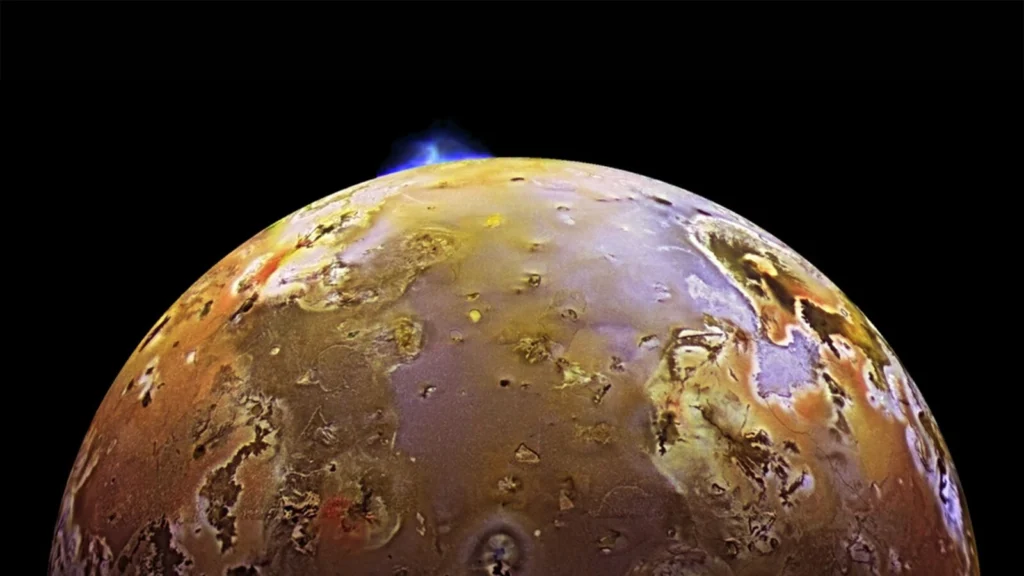
Jupiter’s moon Io is the most volcanically active world in our solar system, with hundreds of volcanoes that constantly erupt on its ever renewing surface. Although Io always points the same side toward Jupiter in its orbit around the gas giant, two other Galilean moons, Europa and Ganymede, pull Io’s orbit into an irregularly elliptical one. Thus, in its widely varying distances from ...[Read More]

Space debris: Borrowing the planet from our children- Why we need to mitigate space desecration

Space debris: Borrowing the planet from our children- Why we need to mitigate space desecration

On December 11, 2024, while taking part in AGU’s 2024 Annual Meeting, I attended a press conference hosted by experts from the University of Colorado Boulder and the University of Michigan that focuses on the serious risks posed by space debris in Low Earth Orbit (LEO). As we are heading towards an increasingly crowded space environment, the question on everyone’s mind is: What can we do to ...[Read More]

GeoTalk: meet Georgia Moutsiana, researcher of Jupiter’s magnetosphere!

Georgia Moutsiana

Hello Georgia – welcome to GeoTalk! Could you tell our readers a little bit about yourself and your background? Thank you, Simon! I’m Georgia Moutsiana, a space scientist and PhD candidate at the National and Kapodistrian University of Athens, Greece. My research focuses on understanding the processes that accelerate and transport charged particles in planetary magnetospheres. My key message is th ...[Read More]

Hera: A journey to Mars kicks off Earth’s latest defence plan

Hera: A journey to Mars kicks off Earth’s latest defence plan

And what if we could prevent a catastrophe as old as the dinosaurs?… As Hera’s mission launched last month, this blog post aims to give you insights into this mission and why it matters. Continue reading and find out! One of humans’ biggest rebellious acts against insignificance is staring at the sky and wondering what else is out there, then thinking “We can definitely fin ...[Read More]

Ozone 101: What you need to know as the Montreal Protocol turns 35

Ozone 101: What you need to know as the Montreal Protocol turns 35

As the world commemorates the 35th anniversary of the Montreal Protocol, it’s worth taking a moment to appreciate this landmark agreement’s monumental impact on our planet. Officially known as the “Montreal Protocol on Substances That Deplete the Ozone Layer,” this treaty stands as one of the most successful environmental accords in history, showcasing what humanity can achieve when it comes ...[Read More]