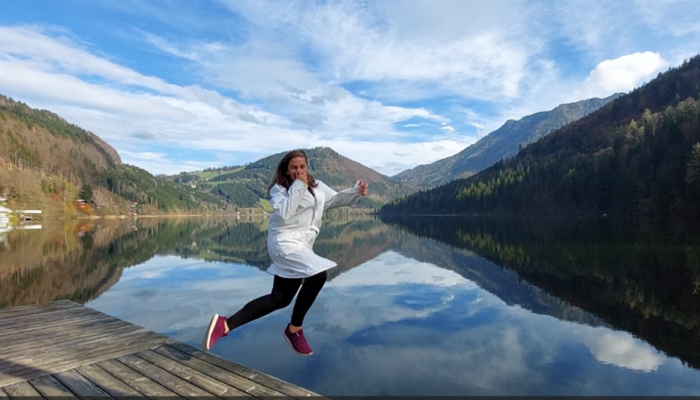
This was the moment when our video duet lesson really started to take shape. Yes, we’d already sketched the idea for a lake stratification lesson months earlier when we applied for EGU’s Teacher–Scientist Pairing Scheme, supported by the Education and Outreach committees, but we wanted an opening that would stop students in their tracks. Nothing like a cold plunge to get everyone’s attention! We b ...[Read More]
Geoscientific perspectives on global wetland systems: Between traditional knowledge and cultural heritage
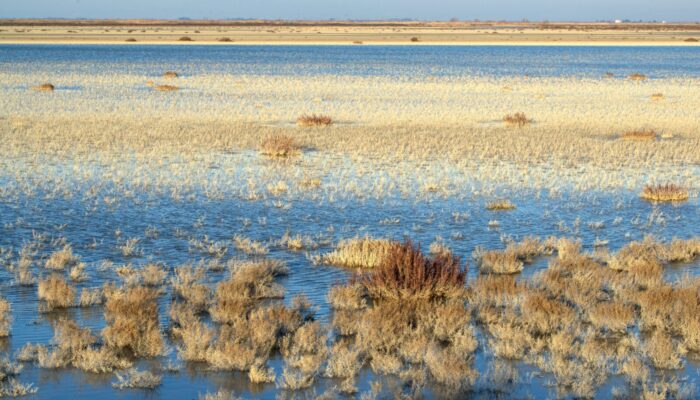
Today marks World Wetlands Day, and this year, the theme is Wetlands and traditional knowledge: Celebrating cultural heritage. Each year, February 2 is a day dedicated to recognising wetlands as places that store carbon, protect water, and hold complex cultural meaning. Wetlands such as mangroves, salt marshes, seagrass beds, peatlands, and floodplains are extremely good at taking carbon out of th ...[Read More]
Earth Science Week: What can you do to celebrate energy resources for our future?
As the air grows crisp and autumn’s colors begin to emerge in many parts of the Northern Hemisphere, I’m reminded that we’re approaching a special time of year for those of us who love the Earth. It’s Earth Science Week (12-18 October 2025), and this year, the theme Energy Resources for Our Future feels incredibly personal. Our lives are powered by energy, and this week is a chance to look a littl ...[Read More]
AI: the good, the bad, and the forgotten
AI is here, and when I say here, I mean e-v-e-r-y-w-h-e-r-e. For all you know, this blog may have been written by an algorithm (it wasn’t — I’m not a robot, promise. Or am I?). In what feels like the blink of an eye, AI has gone from a curiosity to a fully-fledged co-pilot in science (and out of science). It’s generating satellite imagery, helping compute paleo-climate predictions, or writing your ...[Read More]