GeoLog

Cryospheric Sciences

GeoTalk: Meet Marie Cavitte, policy officer for the Cryosphere Division, member of the EGU Climate Hazards Task Force, former Blue Book trainee
GeoTalk: Meet Marie Cavitte, policy officer for the Cryosphere Division, member of the EGU Climate Hazards Task Force, former Blue Book trainee

Welcome, Marie! Could you please introduce yourself to our readers? Hi, my name is Marie Cavitte. I’m a glaciologist and climatologist with a passion for the polar regions. I spent 10 years studying Antarctica. I started off during my Masters, then PhD, looking at the oldest ice on Earth, hunting for THE region of the ice sheet that might contain million-year-old ice. An ice core has been drilled ...[Read More]

McMurdo Sound’s 70th anniversary: An expedition journal by Julia Martin

McMurdo Sound’s 70th anniversary: An expedition journal by Julia Martin

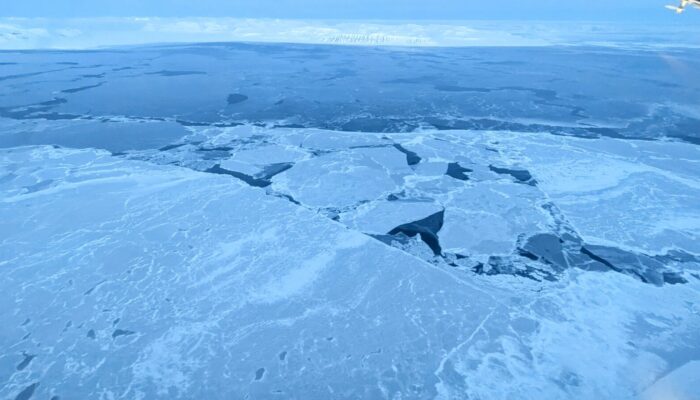
It was October 28, 2022 around 3 p.m. Fascinated by the majestic white snow-covered mountain caps, deep-blue sea ice cracks and light-blue pressure ridges, I gently press my nose against the cold double-glassed window of the Royal New Zealand 757. The tires smoothly touch the ground, and the warm voice of the flight attendant fills the dry air in the aircraft: “Ladies and Gentlemen, welcome to Ant ...[Read More]

GeoTalk: Meet glacial hauntologist, Elizabeth Case (you read that right, a glacial hauntologist!)

Elizabeth Case

Welcome to GeoTalk, Elizabeth! Could you introduce yourself and your background? I’m a genderfluid glaciologist living between previously glaciated, currently glaciated, and flood-prone landscapes. I am a postdoctoral researcher at Utrecht University in the Netherlands. I did my bachelor’s in physics at the University of California, Los Angeles, and my Ph.D. in glacial geophysics at Co ...[Read More]

Raising the (melt)stakes! How robotic innovation reveals new findings on melting glaciers

Raising the (melt)stakes! How robotic innovation reveals new findings on melting glaciers

In the age of climate change, glaciers across the Arctic are melting, consequently reducing regional freshwater supplies and contributing to the ongoing rise in global sea levels. But how fast do they melt? And is it possible to predict that? A new study on the Xeitl Sit’ (LeConte) glacier in Alaska aims to answer these questions. The research group from Oregon State University, Harvard University ...[Read More]