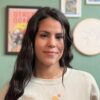
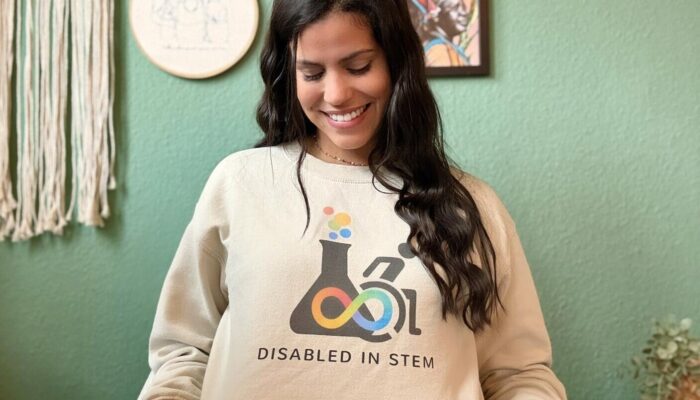
Hi! I am Fernanda Matos, an Oceanographer and autistic! Autism is considered a hidden disability, but it is not at all an easy disability. Unlike popular opinion, I am not like Sheldon from The Big Bang Theory, nor am I like my autistic peers. I am unique and part of a spectrum.
When we talk about disability, we’re talking about conditions like autism, blindness, hearing impairment, or a motor disability. Yes, most people who are disabled need some degree of support to manage their day-to-day lives. But hear me out: that doesn’t make us incapable of having a meaningful, normal life. It just means our “normal” is structured around our specific needs. I know firsthand that Geosciences are full of talented people with disabilities. The unfortunate reality, though, is that even in today’s efforts to create inclusive workplace policies, our needs are frequently an afterthought. We need to do better at ensuring inclusion is real, not just a promise.
I, for instance, do not understand social cues or sarcasm. If I attend a conference or have work to do in Brazil, my country of origin, I am often able to read between the lines, but I can only do it because I studied it. I studied how people behave, always anxious that I may not fit in or understand them. Over the 26 years I lived there, I learned what my people say, and what that means. When I first arrived in Germany four years ago, learning these cues in a different language was hard enough. Adding to that, a highly international environment with so many different cultural backgrounds made things much more complicated. It mostly left me in a state of confusion, constantly wondering: “Am I not understanding because I am autistic or because it is a cultural behaviour?” Poster sessions are another challenging environment for me, and here’s a breakdown of why they trigger my anxiety: the constant noise, the pressure of being the center of attention, the barrage of questions, and the sheer volume of stimuli I have to process in a very short time frame. While I wouldn’t describe myself as an introvert, after a poster session at a conference, I need hours of silence, in the dark if possible, and with no interaction with the environment around me.
So, how do I manage the challenge of being an autistic person working in science? The key, in my experience, is that science is my special interest. This is a common trait among autistic people: we tend to intensely focus on and “obsess” over these topics, and we possess the drive to discuss them endlessly. While others I know might be fascinated by tea, dinosaurs, or aircrafts, for me, one of my strongest special interests is the ocean. See the connection with becoming an Oceanographer?
Throughout school and my undergraduate studies, I always started motivational letters and speeches by declaring my childhood love for the ocean, which was the driving force behind my decision to study Oceanography. What I understand now is that the ocean IS my special interest, a characteristic that was obvious to many but only recently clarified through a diagnosis I had been previously denied. The reason behind such a delayed diagnosis is that the healthcare system of 20 to 30 years ago was oblivious to the existence of “low-level of support” or “high-functioning” autists. Autism was also mostly categorized based on behaviours that appear mostly in boys, rather than in girls. So, no one from my family would accept that Fernanda is autistic if she can be such a good student. But Fernanda would not say “Hi” to anyone unless requested, and still does not understand why she has to say “Good Morning” before asking something.
Two years ago, after years of feeling like a foreign fish in my family and friends’ pond, I was finally able to afford my diagnostics. This is another challenge, and one that is directly tied to science. The financial cost of seeking a diagnosis is already steep, and if you try to use the public healthcare system, the waiting lists in many countries make for an agonizingly long delay. Now, picture trying to manage all of that while constantly shifting between short-term contracts and having to frequently travel for work. That kind of professional instability adds an overwhelming layer of complexity to accessing necessary healthcare. Therefore, even with more and more people becoming concerned about mental health issues, and investing more in psychotherapy or in understanding themselves, it is not easy. To me, it took a Ph.D. salary to be able to afford my therapist, the investigation of my diagnosis, and the tools that now help me in my everyday life.
Because yes, we need tools. We need to silence the noise. A disabled person lives with a constant noise in their life. It can be, for example, feeling our clothing 24/7, being sensitive to the noise of the keyboard which we work with every day, or something as simple as hyperfocusing on a butterfly that suddenly decided to lay on our balcony. So, first and foremost, I believe that we need to understand ourselves and, with that, understand our own noise so we can silence it. These tools can include earplugs, more natural fabrics for clothes, or a weighted blanket. But what about our careers in Geosciences? How can we silence this noise?
We need to be open about our needs. Fortunately, the doors to academia are opening, which is a positive shift from ten years ago. When I say, ‘I am autistic,’ to my colleagues and superiors, I recognise that this act serves a dual purpose: it secures a better working environment for me and helps pave the way for the next generation of autistic scholars coming after me. Unfortunately, very often we think that it will spark negative repercussions, but change does not come from ignorance. We are scientists, and we know, perhaps more than any other professional, that knowledge is power. However, it is ok, valid, and understandable if one does not want to be under the radar. In this case, I would add that communities can be the starting point for change. History has taught us that. So, if wearing a lanyard or being vocal about our struggles is too much, joining or “secretly” starting a support group for neurodivergent/disabled peers can have an immense positive impact on our self-esteem.
Additionally, being open about our needs can mean just asking for direct communication when we don’t understand something that was said indirectly. Or perhaps it means that we need strong boundaries, or working from home a few times a week (as in my case). With that, our strengths, like attention to detail and hyperfocus, can actually be seen as strengths because we are aware of them amidst all the noise. We can unwind. We can stop masking, hiding, and trying to make up for the way that our brain works because we feel safe and less overwhelmed at our workplace.
However, advancing an inclusive culture in Geosciences requires systemic action, not just individual advocacy. The main concept I would encourage to be adopted is that for diverse brains, we need diversity. Leaders, institutions (universities, research centers), and companies must recognise that cognitive diversity is a structural asset. True support for colleagues with disabilities means cultivating environments where differences are valued and accommodated. Practical measures include: implementing flexible work models for neurodivergent peers, providing tailored accessibility (e.g., specialised equipment and suitable workspaces), and explicitly encouraging applications from disabled professionals in all job advertisements
And finally: training. Mandatory, comprehensive training for all working groups is essential. This training must move beyond simple awareness of disabilities within the Geosciences to instilling a true understanding of the importance of peer suppport and the value of a cognitively diverse workforce. The goal should be to equip every team member with the practical knowledge to actively contribute to an accessible and supportive culture. to dispel the myth of a ‘one-size-fits-all’ brain, enabling the creation of diverse and inclusive working conditions. It simultaneously catalyzes the co-creation of a new culture by giving voice to those long neglected by prejudice and inadequate support.
Science is an amazing field of work. In my opinion, Geosciences is even better. And the affirmative measures that can change the way that disabled individuals experience career in STEM are possible to be implemented. For those thinking of starting, I would say: you are welcome. There is a strong will among us to forge a healthier academia, and diverse scientists are integral to to achieving this. Change is rooted in awareness, which is initiated by the bravery of those who share their experiences. By stepping forward now, as I am doing, we build momentum and assure others that their voices, too, will be heard in the future