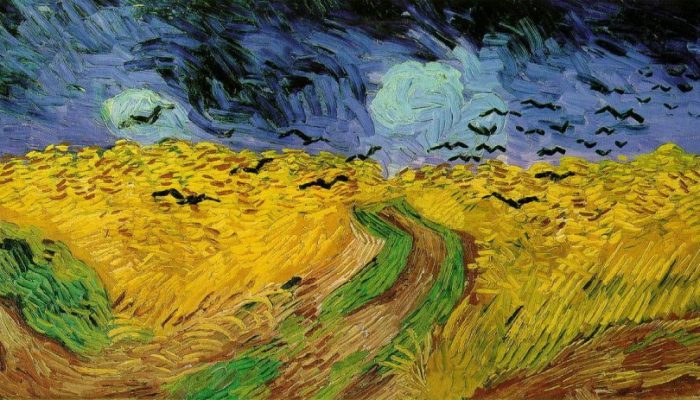
Sicilian farmers are returning to cultivate ancient seed. This is to recover the ancient wisdom that feed the island and Italy since ancient times. Giuseppe Li Rosi is a local farmer and one of the strongest supporters of the return to traditional agriculture. He has converted a property of 100 hectares to traditional farming and proudly guards three local seed varieties (“Timilia”, “Maiorca” and ...[Read More]
Wildfires and soil: Where are we now?
Lorena M. Zavala. University of Seville, Sevilla, Spain Antonio Jordán. University of Seville, Sevilla, Spain Jorge Mataix-Solera. University Miguel Hernández, Elche, Spain Artemi Cerdà. University of Valencia, Valencia, Spain Are wildfires a natural ecological factor or an environmental problem? According to official statistics, during the 1990’s, about 1.5 millions ha were burned in Spain. ...[Read More]
Mediterranean Environmental Research Group (GRAM)
By Marc Oliva The Mediterranean Environmental Research Group, (GRAM) from the University of Barcelona has over 20 years of working experience in the field of the effects of forest fires on soil properties. In 1998 the doctoral thesis entitled “Fire effects on soil properties, the role of fire intensity” carried out by Xavier Úbeda emphasized the importance of fire intensity impa ...[Read More]
Monday paper: Soil carbon stocks and their variability across the forests, shrublands and grasslands of peninsular Spain
Doblas-Miranda, E., Rovira, P., Brotons, L., Martínez-Vilalta, J., Retana, J., Pla, M., and Vayreda, J. 2013. Soil carbon stocks and their variability across the forests, shrublands and grasslands of peninsular Spain. Biogeosciences, 10, 8353-8361. DOI: 10.5194/bg-10-8353-2013. Abstract Accurate estimates of C stocks and fluxes of soil organic carbon (SOC) are needed to assess the impact of climat ...[Read More]
Soil color never lies
Often, soil color is described using general terms such as “brown”, “red”, “dark”, etc. When I talk about this issue for the first time with my students of Soil Science, I use to ask them how to describe the color of a soil sample. Normally, in a few seconds, I get a list of color names ranging from dark brown to bright red, including “chocolate”, “coffee” and “ ...[Read More]
Soils going red: Terra rossa
The term “terra rossa” comes from the Italian for “red soil” or “red earth”. Although terra rossa exists in other places in the world, these soils are common in areas with Mediterranean-type climates: alternation of a rainy and cool-to warm-dry season. The terra rossa soil is heavy and clay-rich (silty-clay to clayey) soil, strongly reddish, developed on limesto ...[Read More]
Monday paper: Modelling soil organic carbon stocks in global change scenarios: a CarboSOIL application
Muñoz-Rojas, M., Jordán, A., Zavala, L. M., González-Peñaloza, F. A., De la Rosa, D., Pino-Mejias, R., and Anaya-Romero, M. 2013. Modelling soil organic carbon stocks in global change scenarios: a CarboSOIL application. Biogeosciences, 10, 8253-8268, DOI: 10.5194/bg-10-8253-2013. Abstract Global climate change, as a consequence of the increasing levels of atmospheric CO2 concentration, may ...[Read More]
Soils at Imaggeo: soil erosion in olive groves
Artemi Cerdà, Spain Olive-cropped soils in Spain cover more than 2.4 million ha, 75% in southern Spain. Historically, high soil erosion rates have been determined in olive groves due to soil management, mostly. Due to Mediterranean climate conditions and low water inputs, traditional management is based on reduced tree density, canopy size control by pruning, and intensive weed control. Weed contr ...[Read More]
Monday paper: Seasonal changes in the soil hydrological and erosive response depending on aspect, vegetation type and soil water repellency in different Mediterranean microenvironments
Gabarrón-Galeote, M.A., Martínez-Murillo, J.F., Quesada, M.A., Ruiz-Sinoga, J.D. 2013. Seasonal changes in the soil hydrological and erosive response depending on aspect, vegetation type and soil water repellency in different Mediterranean microenvironments. Solid Earth, 4, 497-509. DOI: 10.5194/se-4-497-2013. Abstract Mediterranean areas are characterized by a strong spatial variability that make ...[Read More]
Forest residue mulching reduces post-fire soil erosion
Sergio A. Prats University of Aveiro, Portugal Still under the effect of the last wave of wildfires of summer 2013, Porto Canal interviewed the last Ph.D. student of the CESAM Research Centre at the University of Aveiro, who deals with soil erosion mitigation after wildfires. Porto Canal wanted to disseminate the last advances in recognizing the main effects of wildfires, the selection of soil ero ...[Read More]