Interested in the most relevant soil articles of 2015? In this short series of posts I’ve compiled a list of the 30 most cited articles of the top ten journals in the category of SOIL SCIENCES. Today: LAND DEGRADATION & DEVELOPMENT.
Under research
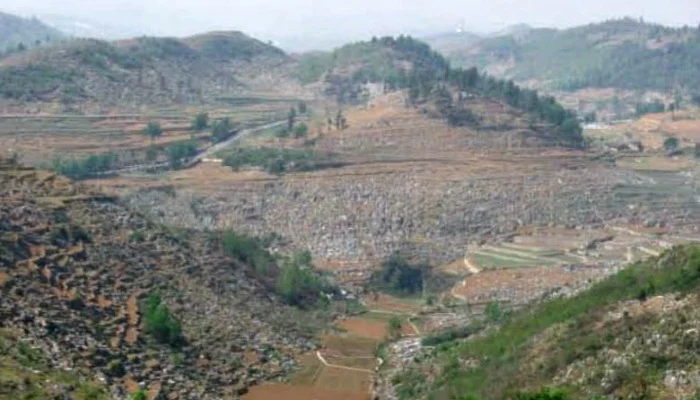
Monday paper: The challenge and future of rocky desertification control in karst areas in southwest China
Zhang, J. Y., Dai, M. H., Wang, L. C., Zeng, C. F., and Su, W. C. 2016. The challenge and future of rocky desertification control in karst areas in southwest China. Solid Earth, 7:83-91, DOI:10.5194/se-7-83-2016, 2016. Karst ecosystems in China are one of the main objectives of desertification control, since its conservation is important for economic and social development, especially of th ...[Read More]
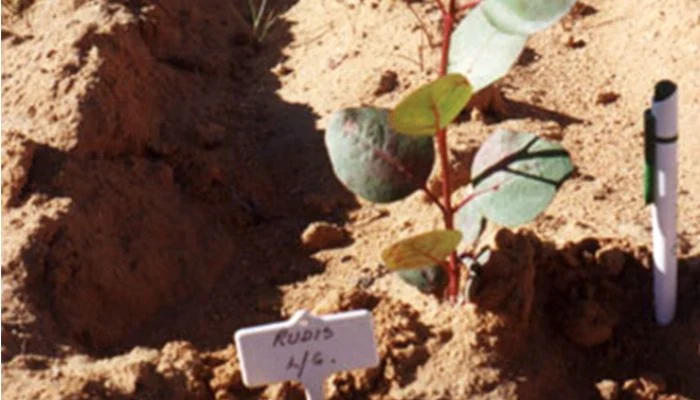
Turning unproductive soil into profits
Preeti Roychand La Trobe University AgriBio Centre for AgriBioscience Melbourne, VIC, Australia Sandy soils in Western Australia are bad soils for growing plants due to their poor nutrients and water holding capacity (see an example in Figure 1). In general, these soils are water repellent, which leads to land degradation by increasing soil erosion risk and run-off rates. Nevertheless, these soils ...[Read More]
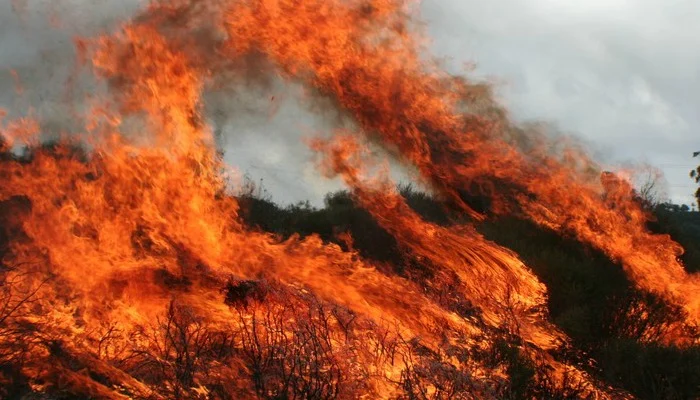
Fire and soil microorganisms: where should we focus on?
Gema Bárcenas-Moreno University of Seville, Sevilla, Spain Currently, the complexity of soil microbial ecology on soil systems is a hot topic in the environmental sciences, since the scientific community has achieved a deep knowledge of the relevance of microorganisms in soil processes. After several decades of study of the effects of wildfires on soils, one of the main conclusions is that soil mi ...[Read More]
Soil science, food production and hunger in Africa
A child dies from malnutrition or related causes every five seconds. Every child who dies from hunger is assassinated. And we have a herd of market traders, speculators and financial bandits who have turned wild and constructed a world of inequality and horror. We have to put a stop to this. Jean Ziegler Soil as a resource A long history of land use Ever since man learned to cultivate, soil has be ...[Read More]
Wildfires and soil: Where are we now?
Lorena M. Zavala. University of Seville, Sevilla, Spain Antonio Jordán. University of Seville, Sevilla, Spain Jorge Mataix-Solera. University Miguel Hernández, Elche, Spain Artemi Cerdà. University of Valencia, Valencia, Spain Are wildfires a natural ecological factor or an environmental problem? According to official statistics, during the 1990’s, about 1.5 millions ha were burned in Spain. ...[Read More]
Monday paper: Simulating microbial degradation of organic matter in a simple porous system using the 3-D diffusion-based model MOSAIC
Monga, O., Garnier, P., Pot, V., Coucheney, E., Nunan, N., Otten, W., and Chenu, C.: Simulating microbial degradation of organic matter in a simple porous system using the 3-D diffusion-based model MOSAIC, Biogeosciences, 11, 2201-2209, doi:10.5194/bg-11-2201-2014, 2014. Abstract This paper deals with the simulation of microbial degradation of organic matter in soil within the pore space at a micr ...[Read More]
Sure can smell the rain
Fly, thought, on golden wings, go alight on the cliffs, on the hills, where the sweet airs of our native soil smell soft and mild! Chorus of the Hebrew slaves, Nabucco Giuseppe Verdi Have you ever noticed the smell of rain? Why does wet soil smell so good? The smell of wet soil plants oils released into the soil during dry periods is due. These substances accumulate in the soil and mix with ...[Read More]
Monday paper: Bayesian calibration of a soil organic carbon model using Δ14C measurements of soil organic carbon and heterotrophic respiration as joint constraints
Ahrens, B., Reichstein, M., Borken, W., Muhr, J., Trumbore, S. E., and Wutzler, T.: Bayesian calibration of a soil organic carbon model using Δ14C measurements of soil organic carbon and heterotrophic respiration as joint constraints, Biogeosciences, 11, 2147-2168, doi:10.5194/bg-11-2147-2014, 2014. Abstract Soils of temperate forests store significant amounts of organic matter and are cons ...[Read More]
Monday paper: Impacts of climate variability on wetland salinization in the North American prairies
Nachshon U, Ireson A, van der Kamp G, Davies SR, Wheater HS. 2014. Impacts of climate variability on wetland salinization in the North American prairies. Hydrology and Earth System Sciences 18, 1251-1263. DOI: 10.5194/hess-18-1251-2014. Abstract The glaciated plains of the North American continent, also known as the “prairies”, are a complex hydrological system characterized by hummock ...[Read More]