SSS
Soil System Sciences

The soil under our boots

(Sicilian farmers look) Back to the future
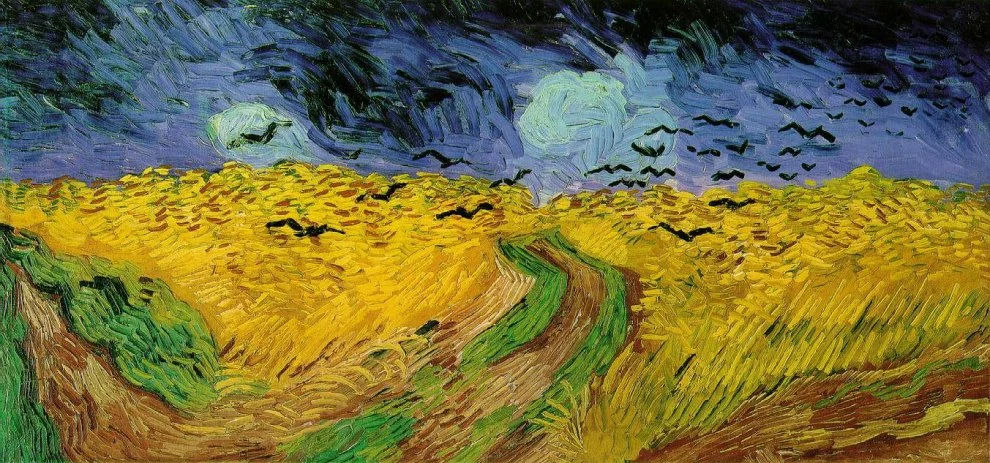
(Sicilian farmers look) Back to the future
Sicilian farmers are returning to cultivate ancient seed. This is to recover the ancient wisdom that feed the island and Italy since ancient times. Giuseppe Li Rosi is a local farmer and one of the strongest supporters of the return to traditional agriculture. He has converted a property of 100 hectares to traditional farming and proudly guards three local seed varieties (“Timilia”, “Maiorca” and ...[Read More]

The long, long travel from rock to soil (I)

The long, long travel from rock to soil (I)

  There is hardly a subject in all nature, of which the majority of people has so unclear terms and which has hitherto been so completely misunderstood, as the soil on which they walk. F.A. Fallou Soil is often considered as the skin of the Earth and is located at the interface between the lithosphere, hydrosphere, atmosphere and biosphere. Air, water, rock and living beings interact to form ...[Read More]

Soil facts

Soil facts

As part of the activities of the International Year of Soils, FAO has published the following Soil Facts. Contribute with your comments!          

Fire and soil microorganisms: where should we focus on?

Fire and soil microorganisms: where should we focus on?

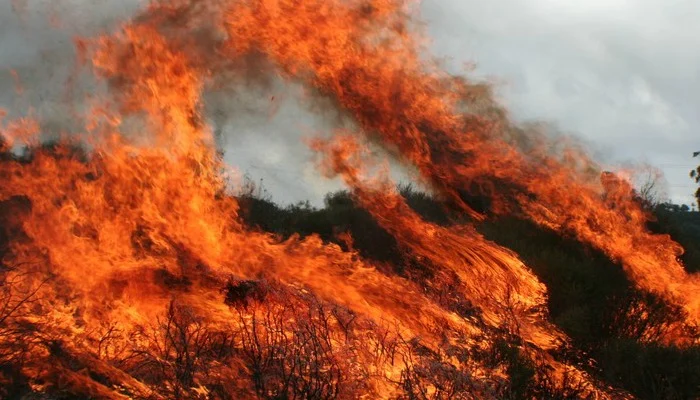
Gema Bárcenas-Moreno University of Seville, Sevilla, Spain Currently, the complexity of soil microbial ecology on soil systems is a hot topic in the environmental sciences, since the scientific community has achieved a deep knowledge of the relevance of microorganisms in soil processes. After several decades of study of the effects of wildfires on soils, one of the main conclusions is that soil mi ...[Read More]

A dark future sprouting from sealed soil

Every year in Europe, soils covering an area larger than the city of Berlin are lost to urban sprawl and transport infrastructure. This unsustainable trend threatens the availability of fertile soils and groundwater reservoirs for future generations. A new report made public today by the European Commission recommends a three-tiered approach focused on limiting the progression of soil sealing, mit ...[Read More]

Lightening the clay (I)

“The more any indivisible exceeds, the heavier it is”. Democritus (c. 460 – c. 370 BC). What is clay? Clays are particles. Very, very small mineral particles. You cannot see them, you cannot handle them… but unity makes strength. Clays are one of the major mineral components of the soil, whose chemical and physical properties depend on them. The study of soil clay minerals allows a gen ...[Read More]

Mediterranean Environmental Research Group (GRAM)

By Marc Oliva   The Mediterranean Environmental Research Group, (GRAM) from the University of Barcelona has over 20 years of working experience in the field of the effects of forest fires on soil properties. In 1998 the doctoral thesis entitled “Fire effects on soil properties, the role of fire intensity” carried out by Xavier Úbeda emphasized the importance of fire intensity impa ...[Read More]

Will drinking tea get us thinking about soils? Yes, but only if you help us spread the word!

Taru Lehtinen PhD candidate at the Faculty of Life and Environmental Sciences, University of Iceland tmk2@hi.is The Tea Bag Index Project wants to create a global map on decomposition with the help of citizen scientists. We use teabags to collect vital information on the global carbon cycle. With our protocol (see our web page and our article: Keuskamp et al., 2013), citizen scientists worldwide c ...[Read More]

Boring Soil Science strikes back

Many scientists are currently debating whether soil science is an academic field in which scientists are engaged in talking to each other, ignoring the rest of society. Of course, traditionally, the dissemination of soil science has been a difficult field. Among other problems, some scientists have reviewed the use of complicated jargon. Soil Science academics work in increasingly smaller and smal ...[Read More]

Soil color never lies

Often, soil color is described using general terms such as “brown”, “red”, “dark”, etc. When I talk about this issue for the first time with my students of Soil Science, I use to ask them how to describe the color of a soil sample. Normally, in a few seconds, I get a list of color names ranging from dark brown to bright red, including “chocolate”, “coffee” and “ ...[Read More]