
SSP
Stratigraphy, Sedimentology and Palaeontology

Zaniar Amiri

Zaniar Amiri is a research associate at the LIAG Institute for Applied Geophysics. His research focuses on high-resolution reconstruction of Pleistocene climate dynamics and environmental changes using loess–paleosol sequences. He employs an integrated multi-proxy approach that combines sedimentology, pedology, grain-size distribution, magnetic susceptibility, colorimetric analysis, clay mineralogy, micromorphological features, and optically stimulated luminescence (OSL) dating to constrain paleoenvironmental change. His work contributes to a better understanding of dust accumulation patterns, moisture variability, and landscape evolution.

Insight into paleo-environmental and -climatic conditions during the Pleistocene period in Kashmir – An understudied and poorly understood puzzle-piece in the interaction-sphere of the Indian Monsoon and Westerly climate-systems
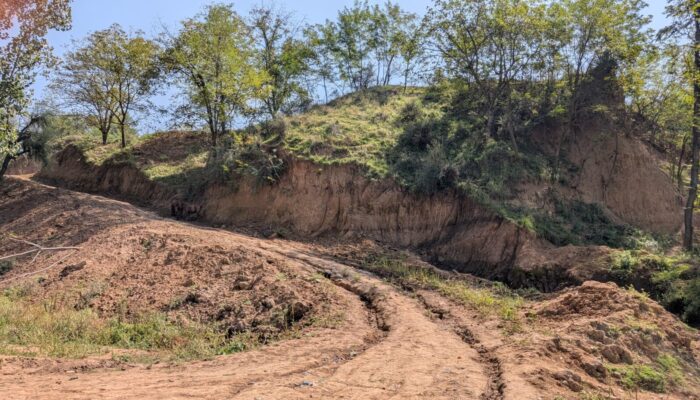
Insight into paleo-environmental and -climatic conditions during the Pleistocene period in Kashmir – An understudied and poorly understood puzzle-piece in the interaction-sphere of the Indian Monsoon and Westerly climate-systems

The Indian subcontinent is situated in Southern Asia, where it projects southwards from the Himalayas into the Indian Ocean. Along the northern border of this subcontinent, the Himalayas – home to the earth’s highest mountains on land – stretch with a length of ~2500 km and a width of 300 km. The stunning mountain ranges of the Himalayas provide a considerable physical barrier for air masses from/ ...[Read More]