
by Rémy Bossu, Laure Fallou, Sylvain Julien-Laferrière, Matthieu Landès, Julien Roch, Fréderic Roussel, Sébastian Soriat and Robert Steed I set the area of interest, and then tried to adjust the magnitude threshold. Either the threshold was too high and I did not get information for the earthquakes that I felt, or it was too low …[Read More]
Earthquake
Taking into account the cultural context to improve scientific communication – Lessons learned from earthquakes in Mayotte
by Laure Fallou and Rémy Bossu Since 10th May 2018, a series of earthquakes has hit Mayotte Island, and it has not stopped yet. This seismic activity is very unusual in the area and has left not only the citizens, but also the authorities and the scientific community puzzled. Soon after the outset of …[Read More]
Palu 2018 – Science and surprise behind the earthquake and tsunami
On September 28, 2018, a powerful 7.5-magnitude earthquake and an unexpected tsunami shook the Indonesian island of Sulawesi, leaving behind catastrophic results and open questions among geoscientists. How come this event is having such an impact on the scientific community? What we know so far On Friday afternoon (at around 5pm Western Indonesian Time) …[Read More]
What’s Shaking? – Facts and figures of latest earthquakes
Haven’t you heard about the recent major earthquakes which stroke the globe? No worries, the ECS-reps will post a quarterly report with basic information about the latest earthquakes you can’t miss. Let’s start with June, July and August 2018. Between the 1st June and the 31st August, 425 earthquakes with magnitude Mw above 5.0 …[Read More]
Lombok and Fiji – or why a M6.9 earthquake can be worse news than a M8.2 event
Two magnitude 6.9 earthquakes in Indonesia in the space of two weeks, 20 km apart. Meanwhile, a magnitude 8.2 event in the Pacific. Did you get any questions about the end of the world being upon us, how come all these quakes happen so close together and why the Fiji event was so harmless? …[Read More]
Seismo @ school
Being a seismologist is not just doing research, it is also sharing experience and teaching the next generation. As early career scientists, we are used to share ‘our science’ during open days and career days at university. Another peculiar moment for Science outreach is the National Science week, where researchers can set up experiments and …[Read More]
4th TIDES Advanced Training School
The 4th TIDES Advanced Training School was held in Prague, Czech Republic, from the 2nd to the 6th of July 2018. If you missed it, take a look at Michaela and Eric’s short report: It’s the first Sunday of July. It could have been a calm sunny noon in Vienna, but that’s not my …[Read More]
Seismology for non-seismologists
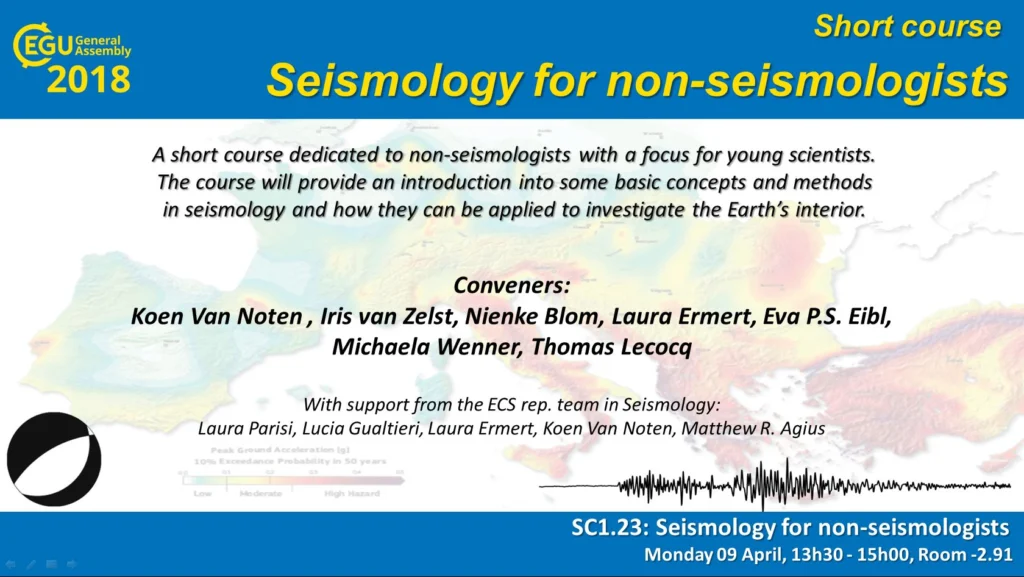
Short Course at EGU2018, organized by the ECS-Team of the Seismology Division Title: SC1.23 – Seismology for Non-Seismologists Time: Monday 9 April, 13:30 – 15:00 Location: Room -2.91 Are you getting ready for the upcoming General Assembly EGU2018? Consider attending our short course in Seismology on Monday. How do seismologists detect earthquakes? How do we locate them? …[Read More]
Crowdsourcing in Europe: how to share macroseismic data of felt earthquakes ?
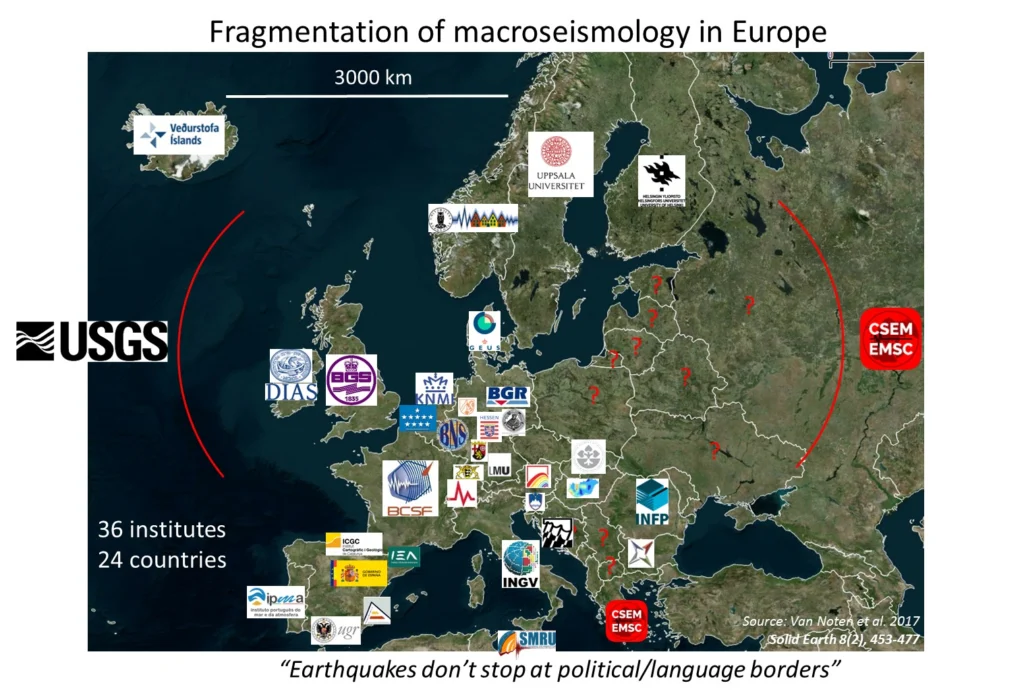
“Did you feel the earthquake ?” “Avez-vous ressenti un tremblement de Terre?” “Erdbeben gespürt?” ” Følte du siste jordskjelv?” “Sentiu um Sismo?” “Ha sentido algún terremoto?” “Pocítili ste zemetrasenie?” “Hai Sentito il Terremoto?” “почувствахте ли земетресение?” Technical workshop on internet …[Read More]
Paper of the month — The origin of volcano-tectonic earthquake swarms by Roman and Cashman (2006)
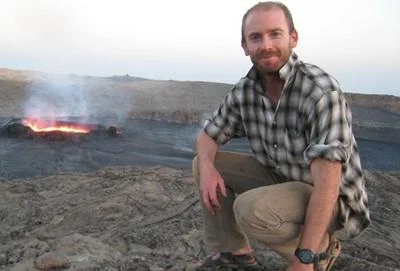
We are pleased to propose you a new Paper of the Month written by Dr. Derek Keir on volcano seismology. Derek’s PhD thesis was on the “Seismicity of the Ethiopian rift” and conducted at Royal Holloway University of London under the supervision of Prof. Cindy Ebinger and Prof. Graham Stuart of the University of Leeds. …[Read More]