EGU Blogs

Division blogs

CR
Cryospheric Sciences

Recipe to quantify calibration errors in a time-dependent ice sheet model

Recipe to quantify calibration errors in a time-dependent ice sheet model

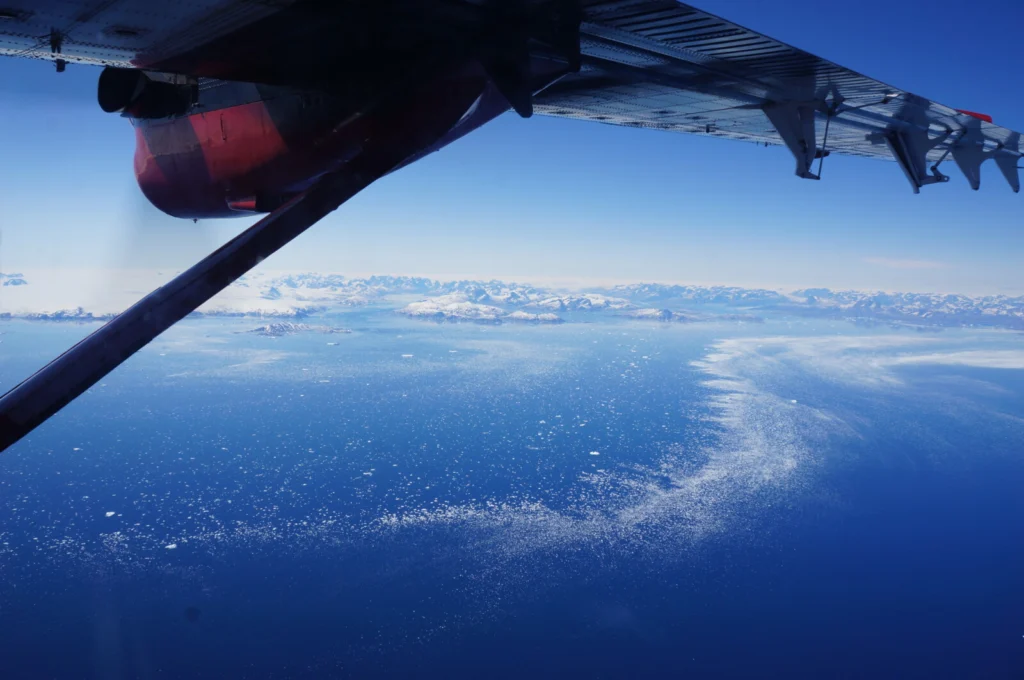
Ice sheet models are awesome tools that help us learn and predict the fate of ice sheets under human-induced climate change. However, all models have errors. What types of uncertainties exist in an ice sheet model and how can we quantify some of them efficiently? Check out our recipe to quantify one type of uncertainty …[Read More]

HS
Hydrological Sciences

Care to get your boots wet? The ‘Partial Surface Water Challenge’

Care to get your boots wet? The ‘Partial Surface Water Challenge’

Inland surface water is a critical resource when scarce and a potential hazard when floods occur. Because the extent of surface water affects habitat condition, weather, and biogeochemical cycles, our ability to accurately track variations in surface water extent is important for resource management, science, commerce, hazard mitigation, and policy making.  Openly distributed data derived …[Read More]

SM
Seismology

Earthquake Watch: The 8 September 2023 Al Haouz, Morocco, M7.0 earthquake

Earthquake Watch: The 8 September 2023 Al Haouz, Morocco, M7.0 earthquake

Contribution about the September 2023 M 7.0 earthquake in Al Haouz, Morocco, by Dr. Nacer Jabour, Head of the National Geophysics Institute (CNRST) in Rabat, Morocco, Abdelillah Tahayt, from the Faculty of Sciences, Abdelmalek Essadi University in Tanger, Morocco, and Mohamed Kasmi, Lahcen Hni, Youssef Timoulali, Mohamed Menzhi, from the National Geophysics Institute (CNRST) in …[Read More]

CR
Cryospheric Sciences

antARcTica

antARcTica

In the frozen expanse of Antarctica, where the remote environment tests the limits of scientists, a unique relationship between science and art can emerge. As the isolation, weather and beauty of the ice-covered continent introduce themselves, some Antarctic individuals find solace in the realm of art. In this blog post, we delve into the interplay …[Read More]

GD
Geodynamics

Mantle, Mountains and Molluscs

Mantle, Mountains and Molluscs

Geodynamic models and landscape evolution models are becoming important tools to quantify the formation and development of paleogeographic features, contributing to our understanding of the patterns of biodiversity evolution. Earth, a dynamic system The Earth’s surface works as a dynamic system and is continuously sculpted through the geological timescale by weathering, wind, rivers, and many …[Read More]