EGU Blogs

Division blogs

SM
Seismology

Earthquake Watch May: Qinghai, China
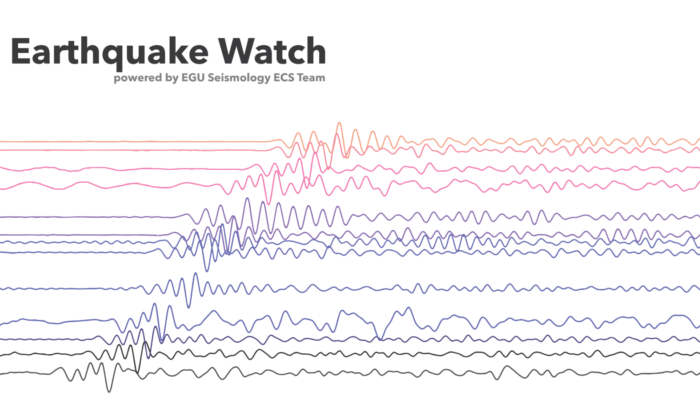
Earthquake Watch May: Qinghai, China
On May 21, a major shallower earthquake (M7.3) hit Central China at 18:04 UTC in the southern Qinghai province (Figure 1). Until this date, this event is the largest onshore earthquake during 2021. The so-called Qinghai earthquake’s hypocenter is located in a remote area near the eastern edge of the Tibetan Plateau, which is formed due to the collision between the India Plate and the Eurasia ...[Read More]

SSP
Stratigraphy, Sedimentology and Palaeontology

Sedimentology – towards a disciplinary crisis?

This contribution adds to earlier articles on impact of global change on sedimentology and on the changing role of sedimentologists in a society moving towards a carbon-free energy future (e.g. Simmons and Davies, 2020, SSP BLOG). Sedimentology is a child of the Age of Petroleum. And, the success story of petroleum is closely linked to the equally successful story of gasoline-powered mobility. Let ...[Read More]

G
Geodesy

Insights from the past ECS Representative of the Geodesy division

Insights from the past ECS Representative of the Geodesy division

For our last interview we haven’t talked to a member of the current Geodesy division team. Instead we asked the past ECS (Early Career Scientist) representative of the Geodesy division, Katrin Bentel, a few questions. Fortunately, she gave us some insights about the role of an ECS Representative. Find out below.   What did you like most about your time as the Geodesy ECS Representative? ...[Read More]

NP
Nonlinear Processes in Geosciences

NPG Paper of the Month: “Recurrence analysis of extreme event-like data”

NPG Paper of the Month: “Recurrence analysis of extreme event-like data”

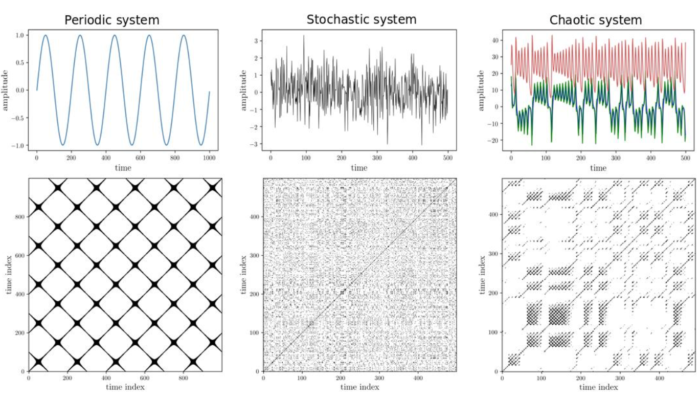
The May 2021 NPG Paper of the Month award goes Abhirup Banerjee and his co-authors for their paper “Recurrence analysis of extreme event-like data“. Abhirup is pursuing a doctoral degree in Theoretical Physics at University of Potsdam. He is working at Potsdam Institute of Climate Impact Research as a guest researcher as part of the DFG funded NatRiskChange project. In this project, he ...[Read More]

CL
Climate: Past, Present & Future

Feeling the Heat: The Grilled Earth

Feeling the Heat: The Grilled Earth

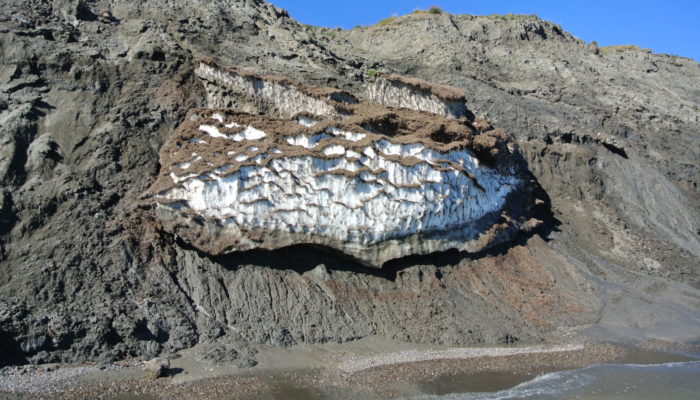
Nowadays, there are plenty of media reports about the impacts of climate change around the world. Glaciers are disappearing, gigantic craters form in Siberia as the previously frozen ground thaws, the sea is threatening to swallow entire islands, floods cause large damages to people and economy, heat waves periodically destroy crops and can reach dangerous levels for people’s health. And this is o ...[Read More]

Geochemistry, Mineralogy, Petrology & Volcanology

A lava for (almost) every colour

A lava for (almost) every colour

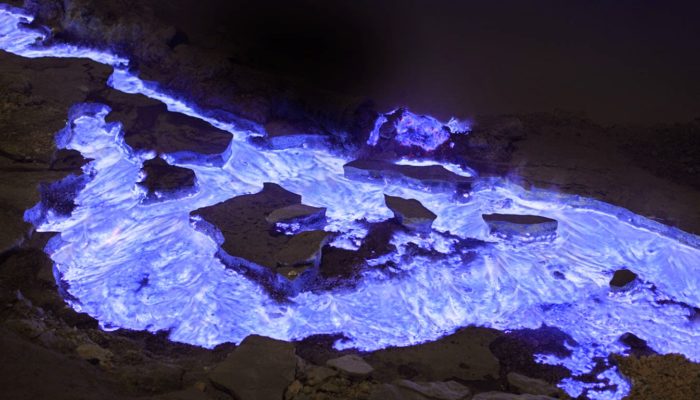
When we think about a volcanic eruption, one of the first things that come to our mind are lava fountains and flows with a characteristic bright orange and red colour. The colour of lavas can be associated with the temperature reached at the surface: dark red at low temperatures (475°C), orange at 900°C and white at extremely high temperature (>1150°C) (Kilburn, 2000). However, some places on E ...[Read More]

TS
Tectonics and Structural Geology

TS Must-Read – Sylvester (1988) Strike-slip faults

TS Must-Read – Sylvester (1988) Strike-slip faults

Strike-slip faults by Arthur Sylvester (1988) is a must-read paper for anyone, and more so for those who want to understand the mechanisms of strike-slip faulting. Although it mostly refers to the San Andreas fault, the most studied strike-slip fault at the time (and possibly to date), the contribution is a comprehensive review of the state of the art about strike-slip faults in general. Sylvester ...[Read More]

NH
Natural Hazards

Artificial intelligence for disaster management: that’s how we stand

Artificial intelligence for disaster management: that’s how we stand

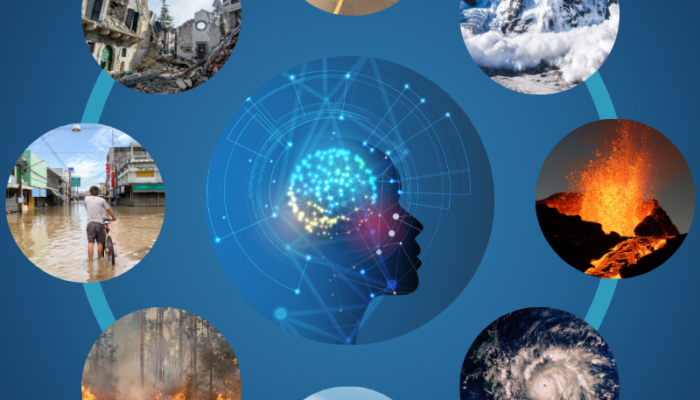
On the 23rd of June, I participated in the Second Workshop for AI (Artificial Intelligence) for Natural Disaster Management that hosted around 400 scientists, UN advisors, practitioners and policymakers from all over the world interested in machine learning for supporting disaster prediction and early warning. AI is not my research area; however, I have always been interested in the new advances t ...[Read More]

TS
Tectonics and Structural Geology

TS Must-read – Dewey (1988) Extensional collapse of orogens

TS Must-read – Dewey (1988) Extensional collapse of orogens

After building orogens with Dewey and Bird (1970) and extending them during building with Platt (1986), Dewey (1988) explores the lifetime of orogens in their last breath: their extensional collapse. Simple considerations on how to form a normally-thick continental crust (30-40 km) from a thickened continental domain (50-60 km) indicate that erosion of the topography alone is far from being suffic ...[Read More]

OS
Ocean Sciences

Connecting the Networks for a better Understanding of the Ocean

Connecting the Networks for a better Understanding of the Ocean

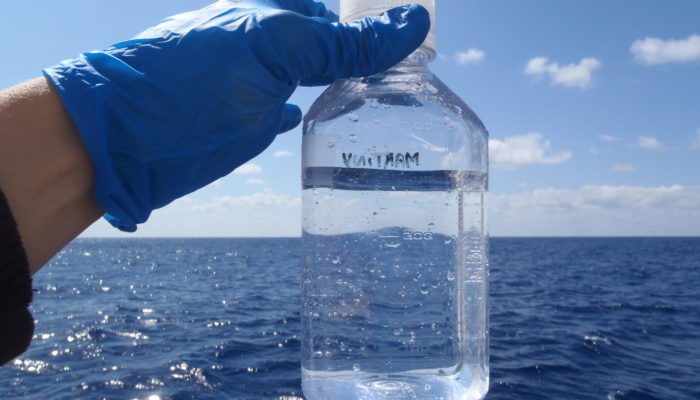
Research in many scientific disciplines can be done singlehandedly by learning from the printed pages, solving complex equations and analyzing the data while sitting alone in an office. But observational ocean science research demands an involved team effort to get meaningful insights of the ocean. This is primarily because: The Ocean is vast – it is humanly impossible for anyone to conduct resear ...[Read More]