At the recent UNDERPIN2 conference (Understanding rare events and their climatic impacts, in Erice, Sicily), we held a discussion on the future of climate science. To guide the conversation, I ran an interactive survey to capture how climate scientists see the current challenges, opportunities, and blind spots in climate research, communication, and the use of artificial intelligence. The response ...[Read More]
Nonlinear Processes in Earth System Dynamics
Earth System Dynamics (ESD) is an open-access EGU journal focussing on an interdisciplinary view of the functioning of the Earth system and global change. Due its broad focus, ESD receives submissions of relevance to several different EGU divisions. Here, I would like to highlight five thought-provoking ESD papers that cover topics spanning environmental governance, extreme events, palaeo-climates ...[Read More]
ECS SpotLight: The link between European warm-temperature extremes and atmospheric persistence
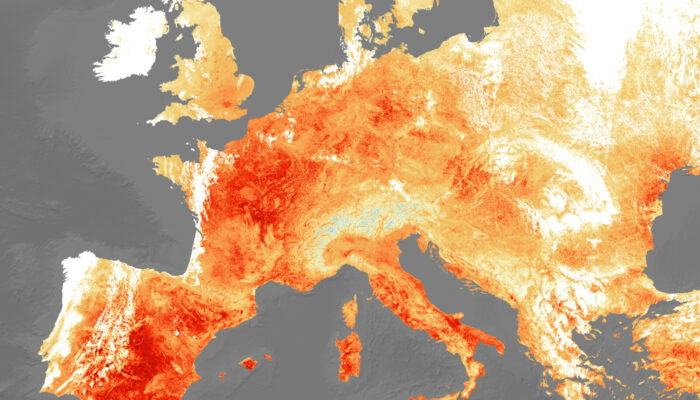
Persistent atmospheric circulation patterns are not a necessary requirement for warm temperature extremes in Europe. This key finding from a recent study led by Emma Holmberg challenges a more traditional meteorological view of persistence, which typically considers summertime heatwaves, especially in northern regions of Europe, to be synonymous with persistent atmospheric flow patterns. Furthermo ...[Read More]
NPG Paper of the Month: “A Range of Outcomes: The Combined Effects of Internal Variability and Anthropogenic Forcing on Regional Climate Trends over Europe”
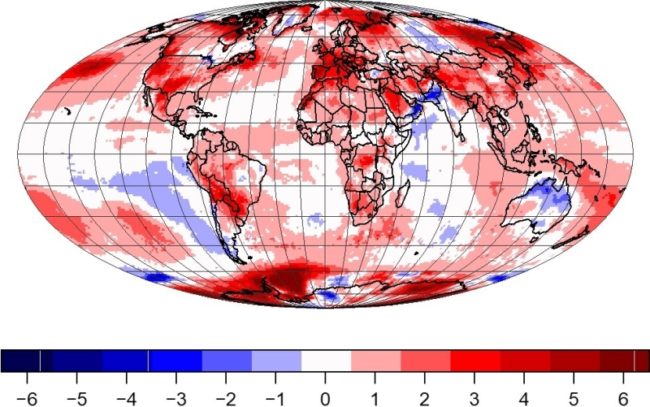
The NPG paper of the month for February 2023 was awarded to “A Range of Outcomes: The Combined Effects of Internal Variability and Anthropogenic Forcing on Regional Climate Trends over Europe” by Clara Deser and Adam S. Phillips. How much will Europe warm in the next 50 years? Will precipitation increase or decrease? Are past climate trends unique or could alternate realities have exis ...[Read More]
Socio-economic and security implications of global heating
This year, like in the last few years, we are experiencing the effects of global heating in increasingly personal ways. The summer of 2022 exposed us to ever more extreme heat waves in North America, Europe, and Asia. For instance, the heat wave in India and Pakistan reached temperatures of 49C in Nawabshah, Pakistan. North America too experienced devastating heat waves and wildfires. Los Angeles ...[Read More]
ECS SpotLight: Changes in the climate dynamics have already modified characteristics and impacts of storms in France: the case study of storm Alex 2020
Extratropical cyclones play a key role in modulating the precipitation and wind in mid-latitudes and can be responsible for extreme wet and windy events. With global warming, the dynamics and thermodynamics associated with these atmospheric systems are being affected. However, due to the complexity of modelling the climate system, a challenge arises when evaluating the influence that climate chang ...[Read More]
NP Interview: Federico Grazzini on Climate Change casts shadows on the present and the future of the Mediterranean Basin
Weather extreme events in the year 2022 are really hitting the Mediterranean basin very hard. Since the beginning of the year we are observing a widespread drought, heatwaves but also severe thunderstorms. Few days before the COP meeting in Sharm-el-sheik we discussed one of the experts of Mediterranean climate, Federico Grazzini, to unveil whether these events can be linked to climate change. Fe ...[Read More]
What the 2022 summer thunderstorms in the Mediterranean tell us about the ongoing climate change?
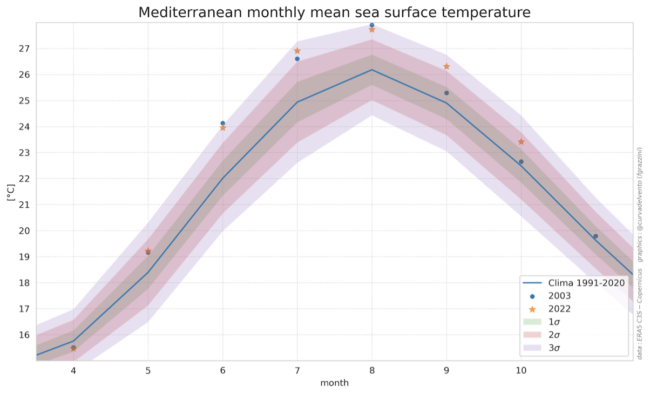
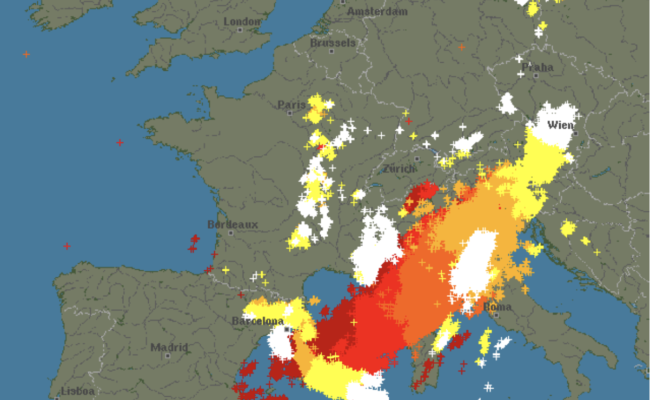
The 2022 European summer was governed by the presence of a persistent cold drop (low pressure area) located between Portugal and France. The change in its position has determined the alternation between hot conditions (low pressure center over Portugal) and stormy conditions (cold drop over France). The warming of the Mediterranean Sea (up to +6°C compared to the period 1990-2020) has largely cont ...[Read More]
NP Interviews: Davide Faranda (CNRS) on the topic “global warming and extreme events in Europe”
Davide Faranda is a physicist at the French National Center for Scientific Research (CNRS). His main interests are devoted to the construction of a statistical mechanical and dynamical systems framework for the study of atmospheric motions. In particular, his works aim at the characterization of the metastable states of the atmospheric circulation with simple mathematical and statistical tools, an ...[Read More]
A new virtual seminar series on Climate Physics organized by the American Physical Society (APS) group in Physics of Climate
The APS Topical Group on the Physics of Climate (APS-GPC) is excited to launch a new virtual monthly seminar series on climate physics and variability. These seminars are aimed at introducing the broader physics community (and math, engineering, and other communities) to the fundamentals of climate science as well as cutting-edge research and open questions in this field. APS invites you to attend ...[Read More]