NP
Nonlinear Processes in Geosciences

Nonlinear Processes in Geosciences

NPG Paper Highlight: “Baroclinic and barotropic instabilities in planetary atmospheres: energetics, equilibration and adjustment”
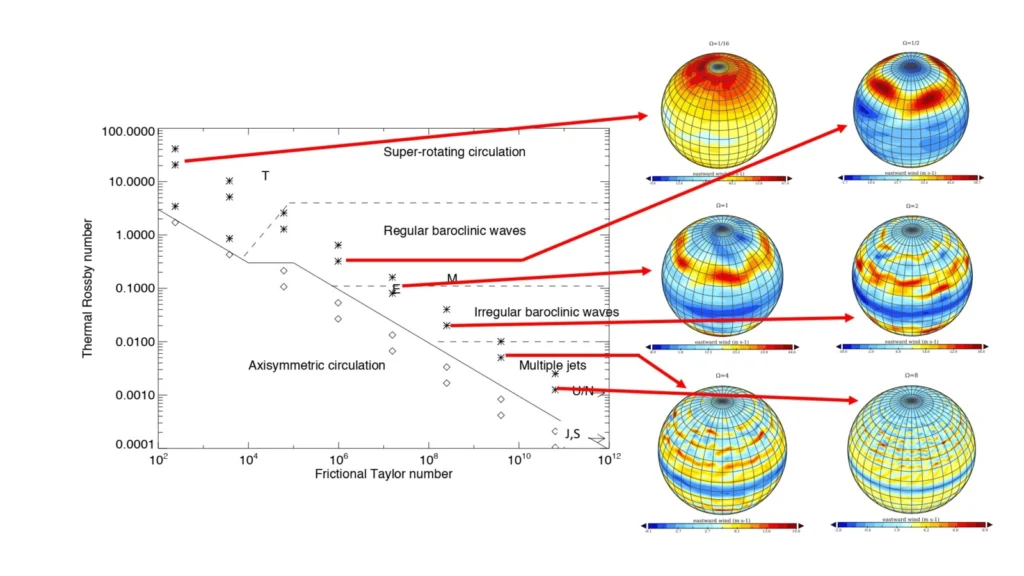
NPG Paper Highlight: “Baroclinic and barotropic instabilities in planetary atmospheres: energetics, equilibration and adjustment”

Today’s our blog hosts a review article by the 2016 EGU Richardson medallist Peter Read, together with Daniel Kennedy, Neil Lewis, Hélène Scolan, Fachreddin Tabataba-Vakili, YixiongWang, Susie Wright, and Roland Young for the special issue of NPG celebrating 100 years of IUGG (https://npg.copernicus.org/articles/27/147/2020/npg-27-147-2020.html). One of the great achievements of the past 100 ...[Read More]

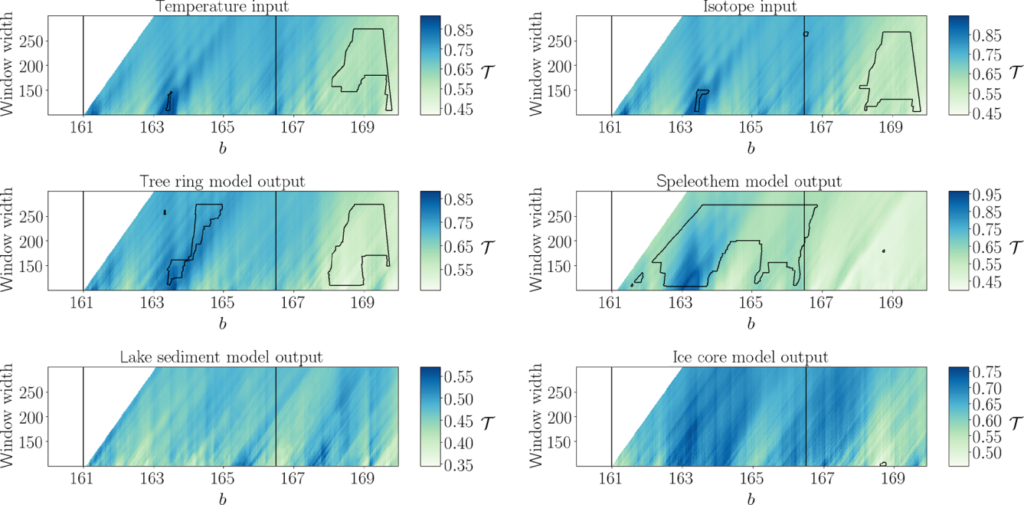
NPG Paper of the Month: “Detecting dynamical anomalies in time series from different palaeoclimate proxy archives using windowed recurrence network analysis”

NPG Paper of the Month: “Detecting dynamical anomalies in time series from different palaeoclimate proxy archives using windowed recurrence network analysis”

This month the NPG Paper of the Month award is achieved by Jaqueline Lekscha and Reik Donner for their paper “Detecting dynamical anomalies in time series from different palaeoclimate proxy archives using windowed recurrence network analysis” (https://npg.copernicus.org/articles/27/261/2020/). Jaqueline Lekscha did her PhD in physics at the Potsdam Institute for Climate Impact Research and Humbold ...[Read More]

Is planting trees a feasible large-scale solution to mitigate climate change?

Is planting trees a feasible large-scale solution to mitigate climate change?

In the last few years it has become a common practice to compensate carbon dioxide (CO2) emissions by planting trees. This idea is simple and rooted on a very basic principle: trees get the energy of sunlight, and by photosynthesis they take water from the ground and CO2 from the air, releasing oxygen in the atmosphere. The CO2 is then stored in trees and surrounding soil. Tree planting efforts ar ...[Read More]

COVID-19-related drop in anthropogenic aerosol emissions in China and corresponding cloud and climate effects

COVID-19-related drop in anthropogenic aerosol emissions in China and corresponding cloud and climate effects

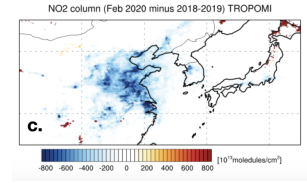
While a previous blog entry dealt with the question whether we can use lessons from the nonlinear nature of climate for projections of the Covid-19 pandemic, there is now a first example of how the pandemic can teach us something on climate. The several weeks long lockdown of China made February 2020 an exceptional month in terms of air quality; aerosol emissions were tremendously reduced leading ...[Read More]

#shareEGU20: Networking event of the NP Division

The current COVID-19 situation has profoundly changed our daily lifes and has also affected our way to perform and share research. In today’s world a lot of efforts have been made to minimize the impact of working from home and exchange thoughts with colleagues, and also the usual annual General Assembly of the European Geosciences Union (EGU) has been moved online. Thus, the largest online ...[Read More]

NP Interviews: the 2020 Lewis Fry Richardson Medal Valerio Lucarini

NP Interviews: the 2020 Lewis Fry Richardson Medal Valerio Lucarini

Today’s NP Interviews hosts the 2020 Lewis Fry Richardson Medal Valerio Lucarini. Valerio (b. Ancona, Italy, 1976) is the Director of the Centre for the Mathematics of Planet Earth and Professor of Statistical Mechanics at the University of Reading, and former Professor of Theoretical Meteorology at the University of Hamburg. His main expertise is in Climate Dynamics, Extreme Events, Statist ...[Read More]

NPG Paper of the Month: “Application of a local attractor dimension to reduced space strongly coupled data assimilation for chaotic multiscale systems”

NPG Paper of the Month: “Application of a local attractor dimension to reduced space strongly coupled data assimilation for chaotic multiscale systems”

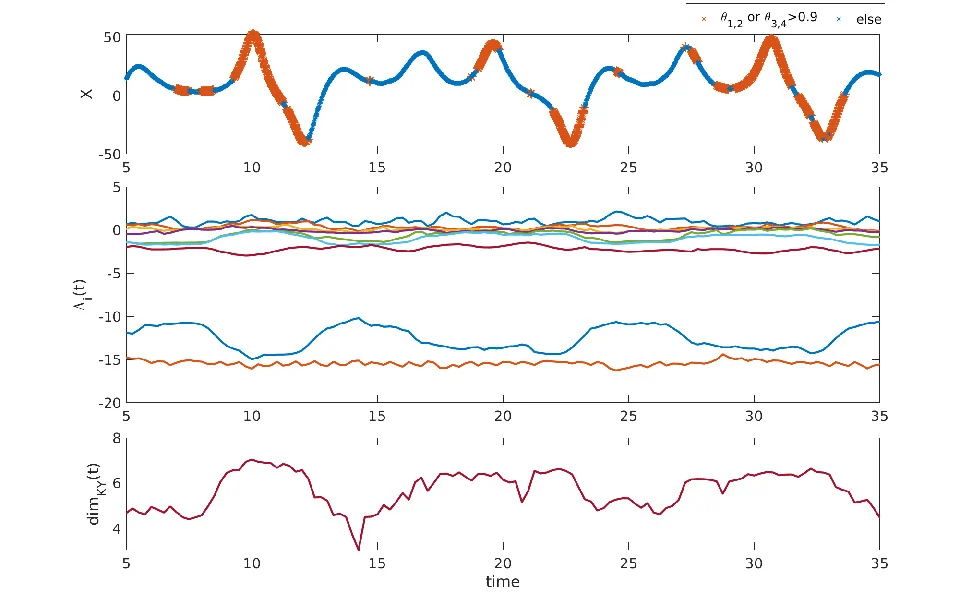
This month the NPG Paper of the Month award is achieved by Courtney Quinn for her paper “Application of a local attractor dimension to reduced space strongly coupled data assimilation for chaotic multiscale systems” (https://www.nonlin-processes-geophys.net/27/51/2020/). Dr. Courtney obtained her PhD in Mathematics at the University of Exeter (UK) researching critical transitions in dynamical syst ...[Read More]

How Climate Sciences can help in understanding uncertainties in Covid-19 epidemic projections

How Climate Sciences can help in understanding uncertainties in Covid-19 epidemic projections

COVID-19 is currently affecting over 180 countries in the world and poses serious threats to public health as well as economic and social stability of many countries. Modeling and extrapolating in near real-time the evolution of COVID-19 epidemics is a scientific challenge, which requires a deep understanding of the factors undermining the dynamics of the epidemics. Despite the importance of havin ...[Read More]

NP Interviews: the newly elected NP Division President François Schmitt

NP Interviews: the newly elected NP Division President François Schmitt

Today’s NP Interviews hosts the newly elected NP Division President François Schmitt. François has a PhD degree from Université Pierre et Marie Curie in Paris (1993), in atmospheric turbulence, and an Habilitation degree from the same university (2001). He has stayed in Belgium during 6 years as a post-doc, working in meteorology and in fluid mechanics. He is CNRS researcher in Wimereux (Nor ...[Read More]

The 2020 extra-tropical monster cyclones and their (possible) relations with climate change

The 2020 extra-tropical monster cyclones and their (possible) relations with climate change

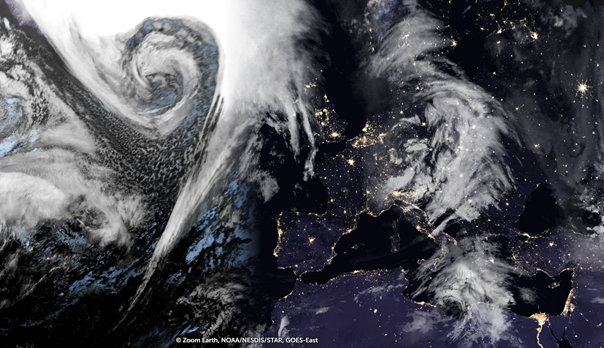
On February 9th, a British Airways Boeing 747 landed in London Heathrow airport just four hours and 56 minutes after its take-off in JFK, New York, setting the shortest flight-time for non-supersonic jets over this route. The jumbo jet took advantage of the fast upper-tropospheric winds associated with an exceptionally strong jet-stream which created tail winds of about 400km/h. Over the United Ki ...[Read More]