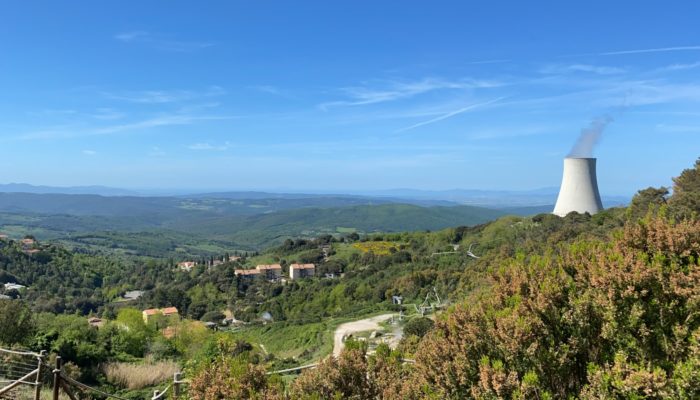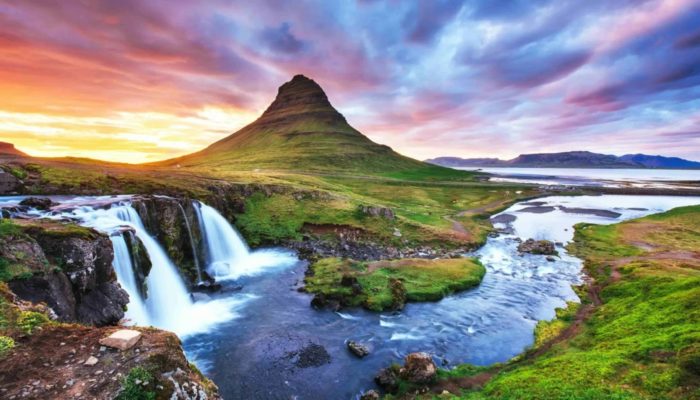
How does a Geothermal system work? Heat is a form of energy and, strictly speaking, geothermal energy is heat from inside the Earth. The large amount of thermal energy enclosed below the earth’s surface derives in part from its primordial formation process and in part originates from the decay of radioactive isotopes present mainly in the earth’s crust and, secondarily, in the mantle. ...[Read More]
EGU23 Friday Highlights
It’s Friday and after a long week of conferencing you’re now on the home straight, the final day of EGU 2023! The following are some suggestions for that last bit of GMPV content to to bring your conference to the perfect close: Kicking things off first thing in the morning, there’s a big, exciting session on Volcanic processes: tectonics, deformation, geodesy, unrest with a loads of fascinating p ...[Read More]
EGU23 Wednesday Highlights
Welcome to the third day of the EGU General Assembly, 2023. Hope that the participants and attendees are enjoying. Let’s start the day with a cup of tea and then enter the Hall. For virtual attendees, we have Gather.town. So don’t miss a single session wherever you are! Anyways, lets have a look on today’s sessions- The first session on “Magmatic, tectonic and hydrothermal ...[Read More]
EGU23 Monday Highlights
EGU23 is finally starting! Hopefully many of you were able to join the icebreaker events yesterday evening and have a smooth start into the conference today! So why not kick the day off by listening to the Xin Zhong’sECS awards lecture on his outstanding work on grain-scale stress variation in metamorphic rock? Alternatively, next to many more exciting scientific sessions (e.g. a session on volcan ...[Read More]
GMPV Early Career Scientists at #EGU23
Spring is here and EGU23 is approaching fast! Are you ready for a full immersion into every aspect of Geosciences? Anyway, EGU is not only scientific sessions, presentations, and posters… but also social events and networking! The ECS team of GMPV (and other Divisions) will be there, ready to meet you on many occasions. Here is a quick list of where and when you can find us. Sunday 23 ...[Read More]
Geo-Fantasy – between Fantasy Novel and the Real World
When reading fantasy novels, we are usually brought to worlds of elves, dragons, and epic battles, all surrounded by breathtaking magical forests, or castles above impervious cliffs. However, even fantasy stories take inspiration from the real world and its geology. Who does not remember the ascent of Mount Doom of Frodo and Sam, or the importance of Dragon Glass (Obsidian) in Game of Thrones? So, ...[Read More]
Become the next Early Career Scientist Representative for the GMPV Division!
The Geochemistry, Mineralogy, Petrology and Volcanology division of the European Geosciences Union is looking for a new Early Career Scientist representative (ECS rep)! The outgoing rep (Giulia Consuma) will be standing down officially at the EGU General Assembly 2023, so this is your opportunity to take this role! Why become an early career scientist representative? Being the ECS rep for an EGU d ...[Read More]
The spinning life of early-career researchers – twirling until out of sync?
In the GMPV blog team we are a group of early career researchers (ECRs*) in their PhD or early postdoc stages. As ECRs we know that permanent positions in Academia are scarce and that we may face long postdoc careers, potentially entailing a rootless life for several years to come. In this blog, we highlight the other side of the ECR lives that fewer people know about, and that occasionally leads ...[Read More]
#EGU23 session in the spotlight: Seismic sources, signals and imaging on volcanoes: observations, laboratory experiments and modelling
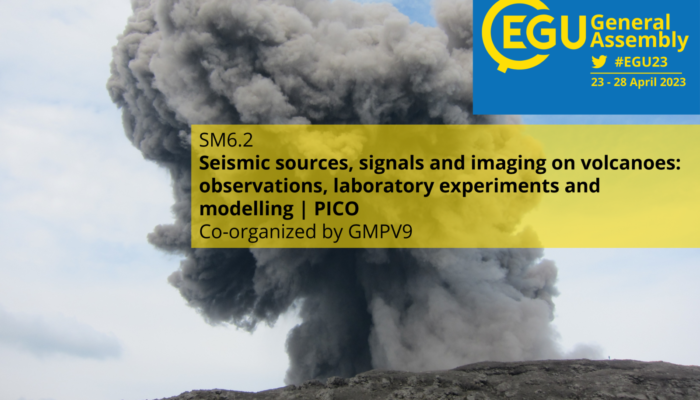
The abstract submission deadline for the EGU GA 23 is approaching fast – 10th January, 2023!!! Before wrapping up 2022, please consider submitting your work to this exciting session that is being co-organised by SM and GMPV divisions. Check out below what the conveners had to say about their session: SM6.2 Seismic sources, signals and imaging on volcanoes: observations, laboratory experiment ...[Read More]
Fagradalsfjall 2021 versus 2022: similarity and differences
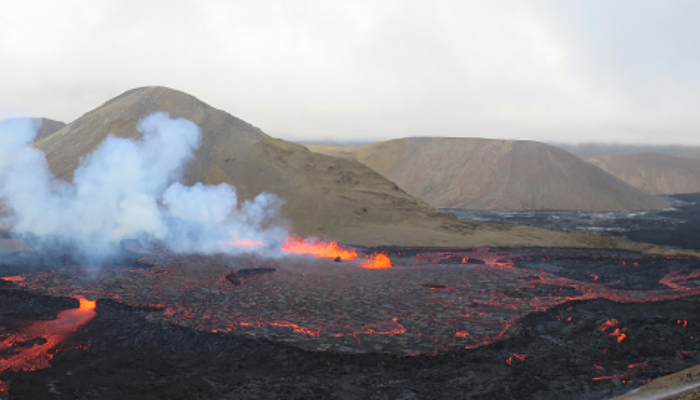
The Icelandic eruptions of 2021 and 2022 originated in the Reykjanes peninsula, characterized by the Krýsuvík-Trölladyngja system, one of the five volcanic systems present along the peninsula. This peninsula is a leaky transform fault, characterized by episodic rifts and associated volcanism. The last two years have brought about some of the most momentous volcanic eruptions in recent history. The ...[Read More]